


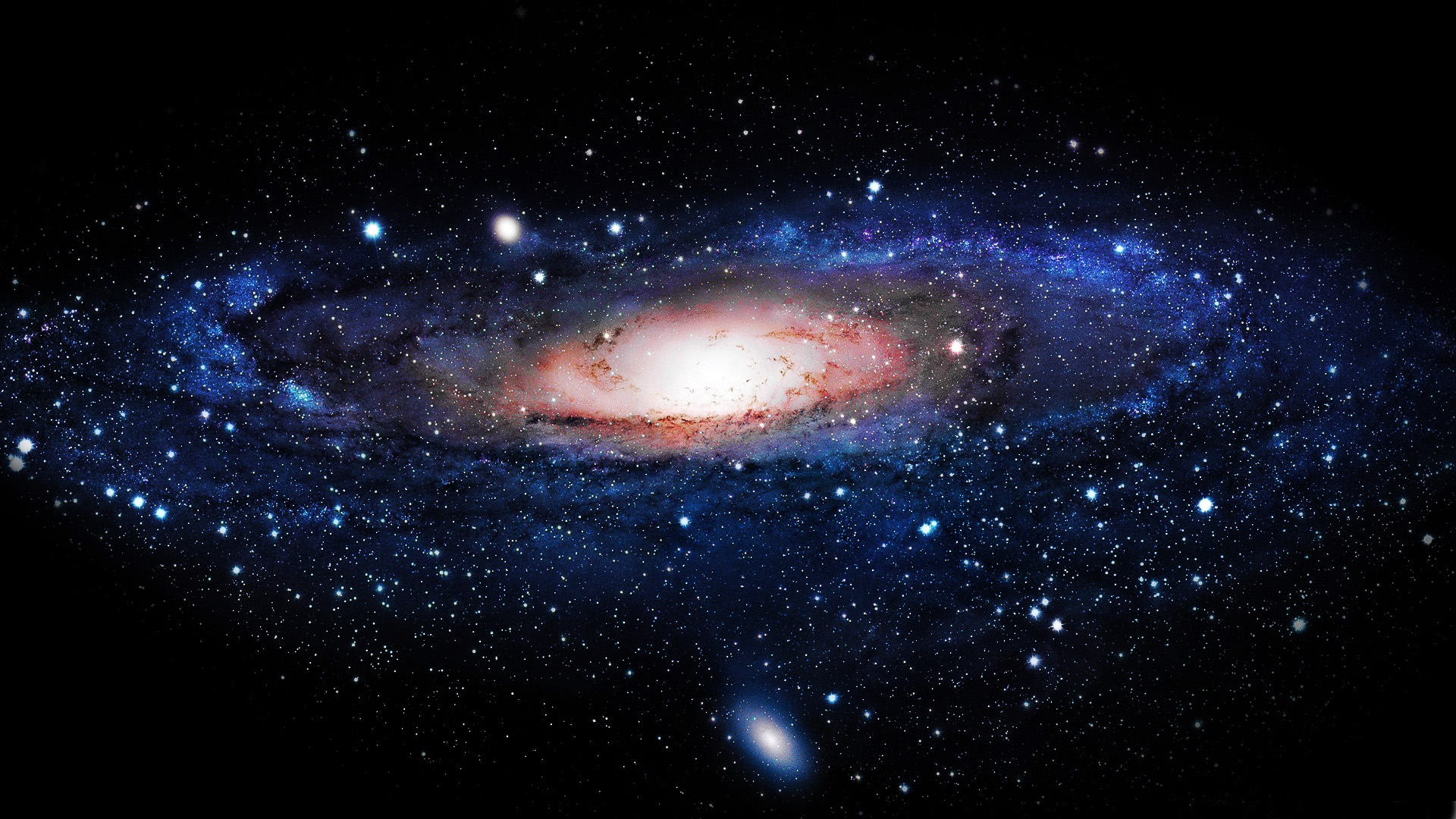
A groundbreaking new research study has stated that our Milky Way galaxy might have been formed from the insideout, and this is providing brand new insight into galactic advancement. The information from the Gaia/ESO project has given evidence which has backed hypothetically predicted divisions in the chemical structure of stars that are making up the disc of the Milky Way. They are a wide assortment of both massive gas clouds and also billions of stars that give our galaxy its unique shape.
The research has proposed that stars located in the inner sections of the galactic circle were possibly the very first to form. This supports the data that the Milky Way actually grew from the inside out in the first place.
A worldwide team of astronomers have taken detailed star observations covering an enormous range of locations and ages, and locations inside the disc to precisely determine their metallicity. That is the chemical element amount which is inside a star other than helium or hydrogen. These two elements are what most stars are made of. In fact, right after the Big Bang occurred, the universe was comprised almost entirely of helium and hydrogen, with a few amounts of contaminant metals beginning to come into existence as time passed.
Therefore, the researchers explain, older stars are made up of fewer elements so they have lower amounts of metallicity. Their study has shown that the metal lacking stars in the Solar Circle, which is our Sun’s orbit around the center of the Milky Way, are much more likely to have higher magnesium levels in their makeup.
The different chemical components of which stars are created are made at varying rates. This high element amount is the reason why it is believed that in this region there are more stars that “live fast and end up dying young.” Enormous stars perish when they are considered young and they become core collapsing supernovae; they end up producing a lot of magnesium when they die. This event might create either a black hole or a neutron star to form.
From what the research team has discovered, they believe that the Milky Way is not some sort of “either or” system any longer. The stars in there are of different metal properties and ages. The percentage of stars with varying properties is not the same in the two regions.
The stars which are located in the outermost regions of the galactic disc are chiefly younger and they have unexpectedly low magnesium levels when compared to the level of their metallicity. Such a finding indicates that there were important differences in planetary evolution across the Milky Way. There was extremely efficient and short star development that happened inside the Solar Circle, but on the outer edge of the Sun’s orbit, creation of stars ended up taking a lot longer.
Maria Bergemann, an astronomer from Cambridge University’s Astronomy Institute, stated that there has finally been new light shed on the chemical enrichment timescale all over the Milky Way, actually showing that the outer areas of the disc took a lot longer to form. She was in charge of the research study, which has appeared in print in the science journal Astronomy and Astrophysics.
The research study states that the Milky Way galaxy might have been formed from the inside out, which is providing exciting new insight into galactic advancement for astronomers.
By Kimberly Ruble
Sources:
Discover more from Guardian Liberty Voice
Subscribe to get the latest posts sent to your email.
8 Responses
Heya this is somewhat of off topic but I was wanting to know if blogs use WYSIWYG editors or if you have to manually code with HTML. I’m starting a blog soon but have no coding skills so I wanted to get guidance from someone with experience. Any help would be enormously appreciated!
This post could detail so much more 🙁 Are you intending to expand on it when you get the chance?
!This might be a slight bit inaccurate. Will you write more about this for me please? 🙂
Ugh. An article about the Milky Way that begins with a photo of the Andromeda Galaxy?
This is a very poorly written article, by someone whose command of English apparently parallels their knowledge of Astronomy.
It seem like what I have been saying is correct. The intergalaxatic ecosystem is simple stars and planets are formed by debris from stars that went supernova and the debris became new stars and planets
Well it kind of has to happen that way, that’s how gravitational collapse works…
the writing could be clearer…pls don’t post, just rewrite a little more before posting