
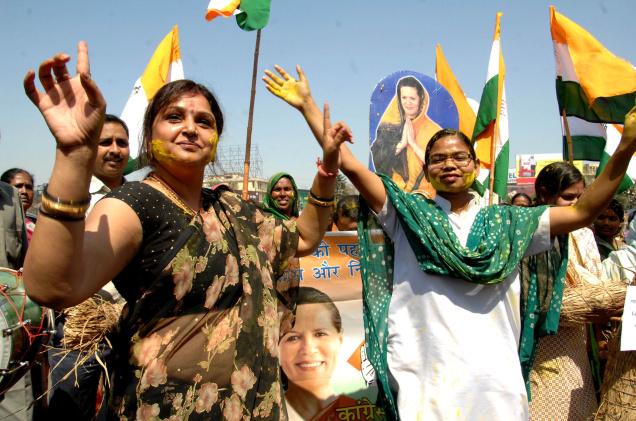
 Imagine if Saturday were International Men’s Day, but it’s not, of course. It is the 103rd International Women’s Day. It would never be necessary to have an International Men’s Day because men do not suffer from gender inequality.
International Women’s Day is a curious beast that aims to celebrate women around the world, their bravery and their achievements, while underscoring that they lag a long way behind in almost all aspects of human rights. For one day a year, lip service is paid to the contributions of women. Attention is drawn to ongoing discrimination and to societal injustices. In 2014, women even get their own Google Doodle.
It is said that the designers were scratching their heads when tasked with creating this tribute. Perhaps that is why they used a female cartoon character, Dora the Explorer, as one of their exemplars of the female sex. 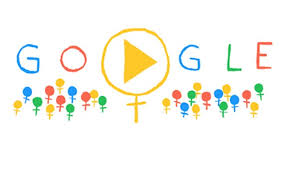 It was a really hard topic, explained the team leader, Ryan Germick. The upbeat collage, set to the jaunty soundtrack of Zap Mama, is a montage of smiley happy ladies from around the globe. Some of them are immense inspirations, like Malala and Camila Batmengelidh, but most are unknown representatives of their countries. They smile and they wave. They all look happy.
The message is “Happy International Women’s Day” yet there is much to be unhappy about. There is not one country in the world where women enjoy political and economic equality with men. Iceland has the honor of having the narrowest gender gap; the United States comes in at no. 23. It is the developing world that bears the brunt of the worst conditions of all for women, yet the West still has much work to do. These rankings, by the World Economic Forum, are based on access to education, political involvement and economic levels.
The theme for this year is “equality for women is progress for all.” According to the Bill and Melinda Gates Foundation, inequities in the lives of girls and women include mass lack of access to contraception. Two hundred million women remain unable to plan their pregnancies. HIV remains the main cause of death for women in low and middle-income countries. One woman dies every two minutes from complications of childbirth or pregnancy. In sub-Saharan Africa, only one girl in five gets through to middle school. Ten million more girls than boys are not attending school. Two thirds of the world’s illiterate are females. In 45 developing countries, it is the women who have to fetch water, which takes away time they could spend on education or income generation.  This is before coming to violence against women, which is pandemic.
One in every three women has reported having been either physically or sexually abused. One hundred forty million women live with the consequences of genital mutilation. Every three seconds, a girl child becomes a child bride. These are just some of the chilling statistics that belie the idea that the world is eradicating inequality.
Melinda Gates wrote in the 2014 annual letter from her foundation that empowering women with knowledge and skills meant they could “start to change their minds about the kind of future they wanted.” The way to secure a sustainable world for all, she argues, is to integrate “fundamental equality.”
A U.N. report by the United Nations Population Fund in February concluded that key indicators for the well-being of women had seen “little progress over the last twenty years.” It also said that what progress there was had been “unequal and fragmented.” The poorest women in the poorest countries suffer the most. They bear the burdens of water supply, food production, extreme physical hard work and unpaid labor without any access to sexual or reproductive counseling, and other vital health services. They provide the food, but are more likely to be malnourished.
The UK Parliament, in a background paper to IWD, said that in tone and nature, it has shifted from being “a reminder about the negatives to a celebration of the positives.” This is the paradox, that it has to try to do both.
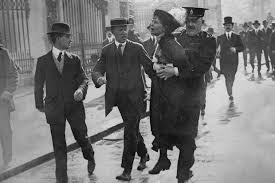
Helen Pankhurst, the great granddaughter of the famous suffragette Emmeline Pankhurst, will be marching in London for International Women’s Day. She recognizes that it is women in “less fortunate conditions” who suffer the most, but that closer to home there is still great inequality. In Great Britain, she cites condoning of gender-based violence, lack of political representation, the continued pay gap and women taking the lion’s share of domestic chores, as well as lack of support for childcare. A report this week showed that many families pay more for childcare per year than they do on their mortgage. That the great granddaughter of Emmeline Pankhurst is marching tells its own story.
International Women’s Day has only one day to try to highlight all of this, while remaining upbeat about the brilliant women who make a difference and make huge cracks in the glass ceilings of the First World, and those who galvanize their communities in developing countries. Underpinning this day is the great need to continue to insist that the battles are far from won. To put it into context, while women earn 10 percent of the income in the world, they still supply 66 percent of the work.
The day when it would be possible to scoff at the thought of an International Women’s Day as it would be to hold an International Men’s Day will truly be a happy one, and a cause for celebration. But it remains a long way off.
Commentary by Kate Henderson
Sources:
NY Times
Daily Telegraph
The Independent
UK Parliament
Discover more from Guardian Liberty Voice
Subscribe to get the latest posts sent to your email.
6 Responses
Kate Henderson is a feminist ,pain and simple. Say Kate aren’t you getting tired of the same heroic nonsense every year,people are not that stupid and can see the truth for what is is,please stop the BS now
Men don’t suffer from gender inequality they just die younger, retire later, are far more likely to die or suffer an injury in the work place, are more likely to commit suicide or become homeless.
Male rape by both genders is seen as a joke, whether in prison or by an older woman and its considered OK to laugh about it.
Domestic violence is just as likely to be initiated by a woman as a man and more women commit child abuse.
Male circumcision is considered socially acceptable whereas female circumcision is considered to be mutilation.
Wage gaps are caused by career choices and the nature of the work.
Apart from not wearing a shirt in public and serving on the front line in the military I’d like to know what rights men have that women don’t.
Emmeline Pankhurst used to hand out white feathers to shame men into signing up and dying in the first world war and lobbied in favour of an involuntary draft.
But like you said men don’t suffer from gender inequality.
The intro to this post was ignorant. “It would never be necessary to have an International Men’s Day because men do not suffer from gender inequality.”
Men DO suffer, not as much as women, from gender inequality.
I hate to burst your bubble, but there is and International Men’s Day, Nov 19, and it is a good thing. Maybe you should look it up sometime.
Sorry! Wrong URL!
http://bit.ly/1ldtZxF?utm_source=Christina%20Liu&utm_medium=Guardian&utm_campaign=YAYA%20Spring%202014
I was born in a nice family in Shanghai, but I know that a lot of areas in China still have tons of women suffering violence. As a millennial women, I grew up learning that women can do whatever men are able to do. But stereotypes towards us often belittle us, making excuses for men to bully women. I read an article yesterday which made really good points on why and how we should be respected.
http://www.theguardian.com/commentisfree/2014/mar/07/international-womens-day-not-for-the-faint-hearted?commentpage=1