
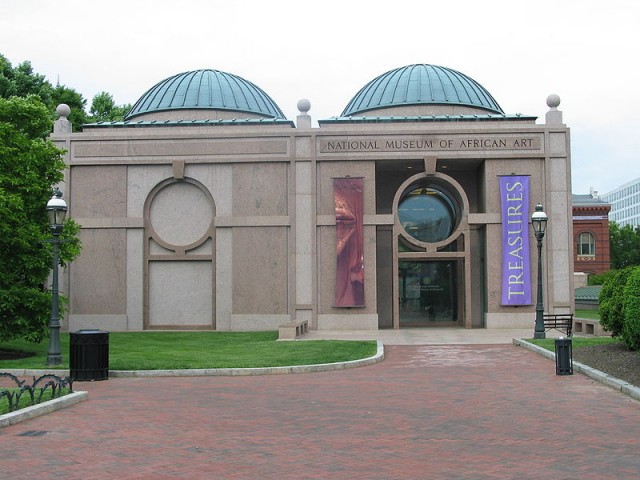
A new art exhibit, featuring works that are part of the Bill Cosby art collection, is on display at the Smithsonian National Museum of African Art from Nov. 9, 2014 until Jan. 24, 2016. The exhibit, Conversations: African and African American Artworks in Dialogue, is in honor of the museum’s 50th anniversary. The paintings and sculptures reflect more than 200 years of artistic expression.
In the 1960s, Warren M. Robbins, a State Department cultural attaché at that time, started collecting African art. By 1964, he had turned the basement of his Washington, D.C. home into a museum and opened it for visitors. His purpose was, in part, a form of outreach in light of racial and cultural tensions throughout the nation. Robbins’ museum became the Smithsonian Institution’s National Museum of African Art, and the collection relocated from his home basement to the National Mall.
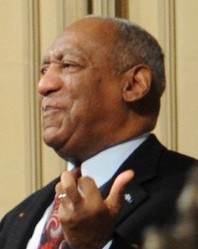 Cosby had also started collecting art in the 1960s. Already a well-known television star, he would go to the Los Angeles Brockman Gallery to see exhibits of new works by African-American artists. He made arrangements to have some of the work he had purchased displayed as part of the set where he would be filming. This would give the work national exposure on television. The Cosby collection makes up one-third of the 160 pieces in the National Museum of African Art exhibit.
The Conversations exhibit is made up of different themes including spirituality, power and politics, family, nature, and music. The different themes illustrate a wide range of expression within the same general topic, various points of view, and conversations about what a work might represent within more than one theme. Centuries, social customs, political views, religions, and economic status are a few of the complexities that make up the African and African American works of art.
The Camille O. and William H. (Bill) Cosby Jr. art collection at the Smithsonian National Museum of African Art is mostly works from the 20th century but also includes the Henry Ossawa Tanner painting, The Thankful Poor (1894). Tanner (1859-1937) was the first internationally-known African American painter. He was born in Pittsburg, PA, before the outbreak of the Civil War. His mother had escaped from slavery via the Underground Railroad and his father was a minister.

The Conversations exhibit is a dialogue of human emotions, of trials and tribulations, humor and sadness, as seen through the eyes of artists who are African or African American. For more information about the entire exhibit including the Bill Cosby art collection, the Smithsonian National Museum of African Art website is listed below.
By Cynthia Collins
Sources:
Smithsonian National Museum of African Art – Conversations Exhibit
Smithsonian National Museum of African Art – About the Cosby Collection
Henry Ossawa Tanner – Biography
Top Photo Credit: Isomorphic, photographer – Wikimedia license
Photo of Bill Cosby: U.S. Air Force photo by Master Sgt. Brandt Smith
Discover more from Guardian Liberty Voice
Subscribe to get the latest posts sent to your email.