

Lower-income, working-class areas were drastically affected by industrialization in both the 19th and 20th centuries. Lives and livelihoods were affected. Changes were eventually made to improve the squalor, poor sanitation, and dreary living conditions. At the J. Paul Getty Museum in Los Angeles, two new exhibits of photos taken over a century apart show the grit and despair of industrialization and humanity caught in its grips.
The two exhibitions – “Now Then: Chris Killip and the Marking of In Flagrante” and “Thomas Annan: Photographer of Glasgow” – are slices of life as great change was taking place and leaving some communities behind. Much like Dorothea Lange’s classic photos of the depression in the U.S., the photos are gritty shots of the reality the photographers viewed. This is the first exhibition to survey Annan’s career in the mid-1800s and the other highlights the Getty’s acquisition of works by Killip that document communities in northern England in the 1970s and 1980s.
There are over 100 photos in each exhibition, which seemed too dense and, in some instances, repetitive. However, the visuals are striking.
The choice to feature these two shows at the same time is not a random combination, according to Timothy Potts, director of the museum, noted. Annan’s shots of Glasgow buildings show industrialization’s dark side. Killip’s works look at the casualties of industrialization and communities that wound up marginalized and desperate. “They are a wonderful juxtaposition,” Potts said.
Killip In Flagrante
As noted in TIME, “Since its publication in 1988, Chris Killip’s “In Flagrante” has been hailed as a masterpiece of photojournalism – a book that not only influenced many of Killip’s contemporaries but also came to be defined, wrongly, says the photographer, as a savage criticism of Margaret Thatcher’s years as U.K.’s Prime Minister.” While hindsight is 20/20, the publication is considered to be one of the most important photo books to document the impact of societal changes on working class areas in the North.
The photographer explained that in flagrante is a legal term for getting caught in the act. His goal during the photo excursions displayed at the Getty Center was to catch real life with images that were not simplified or beautified.
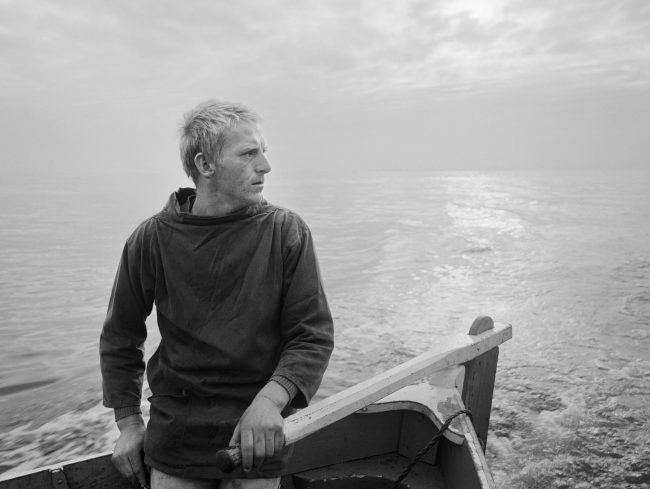
“Now Then” also showcases material from two related projects Killip, who was born on the Isle of Man in 1946, shot in the 1980s in Seacoal and Skinningrove. Those impoverished areas subsisted for years largely on either coal mining or fishing and the photos from them seem frozen in time. One shot shows a coal min with horse carts by a power plant.
At a preview event, Killip noted some fishermen in photos who died shortly after trying to eek out a living. Looking at the works, he acknowledged, “Every picture I took is a chronicle of a death foretold. It’s a moment you can’t get back.”
Annan’s Scotland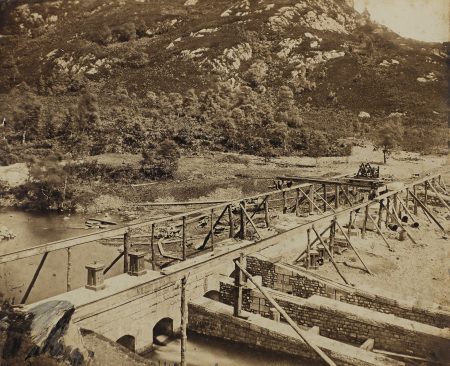
Thomas Annan (Scottish,1829 – 1887) had a prolific career as a photographer, but his shots of changes taking place in an around Glasgow are his legacy. “This exhibition seeks to highlight the breadth of his output and the extent of his contributions to the medium, which we hope will prompt further scholarship and greater appreciation for this important 19th century practitioner,” commented Amanda Maddox, assistant curator of photographs at the museum and the curator, of both exhibitions. “This exhibition is the first to explore Annan’s deep fascination with Glasgow and fully contextualize his contributions within the city’s history,” she added.
Annan witnessed (and documented) a period of great transformation as cities like Glasgow grew tremendously. The Getty show includes his photos of the overcrowded tenements set for future demolition; the construction of the Loch Katrine aqueduct to deliver clean drinking water to the city; the expansion of the River Clyde to accommodate newer, larger vessel; and University of Glasgow, founded in the 15th century, forced to relocate then because of crime and pollution.
Shot over a century apart, the Annan and Killip photos have in common the grit, despair, and changes wrought by industrialization. They will be at the Getty until August 13, 2017.
By Dyanne Weiss
Sources:
Exhibition visit May 22, 2017
Getty Museum Presents Thomas Annan: Photographer Of Glasgow
Getty Museum Presents Now Then: Chris Killip And The Making Of In Flagrante
National Library of Scotland: Thomas Annan
TIME: Chris Killip’s Celebrated Photobook In Flagrante Makes Its Return
Photo of “Leso” at Sea of Skinningrove, North Yorkshire, 1983, by Chris Killip, : © Chris Killip
Photo of “Loch Katrine Outlet,“ 1859, by Thomas Annan, lent by Glasgow Life (Mitchell Library Special Collections) on behalf of Glasgow City Council
Discover more from Guardian Liberty Voice
Subscribe to get the latest posts sent to your email.