


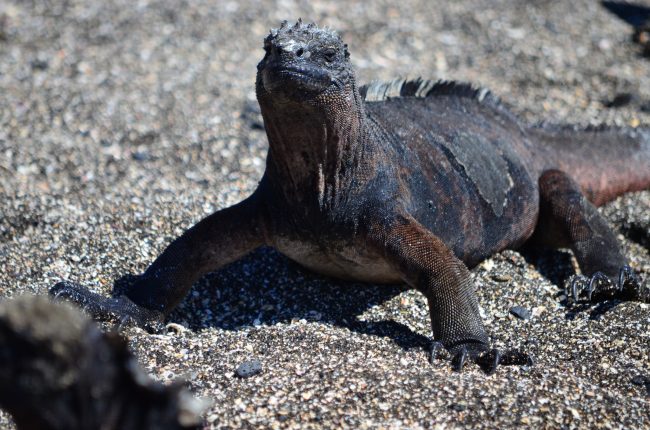
Days before New Year’s Eve and the traditional New Years Eve celebrations, Ecuador government has banned most fireworks in the archipelago. Traditionally, fireworks are deployed across Latin America during that time.
Fireworks that produce light but have no sound are not part of the ban.
Conservationists say that fireworks cause the animals on Galapagos to suffer from anxiety, trembling and elevated heart rates. These factors have changed the behavior of the animals and may affect the survival rate of some of the species.
Ecuador’s government has banned the use and sale of the pyrotechnic devices on the Galapagos Islands to protect unique fauna.
New Firework Law
The new rule bans the sale, distribution, and entry of any firework that makes a sound on the 13 main islands of the archipelago and at least 17 islets that are within 620 miles (1,000 kilometers) off the coast of Ecuador.
Lorena Tapia, the president of the Government Council of Galapagos stated that this is a gift for Ecuador and the world. The ecosystems on the Galapagos Islands are affected by fireworks.
The firework campaign to limit them on the Galapagos Islands started in 2017. Single-use plastics were banned on the archipelago earlier in 2018. Galapagos has a population of about 25,000. The Ecuadorean government has been under mounting pressure to do more to protect the ecosystems of the archipelago.
Germany
The Environment Agency in Germany has also urged people to not use private fireworks on New Year’s Eve to prevent fine dust pollution which has drastically increased as of late.
Maria Krautzberger, the head of the Environment Agency told the Rheinische Post that using fewer fireworks will cause less waste in the environment and on the street. It is also better for one’s health.
Around 4,500 tons of fine dust is blown into the air in Germany on New Year’s Eve the agency estimates. The levels at that time are higher than at any other time. In a year that is 15.5 percent of the dust emitted by cars.
Thirteen islands, seven smaller islands, and about 125 islets make up the Galapagos Islands, 600 miles (1,000 kilometers) in the Pacific Island off the coast of Ecuador. The Islands are volcanic islands located on the Nazca Plate.
At one time the islands were dubbed “Enchanted Isles.” Despite very limited resources, for thousands of years, countless species and animals have adapted to the climate and have called the islands their home. The indigenous species found on the Galapagos Islands, which includes tortoises and iguanas helped Charles Darwin develop his Theory of Evolution.
Animal Species
Galapagos has been keeping track of the species of the Island. To date there are:
- Mammals: 32 species recorded
Reptiles: 28 species recorded
Darwin’s Finches: 13 sub-species recorded
Sea Birds: 42 species recorded
Shore Birds: 34 species recorded
Water Birds: 21 species recorded
Land Birds: 49 species recorded
The Galapagos Islands have few animal species. This is due to the fact that the islands are the islands are 600 miles (1000 km) from the main continent. The ocean makes it difficult for new kinds of plants and animals to reach Galapagos.
Marine animals such as corals and green sea turtles probably came to the island by swimming of floating in the ocean in a larvae stage. Birds could have come by flying independently and are used to making long journeys.
However, most reached the island by accident. They would have to face the wind, intense sunlight, and saltwater. They also would have no fresh food or water during their trip.
Reptiles are more likely than mammals to be able to survive conditions like this. The ancestors of the animal residents of Galapagos presently are well suited for the environment.
Written By Barbara Sobel
Featured and Top Image Courtesy of Paul Krawczuk’s Flickr Page – Creative Commons License
Discover more from Guardian Liberty Voice
Subscribe to get the latest posts sent to your email.
4 Responses
Say, you got a nice blog post.Thanks Again.
Is it okay if I add you on FB?
Thanks for your practical advice on what is normally a forgotten topic. Mind if I share this with my group?
This comes across rather circular…as far as I’m concerned…