


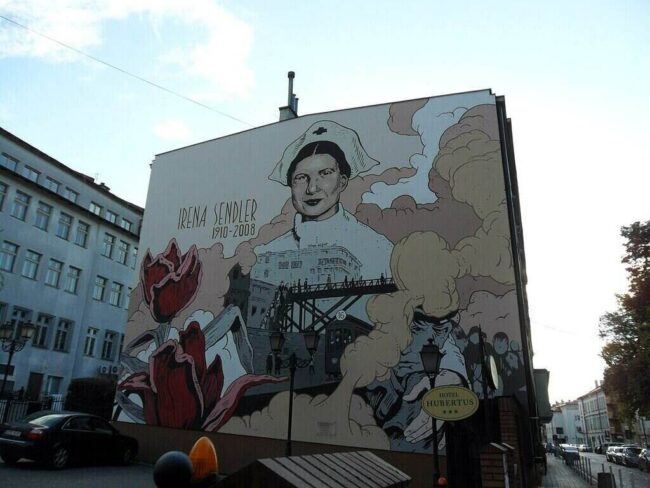
Read about any tragic event in history, and I guarantee you will discover stories of heroism fueled by compassion. The worst of us frequently brings out the best of us. This is a story of just such a woman, Irena Sendler, born on February 15, 1910.
Sendler was born in Otwock, Poland, just 15 miles southeast of Warsaw. Her father was a doctor whose patients were mostly comprised of poor Jews.
Employed as a healthcare worker, Sendler was 29 years old when Adolf Hitler executed his “blitzkrieg” against Poland in 1939. Across Poland, Hitler’s Nazi army waged an invasion, creating fear and terror.
Construction of the “Warsaw Ghetto” began immediately. Inside its walls, Hitler’s army gathered approximately 500,000 Polish Jews. As the Nazis were preparing to exterminate them, Sendler began executing her plan to save as many as possible and smuggle their children into safety.
As the Senior Administrator in the Warsaw Social Welfare Department, she was responsible for the “canteens” which existed in every district of Warsaw. In these canteens, food, financial aid, and other services were offered to the poor, elderly, orphans, and the destitute. In addition, Sendler began providing clothing, medicine, and money for the Jews. She also created fictitious Christian names for them, hoping to save thousands from certain death at the hands of the Nazi invaders.
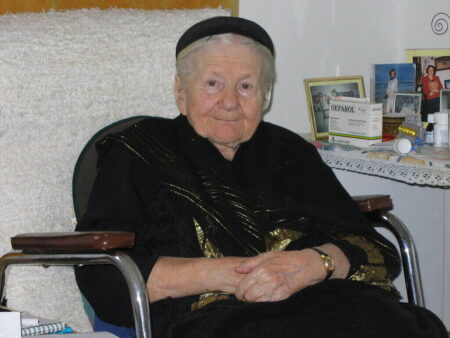
Sendler recruited at least one volunteer from each of the 10 centers who began smuggling children out of Poland in ambulances, hidden in body bags, and packed into shipping crates, taking them to safety, where they were given new names. Between 1942 and 1943, she saved more than 2,500 children.
Irena Sendler accomplished her incredible deeds with the active assistance of the church. “I sent most of the children to religious establishments,” she recalled. “I knew I could count on the Sisters.” Irena also had a remarkable record of cooperation when placing the youngsters: “No one ever refused to take a child from me,” she said.
She was the only one who kept a record of the children’s new identities, along with their birth names.
In 1943, the German invaders learned of Sendler’s actions. She was arrested and tortured, her feet and legs were broken, but she refused to give the Gestapo the names of her associates or the children. As a result, Sendler was sentenced to death and sent to Pawiak Prison.
She was saved at the last minute when members of the Polish underground bribed the guards about to execute her. She escaped, but the Gestapo never gave up their efforts to recapture her.
After the war, Sendler dug up the jars she buried, which contained the names of the children she rescued. She spent her days attempting to reunite them with family members.
Little was known about her heroic actions until the story was uncovered by four young students at Uniontown High School in Kansas. They were the winners of the 2000 Kansas state National History Day competition by writing a play Life in a Jar about the heroic actions of Irena Sendler.
Sendler received multiple honors after her story became known, including Poland’s highest distinction, the Order of White Eagle in Warsaw, Monday, Nov. 10, 2003.
She died in Warsaw on May 12, 2008, at 98.
Op-ed by James Turnage
Sources:
Life in a Jar: The Irena Sendler Project
Jewish Virtual Library: Irena Sendler 1910-2008
The United States Holocaust Memorial Museum: Irena Sendler (1910-2008)
Featured and Top Image by Emilio2005 Courtesy of Wikimedia – Creative Commons License
Inset Image by Mariusz Kubik Courtesy of Wikimedia – Creative Commons License
Discover more from Guardian Liberty Voice
Subscribe to get the latest posts sent to your email.