


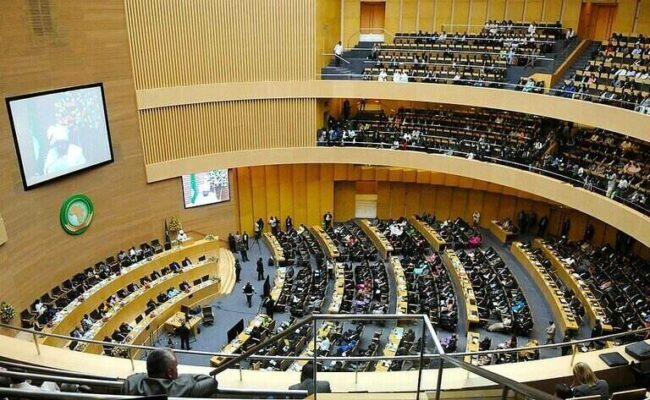
Ethiopian government officials and Tigrayan authorities officially agreed to terms in peace talks on Nov. 2, hopefully bringing about the end of the two-year armed conflict in the Ethiopia’s regional state of Tigray.
AU envoy Olesegun Obasanjo of Nigeria led the peace negotiations and helped secure a “permanent cessation of hostilities” between the two parties. The agreement, however, did not involve or mention the nation of Eritrea, which has been militarily involved in the conflict. If the agreement can stand, it will bring about an end to two years of horrific violence that has resulted in the deaths of hundreds of thousands of civilians, and the displacement of millions more. The conflict has created one of the largest ongoing humanitarian crises on Earth.
How the War Began
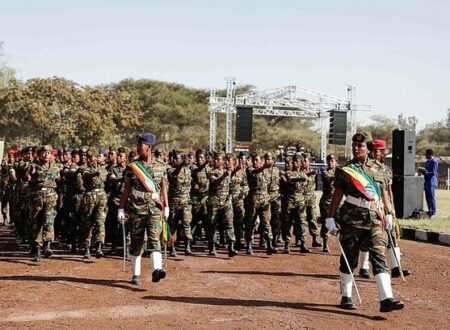
Years of tension between Ethiopia’s federal government and the Tigray People’s Liberation Front escalated to a boiling point in October 2020. Elections were delayed due to the COVID-19 pandemic, and elected officials’ terms in office were extended.
TPLF chairman, Debretsion Gebremichael, claimed these measures were unconstitutional. In retaliation, the TPLF held regional elections that very September. The Ethiopian government deemed these elections to be illegal, and cut federal funding to the region.
The TPLF considered the government’s actions to be “tantamount to declaration of war,” and on Nov. 2 Tigrayan rebel forces launched an attack on an Ethiopian National Defense Force headquarters in the Tigrayan capital city of Mekelle.
Course of the Conflict
The Ethiopian Government immediately declared a state of emergency and launched a military offensive against the rebels in coordination with the Eritrean Defense Force. The ENDF and the EDF captured Mekelle by the end of the month, and declared that their operation was now complete.

The TPLF vowed to continue fighting, and along with the Oromo Liberation Army, retook Mekelle from Federal forces in June of 2021. By July they had moved into the regions of Afar and Amhara. A year after the conflict began, the rebels captured several towns just north of the Ethiopian capital of Addis Ababa.
An ENDF and the EDF counter offensive, aided by superior air power, retook most of the regions of Afar and Amhara by December. Fighting slowed down going into 2022, with an agreed upon ceasefire starting in March and lasting until August.
Late August saw a return to fighting around the southern borders of the Tigray region. The fighting triggered several air raids and bombings of civilian population centers by Ethiopian and Eritrean air forces. In September, Eritrea invaded Northern Tigray.
The three front offensive was now overwhelming the TPLF, and in desperation they called on every able-bodied Tigrayan to take up arms and join the fight. It was the deadliest chapter in the conflict thus far, and by late October, both sides were willing to meet again in an attempt to bring an end to the fighting.
Atrocities on All Sides
The Ethiopia Tigray war is considered to be one of the bloodiest conflicts in recent years. Fighting and famine have combined to cause an estimated death toll of over half of a million people in the two year war. Tens of thousands were killed just since the fighting had resumed in August.
Horrific Acts committed by the TPLF against non-Tigrayan ethnic groups in the region are near tantamount to genocide. A report by the Ethiopian Human Rights Commission detailed an event in the town of Maikadra, in which peoples perceived ethnically as Amharas and Wolkaits were slaughtered in the streets. According to the EHRC, local police and militia guarded all exits from the town and along with groups of Tigrayan youth, “killed hundreds of people, beating them with batons/sticks, stabbing them with knives, machetes and hatchets and strangling them with ropes.”
The report indicates that the majority of these killings in Maikadra were of men, but women and girls have suffered extraordinarily in this conflict as well. A recent report by Amnesty International accuses the Ethiopian Government forces and their allies of grave acts of sexual violence against Tigrayan women. The report accounts these appalling acts and their effects with the following statement:
“In the majority of cases investigated for this report, women and girls were gang raped. The victims included children and pregnant women, with several of them subjected to additional acts of torture, including being raped with objects, being beaten, threatened with the intention of humiliating them, and being denied assistance for the injuries sustained. Several were held captive in sexual slavery for up to several weeks.”
A Lasting Peace?
The original agreement on Nov. 2 did not include or even mention Eritrea and their involvement in the conflict, and reports indicated the EDF was still killing and looting in Tigray as the peace talks were being held.
A new agreement between sides was reached on Nov. 12 to begin implementation of the truce, including disarmament and uninhibited humanitarian aid distribution to Tigray. The new agreement, once again, did not include Eritrea or the EDF by name, but did state that, “Disarmament of heavy weapons will be done with the withdrawal of foreign and non-ENDF forces from the region.” This was the first time the Ethiopian Government had admitted to any foreign military’s involvement in the conflict, and is considered to be a “significant acknowledgement,” according the US Department of State.
While signs of a lasting peace are on the horizon for the Tigray region, recent violence in the country’s largest region of Oromia means Ethiopia could be sliding into a new internal conflict. According to the AP, fighting between the ENDF and the Oromo Liberation Army resulted in the killings of “several dozen” people in the past week.
Though the OLA had formed an alliance with the TPLF last year, this new conflict seems to be entirely separate from the recently ended war.
Written by Seth Herlinger
Sources:
Aljazeera: Ethiopia: Government, Tigrayan forces agree to end two-year war
Aljazeera: Two years of Ethiopia’s Tigray conflict: A timeline
Amnesty International: Ethiopia: “I don’t know if they realized I was a person”: Rape and sexual violence in the conflict in Tigray, Ethiopia
AP News: Witnesses say new fighting in Ethiopia’s Oromia kills dozens
BBC News: Ethiopia’s Tigray conflict: Truce agreed
Ethiopian Human Rights Commission: Rapid Investigation into Grave Human Rights Violation Maikadra – Preliminary Findings
Reuters: Ethiopia combatants sign deal to start implementing truce
Reuters: Nigeria’s Obasanjo clinches unlikely Ethiopia truce
U.S. Department of State: Briefing with Senior State Department Official on the Situation in Ethiopia
Top image courtesy of U.S. Department of State‘s Flickr page – Public Domain
Featured and First inset image by Office of the Prime Minister – Ethiopia‘s Flickr Page – Public Domain
Second inset image by NordNordWest courtesy of Wikimedia – Creative Commons License
Third inset image courtesy of Rod Waddington‘s Flickr page – Creative Commons License
Discover more from Guardian Liberty Voice
Subscribe to get the latest posts sent to your email.