

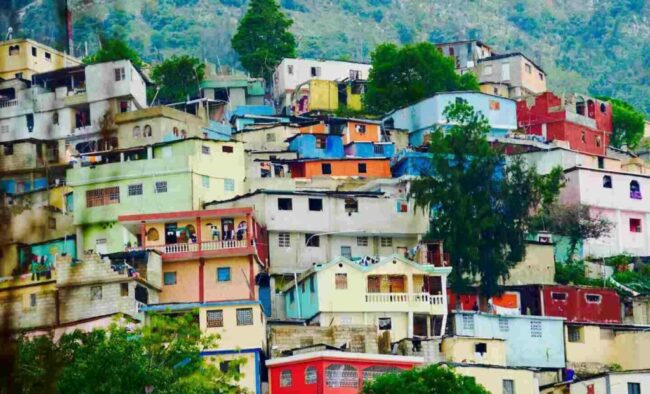
Sixty percent of Haiti’s capital city, Port-au-Prince, is currently under control of ruthless, violent gangs that are killing, raping, and kidnapping the people of Haiti with abandon, according to United Nations’ resident and humanitarian coordinator in Haiti, Ulrika Richardson.
On Nov. 28, Haiti’s ambassador to the U.S., Bocchit Edmond, formally requested, “an international presence to help confront the gangs.” The international community has intervened in Haiti in the past, against the wishes of many Haitian citizens. But as the situation in the island nation continues to deteriorate, support for outside intervention has increased.
Gangs Terrorize the Civilian Population
The gangs are dividing up territory in Port-au-Prince, and fight constantly for control of different areas. On Tuesday Nov. 29, more than 12 people were killed and several houses set ablaze during a rival gang fight over territory in the small town of Cabaret, just outside of the capital. According to the UN, the gangs killed nearly 1,000 people in and around the capital from January to June of this year. Over 1,000 were kidnapped between January and October.
Kidnapping is a growing industry for the gangs, who charge ransoms for their captives, anywhere from $200 to $1 million. Victims are often returned alive is their ransom is paid, but not before being made to suffer cruel acts of torture or rape.
“Men are beaten and burned with materials like melted plastic, women and girls are subject to gang rape. This situation spurs relatives to find money to pay the ransom,” explains Gedeon Jean, director at Haiti’s Centre for Analysis and Research in Human Rights. “Sometimes kidnappers call the relatives so they can hear the rape being carried out on the phone.”
The President Is Dead
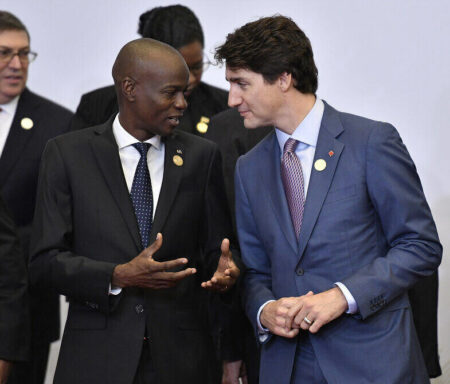
In Haiti, it’s not just the average citizens who are victimized. Haiti’s President, Jovenel Moïse, was assassinated in his home on July 7 of last year. Moïse was shot 12 times from his head to his torso, falling dead at the scene. His wife was also shot in the altercation, but survived the attack.
The assailants were ex-Colombian military, and are understood to have been hired by Christian Emmanuel Sanon, a Haitian national and doctor. Sanon had been living Florida, but returned to Haiti with intentions to supplant President Moïse, according to Haitian police chief Léon Charles.
President Moïse consolidated power in Haiti’s government prior to his death, stripping the country’s parliament of much of its ability to govern and function. Because of this, Moïse’s death opened a power vacuum left only to be filled by the gangs.
A Failed State
With a dead president, a non-functioning parliament, and an unelected, thoroughly unpopular prime minister, Haiti faces several coinciding crises with no direction or leadership. In addition to the previously mentioned gang warfare, the country is dealing with a resurgence of cholera, lasting damage stemming from last year’s 7.2 magnitude earthquake, and nearly half of Haiti’s population is facing acute hunger or famine.
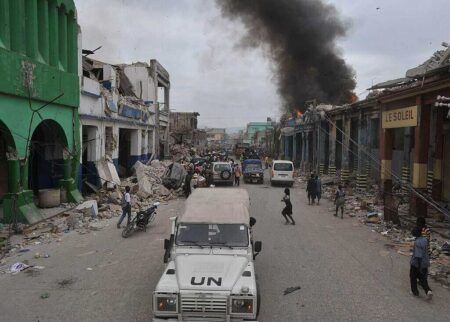
Categorized for some time as a fragile state, Haiti should now be considered a “failed state”, argues Boston University’s Jorge Heine, Research Professor at the Frederick S. Pardee School of Global Studies. The issues at hand for the people of Haiti are terrible as is, but they are being exacerbated by the gangs and the power they are able to wield in the face of the government.
An Avoidable Fuel Crisis
From mid-September to the beginning of November, a coalition of nine gangs in Port-au-Prince known as “G9”, took over and blockaded the country’s main fuel terminal, bringing many of the essential businesses and services, who often rely on diesel-powered generators, to a sudden stop.
Garbage collection, water pumps, grocery vendors, health clinics, and hospitals were all affected and many forced to stop operating without power. These conditions led to the country’s first outbreak of cholera in 10 years, an illness that much of the world has eradicated with modern sewage and water treatment. Police were able to retake control of the terminal by Nov. 4 after heavy fighting with the gangs.
Jimmy “Barbecue” Chérizier
The so-called G9 gang coalition is led by Jimmy Chérizier, a former police officer who now goes by the alias, “Barbecue”. Chérizier was fired from his role with the police and a warrant was issued for his arrest after he allegedly participated in the 2018 La Saline Massacre, in which 71 civilians were killed by gang members.
Following the massacre, Chérizier expanded his power and influence as the leader of the Delmas 6 gang, all while receiving money and resources from corrupt members of President Moïse’s government. Prior to the president’s death, 50 percent of Delmas 6’s funding was coming from the government, according to Insight Crime.
Chérizier has denied involvement in the La Saline and many other atrocities that have been attributed to him, describing himself not as a criminal, but as a revolutionary. “I’m not a gangster. I never will be a gangster,” he said in an interview with Al Jazeera. “It’s the system I’m fighting against today. The system has a lot of money; they own the media. Now they try to make me look like a gangster.”
In June of 2020, Chérizier announced the formation of G9 in a video uploaded to YouTube, presenting the new coalition as a way to bring peace back to Port-au-Prince.
Despite his promises, the formation of G9 gave the member gangs unparalleled power in the capital, as the group expanded territorial control through violence and intimidation.
Actions of the International Community
In late October 2022, the UN Security Council unanimously voted to press sanctions on Chérizier, freezing his assets abroad and instituting travel bans and arms embargos in numerous countries. The U.S. and Canada imposed earlier sanctions on several Haitian politicians who had extensive links to the gangs and their drug trafficking operations.
“These gangs and their supporters terrorize vulnerable populations in Haiti with impunity,” the Canadian foreign ministry said. “They are committing unspeakable violence, including widespread sexual violence, against affected populations and impeding the delivery of critical services.”
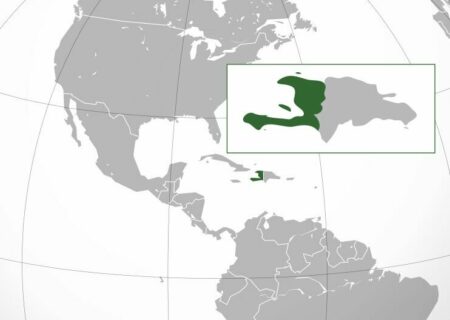
The UN Security Council also debated sending armed forces to restore peace and order in Haiti. The security mission was proposed by the U.S. and Mexico, but was set aside once Haitian police retook control of the Varreux fuel terminal.
The idea of foreign intervention is fairly unpopular in Haiti, and many countries are skeptical, thanks in large part to the United Nations Stabilization Mission in Haiti (MINUSTAH) peacekeeping force which operated from 2004 to 2017. MINUSTAH has faced a great deal of criticism, including partial responsibility for the country’s last cholera outbreak in 2010.
Many nations are also skeptical of a peace keeping mission in Haiti. Representatives from Russia and China expressed concerns about the effectiveness of such an operation.
“Will sending such a rapid action force to Haiti receive the understanding, support and cooperation of the parties in Haiti? Or will it face resistance or even trigger violent confrontation from the population?” asked China’s representative.
Despite the skepticism, Haiti’s U.S. ambassador is searching for outside help with increasing urgency, and calling for a “coalition of the willing for Haiti.”
“The situation has not changed, the opening of the fuel terminal did not bring a solution to the problem,” said Edmond in an interview with Reuters. “If you don’t have an international presence to help confront the armed gangs, the situation will become even more dire.”
Written by Seth Herlinger.
Sources:
Aljazeera: Who is Haiti’s sanctioned gang leader Jimmy ‘Barbecue’ Cherizier?
AP News: Mayor: More than 12 killed in Haiti as gangs vie for control
BBC News: Haiti: Inside the capital city taken hostage by brutal gangs
BBC News: Haiti president’s assassination: What we know so far
Boston University: Heine Offers Thoughts on the Current State of Haiti
Insight Crime: Jimmy Chérizier, alias ‘Barbecue’
Reuters: Canada sanctions Haitian gang leader over humanitarian crisis
Reuters: Haiti police end gang blockade of fuel terminal, sources say
Reuters: Haiti still needs foreign strike force to confront gangs, official says
Reuters: U.S., Mexico call for Haiti security mission to confront gangs
Top image courtesy of Heather Suggitt‘s Unsplash page – Creative Commons License
First inset image courtesy of Ministerio de Relaciones Exteriores‘ Flickr Page – Creative Commons License
Second inset and featured image by Agência Brasil, Courtesy of Wikimedia – Creative Commons License
Third inset image by Connormah, Courtesy of Wikimedia – Creative Commons License
Discover more from Guardian Liberty Voice
Subscribe to get the latest posts sent to your email.