


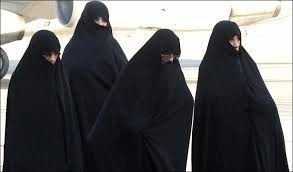
Islamic women’s rights over the decades has changed, allowing Muslim women to have the freedom to live as a dignified human being, according to the Quran.
In the early days before Islam, families did not celebrate the birth of a girl as it was considered more of a tragedy than a celebration. Female infantile killings were uncontrolled during those times, and the family made the decision without permission to either have the child killed or protect the child who of course would remain a problem for them. A verse from the Quran condemned this action against female infants.
A woman was considered a slave or bought as property in the days before Islam. Women were unimportant; they had no rights, no independence, could not own property and were not worthy to inherit. Women were used as a pawn for one reason only, and discarded like an old football, when they were no longer able to perform the requirements of their husband or family. All marriages were prearranged, and women did not have any support in this matter. The family made the decision and a woman did not have any rights to either accept or reject the instructions of her father.
During those early days, it was no better in European countries, India, or Egypt for the Muslim women. They were all treated no better than slaves. Shamefully, women were regarded as subspecies between humans and animals.
It was more than 1400 years ago that the compassionate and all merciful Allah (SWT) gave the Arab women rights. Finally, rights were established for women and taught from the perfect example of the Prophet Muhammad (SAW). In the Quran, it is stated, “Who created us and Who alone knows what rights are best for our female natures.” At length, the Muslim women were respected as human beings rather than subspecies.
The Prophet Muhammad (SAW) said to recognize that a woman was created with the soul of the same nature as man, which gave women the right to be considered equal as a human being and as a partner in this life.
The Islamic law was changed and stated that a woman is an independent unique individual in her own right. She must show the same responsibility toward herself, toward all other human beings, and toward Allah (SWT), and it is stated that either a reward or punishment will be given in the hereafter without discrimination of the female gender.
Some other rules attached to Muslim women are their right to go outside of their home, and the law that must not change her family name when an agreement of marriage is accepted. More importantly, Muslim women now have the right to accept or reject a proposed marriage and can now request a divorce, if necessary.
Education is no longer banned, and Muslim women have the right to seek knowledge. In fact, women are encouraged to gain knowledge and to continue to learn throughout their lives.
Women are still required to keep their home intact, but they do have the right to go to work or visit relatives and friends, providing their spouse or guardian is aware of the arrangement. They are still required to cover their heads and speak according to Islamic guidelines.
The laws of yesteryear no longer apply; and today, Muslim women are respected as individuals, and can live a life without condemnation.
Written by Laura Oneale
Source 1
Discover more from Guardian Liberty Voice
Subscribe to get the latest posts sent to your email.
5 Responses
Did the author actually research any real Muslim women in the Middle East and French and English Islamic Sharia controlled communities?
I don’t understand how this article is so positive about Muslim women enjoying their rights “now”. what the article states is that Islam’s arrival changed the status of women in Arabia, but ever since, the rights of women in the written Sharia Law are not changed, they are pretty much still the same despite all of the Islamic Feminism movements. Also, how could you look at it so positively and explain how women can leave the house to get education and visit family and friends when the end of your sentence is “if her husband is aware of the arrangement”. It’s just sad to see how brainwashed we are as muslim women, not knowing the difference between Divine words and Interpretations of it.
i think that it is unfair that they treated the women like this and they deseve equal right like all other civillians in the world
Move to egypt if you think their women are better and their system is so good. I bet that you would not have any better luck there. Because, what father would want you married to his daughter. And why SHOULD a woman be your slave. Clean up your own house and get your own damm decent job. Money has always been an issue. In every century and every culture, wealth counts. poverty =starvation. Men actually support their women i these cultures. Get a job. You might find that women suddenly have more respect.
Well the way i look at it is that women years ago were very committed to their men and Accepted their men for who they were when money wasn’t an issue that many of them want nowadays, and now with their Change in attitude since many of them really do think that they’re all that, but they’re Really Not. And the ones with their high paying job are certainly the Worst. Very Obvious why many of us good men out there can’t meet a good woman anymore now, and we’re Not To Blame.