


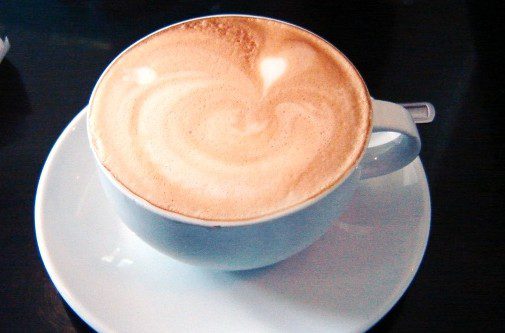
When someone grabs a cup of coffee while getting ready in the morning an rushing off half awake, it can be hard to get by without spilling a bit on the way. That is why commuter cups are so popular. But, something other than the lid would help save someone or his or her outfit from the hot liquid – making it a frothy, foamy cup. Lattes are less likely to spill because of the bubbly milk foam.
Any liquid filled container carried, once set in motion, has a tendency to slosh, whether a pail of water, cup of Joe, mug of ale or bowl of soup. However, not every liquid seems to spill the same way. It turns out that those with form or bubbles, like lattes, do not splash over the sides of the container as readily as those without. The observation that a beer or latte is less likely to spill than juice or tea lead a team of researchers from Princeton to study the phenomenon.
The results of their research, published in the Physics of Fluids, seems to indicate that liquids with a little foam on top (like lattes) are less prone to spilling than regular liquid sans foam. Adding the bubbles—like the milk foam layer in lattes or cappuccinos — significantly reduces the possibility of the liquid sloshing over.
The Princeton scientists began their research into the phenomenon by constructing a narrow rectangular container made of glass. They filled it with water, added glycerol (which helps keep fluids thick), and some dishwashing detergent to create the bubbles. They then subjected the container was then subjected to two different types of movement that could commonly happen to test the reaction – a side-to-side wave-like motion and a steady back and forth rocking. The research team recorded the motions of the liquid using a high-speed camera.
As they shook the container, the bubbles expanded and the layer was heavier. Reviewing the recording showed that layers of foam did decrease the waves created in the fluid. In fact, the researchers noticed that about five layers of bubbles resulted in a height by which the liquid could splash that was 10 times lower than with less foam. The foam made the fluid more stable.
In technical terms, the scientists determined the foam contributed a “damping coefficient through viscous dissipation” on the container’s walls. They concluded that the bubbles had a significant impact on how energy was diffused along the walls of the glass container. The layers of foam did not move as much as the water so they acted a slight barrier, so the test liquids like lattes were less likely to spill.
That’s probably because the foam is diffusing the energy of the slosh by way of friction against the glass container. Layers of foam on top don’t really move or come into contact with the container, so they’re not sharing the energy burden.
The news that lattes are less likely to spill than regular coffee may give commuters some ideas of what to order next time they stop at Starbucks on the way to work. The scientists also hope that the information leads to development of industrial uses for foam in transporting other fluids, like gas in tankers and other hazardous liquids.
By Dyanne Weiss
Sources:
Physics of Fluids
TIME
Washington Post
The Blaze
Discover more from Guardian Liberty Voice
Subscribe to get the latest posts sent to your email.
One Response
whoever edited this article did a terrible job; there are countless errors!