


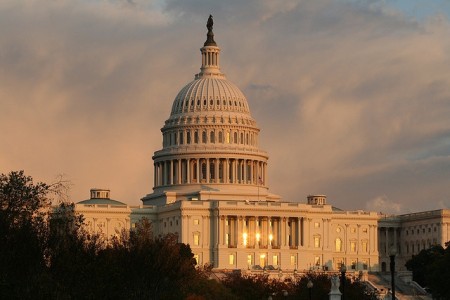
United States Senate leaders are concerned about Iran negotiations, and state that U.S. officials leading the talks are in a weak position to make any demands. The talks are expected to miss Tuesday’s deadline for completion, and will likely continue through July 5.
The reason for concern, according to Senate Foreign Relations Committee Chair Bob Corker (R-TN), is that a deal with the Middle Eastern country would be such a historical moment for the Obama Administration that the fear is negotiators will cross lines that would be bad for the United States – and the world – just to achieve a deal. “I have become more and more concerned with the direction of these negotiations and the potential red lines that may be crossed,” Corker said.
Congress, with strong support from the United States Senate, laid down a “red line” earlier this year with a bill authored by Corker, giving Congress authority to approve or disapprove any final deal stemming from the talks with Iran and six other world powers. The bill was reluctantly signed by the President, after he could not garner enough Democratic support to make a veto a plausible effort in killing the bill.
Part of the stipulations various U.S. lawmakers, including those in the United States Senate, have insisted on is that Iran sanctions are not to be lifted before the country begins complying with the agreement. Part of compliance revolves around security checks on nuclear facilities. Lawmakers, especially those in United State Senate on the foreign relations committee, also want verification to be tough, with inspectors sent to visit nuclear facilities in Iran anywhere and at any time.
Those in the United State Senate also wants Tehran to release past military dimensions of the nuclear program. That standard came into play after U.S. Secretary of State John Kerry relaxed the stance of the United States, and said Iran would not budget on release of such information. Such a relaxed attitude coming from Kerry is one factor in the reasoning why United State Senate leaders are concerned about Iran negotiations.
Lawmakers in the United States Senate are also facing significant lobbying efforts from pro-Israel groups, including AIPAC and J Street. AIPAC believes the proposed pact is “fundamentally flawed” and J Street is rebutting statements from proponents of the deal with its own campaign. Israeli leaders, particularly Prime Minister Benjamin Netanyahu, have spoken out against any proposed deal with Iran over the past two years in which the talks have been ongoing.
The problem, according to those involved in the negotiations, is that Iranian officials refused to compromise on any aspects of the proposal. That fact is leading those like Corker in the United States Senate to believe that America is chronically in a weakened position for negotiations.
The negotiations are also disappointing to those hoping they would include demands to release Americans, specifically Pastor Saeed Abedini. There are three being held in Iranian prisons at this point in time, and FBI agent Robert Levinson has been missing since 2007 after he vanished during a visit to Kish Island. Officials believe he is also in prison, although Iranian officials deny this. Other Americans left in Iranian prisons include former Marine Amir Hekmati, and Washington Post correspondent Jason Rezaian.
U.S. officials in the Obama Administration said they would not include release of the Americans in the Iranian negotiations, because the hostages are not correlated to nuclear capabilities. One official said one issue simply is not related to the other.
The United States Senate feels differently; it passed, with a unanimous vote, a resolution in May calling for the immediate release of the three known American prisoners in Iran and for Iranian leaders to help locate Levinson. Even with the passage of resolutions and drawing of boundaries, United States Senate leaders remain concerned about Iran negotiations.
By Melody Dareing
Edited by Chanel van der Woodsen
Sources:
Yahoo Finance: New Concerns that Obama Will Cut a Bad Deal with Iran
Reuters: U.S. laws down ‘red lines’ on Iran nuclear deal
Thomas Reuters Foundation: U.S. steps up warnings against ‘weak’ Iran deal
Photo Courtesy of Eric E. Johnson’s Flickr Page – Creative Common License
Discover more from Guardian Liberty Voice
Subscribe to get the latest posts sent to your email.