


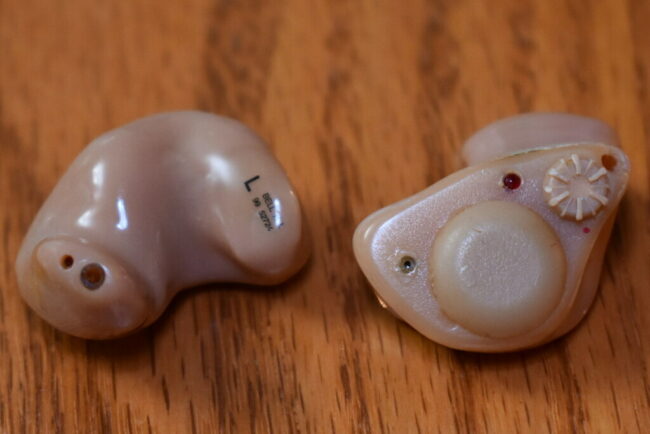
Hearing aids are small devices that you wear in your ear and around the ear to help make some sounds louder for those who can not hear. So that a person with hearing loss can communicate and listen. This also allows people to participate more fully in daily activities, like watching movies with the family. But watching movies and television shows isn’t the only issue people face. People who rely on hearing aids can be left alone. In case of fires or break-ins, they need to be able to hear what’s going on around them. It can also affect their work, causing issues with miscommunications or misunderstandings. Sound is really something we don’t appreciate until we lose it.
Those who are born hard of hearing or deaf, learn a different set of skills for everyday life. But that’s not the case for everyone. It can be hard to learn those skills as an elder or someone who is losing hearing. Hearing aids can cost as much as $6,000. This can be an issue for low-income residents or even people who are on a fixed income.
That amount of money isn’t something that everyone can pull out of their pockets with ease. So it is much easier to just go without this need and can cause serious issues as stated before. The wait for hearing aids may just be over and changing the lives of Americans.
Thousands and thousands of other Americans’ wait may be over. Adults throughout the United States to moderate to severe hearing loss will be able to buy over-the-counter hearing aids for the first time on Monday. Those under the age of eighteen or who suffer from significant hearing loss will still need a doctor’s prescription.
What Is Happening
President Joe Biden signed an executive order in July to increase innovation; it encouraged the US Food and Drug Agency to allow over-the-counter, prescription-free hearing aids, which even the FDA announced in August. The transition welcomes possibilities that should be less costly, if not better.
Only about 16% of the thousands of millions of individuals with hearing loss actually use a hearing aid, according to the National Institute on Deafness and Other Communication Disorders. The number of individuals who struggle with hearing loss is significant. Hearing loss in both ears affects approximately 1 in every 8 people in the United States alone. From the ages 12 and up, the rate increases significantly with age. Hearing loss affects about 25% of people aged 65 to 74, and it rises to half around the age of 75.
The More Hearing Aids The Better
A 2020 study published in the medical journal JAMA showed that individuals spend an average of $4,000 out of pocket for devices for both ears. Prices may vary: depending on the technology, some can pay up to $6,000 per ear, and large retailers may sell a pair for almost $1,400. The FDA’s decision to approve over-the-counter hearing aids seems to have no effect on how the devices are covered. While most private insurers cover treatment after a limb loss or even the cost of Viagra, most do not cover hearing aids. Most Medicare plans would not cover them either. Roughly half of state Medicaid programs do. Until relatively recent times, five companies controlled 90% of the global hearing aid market. Due to this level of consolidation, there was little competitive pricing.
Many businesses are expected to enter the marketplace as a result of the change. According to experts, existing manufacturers will develop lower-cost OTC devices in addition to their current offerings. Hearing aids are now available or will be available soon at Walmart, Walgreens, Best Buy, CVS, and Hy-Vee, according to the White House, with some models costing as little as $200 for a pair.
Sony offers a few models that come with an app that allows users to customize settings and find additional support. The CRE-C10 costs $999.99 and has a battery life of up to 70 hours when used continuously. The CRE-E10 has an earbud-like design and a rechargeable battery; it can stream music or audio via Bluetooth. It will cost around $2,000 on the Sony website, as well as, on Amazon, Best Buy, and other retailers. Bose also collaborated with Lexie Hearing to offer the B1 model for $899 per pair. The B2, which costs $999, adds a rechargeable battery that can last up to 18 hours. Both models are Bluetooth-enabled, can be tuned by the wearer, and pair with a mobile app for support. They’ll be available on the internet, at drugstores, and in stores like Best Buy.
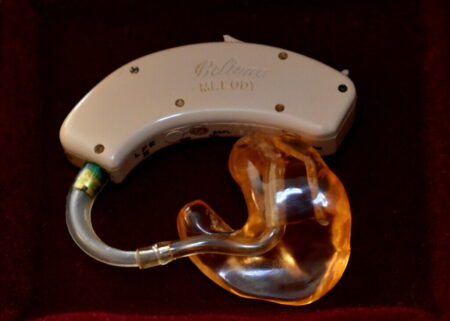
Best Buy stated nearly 300 of its stores will offer a “hearing experience,” which will include up to 10 over-the-counter hearing aids and PSAPs, or personal sound amplification products. Those improve the sound but do not have to meet FDA standards, unlike hearing aids, which must meet the FDA’s stringent labeling, manufacturing, and safety requirements, as do other medical devices.
Why This Is Important
Hearing aids are not just nice to have; they are necessary for both physical and mental health. According to studies, people with hearing loss who do not wear hearing aids are more likely to report poor overall health and are less likely to leave the house or exercise.
There is a link between hearing loss and general frailty and an increased risk of falls, which are the second leading cause of unintentional deaths worldwide, according to the World Health Organization. A number of studies have also discovered a link between hearing loss and psychosocial health. As well as poor mental like depression, loneliness, and isolation, as well as dementia. This should allow companies like Samsung, Apple, and Google — which are already producing innovative earbuds — to enter the market. They simply couldn’t.
What We Should Be Looking For In Hearing Aids
If you plan to purchase an OTC hearing aid, Kelley recommends reading the return policy. The FDA did not require companies to provide one, as Kelley’s group advocated, but any return policy should be clearly stated on the package. Check how much time you have before you have to return them. Hearing aids are not like glasses; it can take up to four weeks for your brain to adjust to hearing in a new way. People can now check with their insurance companies to see if they qualify for any payment reductions. Helping people be able to hear life a lot better.
By: Zaylah De La Torre
Sources:
CNN: A ‘game-changer’ for millions of Americans: You can now buy hearing aids over the counter By , CNN
NPR: What to know now that hearing aids are available over the counter By: JOE HERNANDEZ
People: New Over-the-Counter Hearing Aids a ‘Game Changer’ for Millions of Americans It’s thought that 90% of the U.S. population with hearing loss could benefit from the introduction of over-the-counter hearing aids By Brenton Blanchet
ABC News: Over-the-counter hearing aids available in US for 1st time Nearly 30 million Americans suffer from some degree of hearing loss. By Emma Egan, Justin Gomez , and Morgan Winsor
Discover more from Guardian Liberty Voice
Subscribe to get the latest posts sent to your email.