


Recent Discoveries
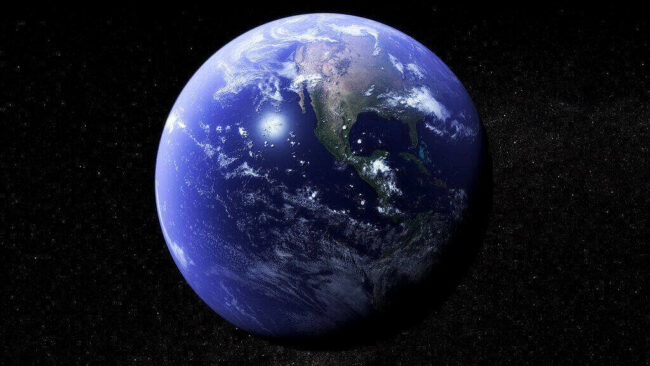
Researchers have found that a new supercontinent “Amasia” would form in the next 200-300 million years as the Pacific Ocean begins to close. Scientists have stated that the Arctic Ocean and the Caribbean Sea will disappear and Asia and America will crash into each other.
At Peking University in China and Curtin University in Australia, they have been using a supercomputer simulation to conduct research. The simulation is used to show how supercontinents form. Research has shown that the Pacific Ocean is slowly shrinking at around one inch per year. Australia is drifting towards Asia at a rate of seven centimeters per year. Eurasia and America are both moving at slow rates toward the Pacific Ocean.
Using the supercomputer simulation, scientists were able to show how the tectonic plates are expected to move. Research has demonstrated that it is likely for the Pacific Ocean to close in less than 300 million years, debunking other scientific theories. The simulation has also shown how due to the fact that the Earth has been cooling for billions of years, the strength and thickness of the tectonic plates have declined.
Formation of Supercontinents
For the past, two billion years, the continents on Earth have collided and they form a supercontinent every 200-600 million years. This process is known as the supercontinent cycle. Dr. Huan Chang, who was the lead author in a study that was published in the National Science Review, suspects that means that the continents are due to come together in another couple hundred million years. Although scientists are still trying to understand the supercontinent cycle on Earth.
Researchers have stated that supercontinents on Earth are believed to form in two greatly different ways. Those two ways are known as introversion and extroversion. Introversion is when internal oceans from previous supercontinents breaking up are closed. Extroversion on the other hand is the closure of a previous super ocean.
The Pacific Ocean is what’s left of the Panthalassa ocean, which formed 700 million years ago when the previous supercontinent broke apart. It is the Earth’s oldest ocean and has steadily been shrinking from its maximum all the way to prehistoric times.
Previous Theories Of Future Supercontinents
Christopher Scotese was an American geologist and in 1982, he was one of the first scientists to speculate about a future supercontinent. He named it Pangea Proxima, as he expected it to be very similar to the 200 million-year-old landmass Pangea. Later in the 1990’s Roy Livermore, a British geophysicist, theorized that all landmasses will unite from pole to pole. He named this Novapangae. Then once again in 2016, American researchers proposed Aurica. This theory was very similar to Novapangae but it would cluster around the equator instead.
No matter what previous model theory thought, it was assumed that the Atlantic Ocean is getting wider by roughly four centimeters each year. The ocean would reach a critical size until it eventually starts to close again. However recent studies might prove otherwise.
Predictions of Amasia
As of Amasia, the exact shape is highly up to speculation. Experts believe that the supercontinent is going to form on top of the Earth, eventually slumping south of the equator. It is thought that Antarctica will stay isolated near the South Pole if this does end up happening.
The name Amasia was given because some believe that it will be the Pacific Ocean closing, rather than the Atlantic or the Indian Ocean, when America and Asia collide. Australia is also thought to play a role by first crashing into Asia and then combining with America when the Pacific Ocean closes.
According to Professor Zheng Xiang Li, also from Curtin’s School of Planetary Science, the Earth is expected to look extremely different. The sea level is expected to be way lower, along with the interior becoming very arid and extremely high temperatures. Research has also shown that more earthquakes will be expected. He also states how it will be fascinating to think about what world life will be like in 200-300 million years. Especially since the world now is made up of many different continents with many different cultures.
Written by Alyssa Calderon
Sources
NDTV: Scientists Say New Supercontinent “Amasia” Will Form When Pacific Ocean Disappears
Forbes: In 200 Million Years There Will Be Only The Supercontinent Of ‘Amasia’ On Earth, Supercomputer Simulation Concludes
CNN: Next supercontinent may form when the Pacific Ocean disappears
SciTech Daily: Behold! The World’s Next Supercontinent, Amasia
Top and Featured Image Courtesy of Kevin Gill Flickr Page – Creative Commons License
Inset Image Courtesy of gail Flickr Page – Creative Commons License
Discover more from Guardian Liberty Voice
Subscribe to get the latest posts sent to your email.