

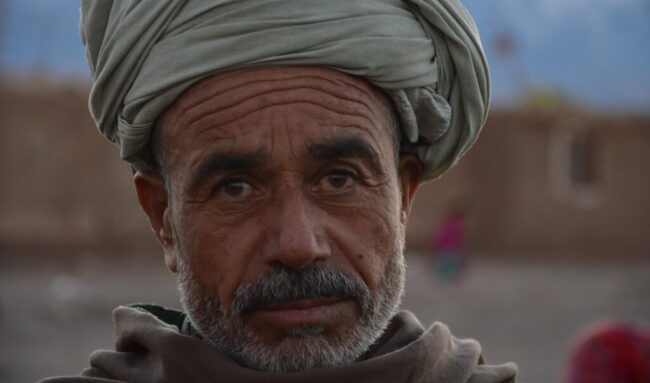
Internal displacement is a phenomenon in which people are displaced from their homes and travel to a different place within that nation. This happens for a variety of reasons, violence, climate disasters, imperialism, gross violations of human rights, and many others. These people are just like externally displaced refugees, however, at times they aren’t seen as the same. The reason why is because of the fact they did not travel outside the country. For example, many refugees were created during hurricane Katrina, however many of them moved to different states in America rather than outside the U.S. The same idea applies to nations all over the world. This can typically be seen in nations that are already unstable.
Infrastructure
Destabilized and exploited nations usually don’t have the infrastructure to deal with something like a hurricane. If they do, internally displaced persons can be created through things like religious persecution or racialized violence. An example of this is Black Americans moving out of and staying away from sundown towns. Sundown towns are places in America where it isn’t safe to exist as a Black person at night. An even greater example of this phenomenon is the Native Americans during manifest destiny. The Indigenous populations of America were forced to move a lot throughout American history because they needed to escape colonial violence. This is a great example of how racialized and political violence can create internally displaced refugees.
Natural disasters
Like regular refugees, internally displaced refugees sometimes leave their homes because of natural disasters. Natural disasters are becoming more common as a result of the climate crisis. This has a direct result in creating more internally displaced refugees. This as a whole amplifies the severity of the world refugee crisis. As people leave from one place to another because of the climate, many places end up looking like ghost towns. The devastation of an area by a natural disaster is pervasive.
If a volcano spits up lava on an island, it could be very bad news for everyone nearby. This is relevant specifically to coastal places. Rising sea levels could spell death, destruction, and the loss of many people’s way of life. People that previously fished on the shoreline for decades are forced to move because of rising sea levels. Humanitarian organizations may sometimes not be able to reach the internally displaced people who need their help because they are out of reach. However, humanitarian organizations are not the only ones who can help.
The State
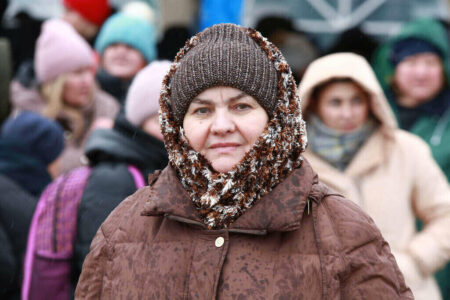
The government’s that these people live under could help and mediate the problem. Sometimes that government simply doesn’t want to help the internally displaced population. They could be a part of a racial minority that the government in question regularly discriminates against. The government may be too corrupt to have any funds for people that need help.
That government could be ruled under an American state-sponsored dictator that is only there to enrich the leader and the United States. In any of these cases, the odds of the refugees getting hello are very slim. The reason why is that it would take a mass-scale movement to fix any of those problems.
The role of the state in the situation of displacement is quite evident. The state as a tool of violence, power, and control is uniquely able to both oppress and heal at the same time. Yet, there are still internally displaced persons.
There are many reasons for this reality. One of them as mentioned earlier is that the displaced group is a racial minority. Many countries around the world do not treat their racial minorities with any humanity or respect. So when a racial minority is harmed by political or state violence, it is like another day of the week.
State Violence
The normalcy of which violence is inflicted upon those that have been dehumanized is disgusting. Additionally, the dehumanized are usually the poorest and most disenfranchised of the masses. So bad things tend to happen to them. Because immigration is expensive many of them just move northward, or inward toward a city. The reason why is that those places tend to have more resources distributed to them.
The reason why this is relevant to the state is that the state handles things like that. On some levels, the state distributes resources amongst different communities. So some communities get resources while others don’t. This creates an active contradiction between the places that do have those resources and the places that don’t. This contradiction has consequences. The places that don’t have resources have less infrastructure and therefore can’t handle things like hurricanes or natural disasters.
Unequal Distribution Against the Internally Displaced
This unequal resource distribution becomes a systemic problem once threats like natural disasters come around. The state could distribute resources a little more evenly. They could pay extra attention to areas that need extra help, however, most don’t. So internally displaced refugees are created and they suffer for simply existing.
Those people didn’t ask to be born, they are simply trying to survive the crisis they are being put through. All of this worsens the international refugee crisis because this doesn’t just happen in one country. This happens in many countries across the globe. At the end of the day, these people just need help.
Maybe some empathy for these people would be nice. They exist for so many different reasons and all they are trying to do is survive. Some are racial minorities, some are escaping the impacts of climate change, and others could be facing religious persecution. They all deserve compassion and kindness because they are human beings. Everyone deserves freedom of movement within a nation. These people deserve a chance at a civilized life, not persecution, disdain, or apathy.
The Basics
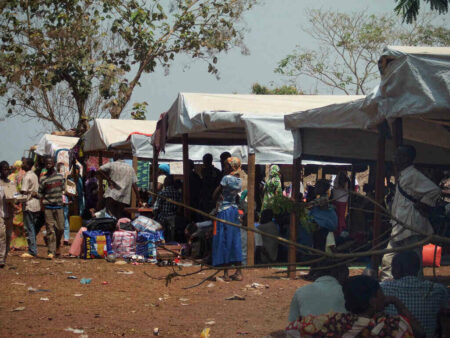
All states and governments should provide the basics for all of their people. Not just the ones they feel like deserve it. Internally displaced persons are an extremely vulnerable group of people. The level of danger varies based on why they are internally displaced.
However, in general, they are all in a very dangerous position to be in society. Their position in society is much like the homeless population in America. In America, the homeless are treated like second-class citizens. People whose needs don’t matter and should generally be ignored.
The world refugee crisis is severely impacted by this type of displacement. Tragedy can strike anywhere, and refugees from that tragedy may have to move to other places within that nation. The general safety of these people is always called into question because of the nature of their predicament.
An internally displaced person would have trouble getting back on their feet. So many people end up not getting back on their feet because of a lack of social safety nets. It all comes back to the question of the state. The state could create social safety nets for internally displaced people.
Welfare
They could create a welfare program to help not only the internally displaced people by the nation in general. All it would take is a state deciding to help these people who so desperately need it. Sometimes, internally displaced peoples are out of the reach of humanitarian organizations. It is up to the people to fight for a nation that does better on this issue
Written by Kenneth Mazerat
Sources
NYTimes: At Least 37 Million People Have Been Displaced by America’s War on Terror by John Ismay
UNHCR: Forced Displacement in 2018
LUKE T. LEE, Internally Displaced Persons and Refugees: Toward a Legal Synthesis?, Journal of Refugee Studies, Volume 9, Issue 1, March 1996, Pages 27–42
Featured and Top Image Courtesy of EU/ECHO Pierre Prakash Flickr Page – Creative Commons License
First Inset Image Courtesy of UN Women/Aurel Obreja’s Flickr Page – Creative Commons License
Second Inset Image Courtesy of Steve Cockburn/Oxfam’s Flickr Page – Creative Commons License
Discover more from Guardian Liberty Voice
Subscribe to get the latest posts sent to your email.