


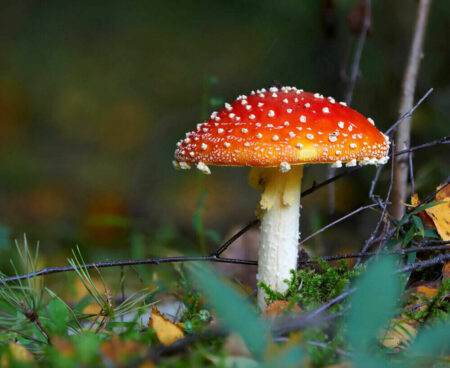
Magic Mushrooms!
The hallucinogenic chemical present in magic mushrooms can help treat severe depression when paired with psychotherapy, according to a trial that gives hope to those who have been unsuccessfully treated with conventional antidepressants.
A 25 mg dose of psilocybin and therapy sessions focused on assisting patients in identifying causes and treatments for their depression. Researchers reported that nearly a third of patients with severe depression had quick remission.
Professor Guy Goodwin, the chief medical officer at Compass Pathways, the mental healthcare company that oversaw the research done at 22 sites across the U.K., Europe, and North America, called the outcomes of the largest clinical investigation into psilocybin and depression “extraordinary.”
Treatment-resistant depression, which is a major depressive illness that hasn’t responded to at least two antidepressant therapies, affects an estimated 100 million people worldwide. Of those affected, about 50% are unable to carry out ordinary everyday chores.
Response rates in this category of patients with treatment-resistant depression typically range between 10 and 20%, according to Goodwin. At three weeks, they observed remission rates of roughly 30%, which is a pretty pleasing result.
Treatment-resistant depression places a “staggering” burden on patients and those around them, with a total annual cost to the U.K. of £3.9 billion, according to Dr. James Rucker, a consultant psychiatrist at the South London and Maudsley NHS foundation trust, who worked on the trial at King’s College London.
Let The Trials Begin
Over 230 individuals with resistant depression, were included in phase 2 clinical trial, and they were randomly chosen to take one Comp360 capsule containing 1 mg, 10 mg, or 25 mg of synthetic psilocybin. Patients were instructed to focus inward for at least six hours until the hallucinogenic took effect while listening to soothing music and donning eye protection.
To make sure the patients were secure and doing well, two therapists were there at all times. The day after taking the medicine and one week later, the participants continued their therapy sessions.
According to findings reported in the New England Journal of Medicine, all three treatment arms of the trial experienced an immediate improvement in depression ratings as measured by the common Montgomery-Sberg depression scale.
The individuals receiving the maximum 25mg dose of psilocybin experienced the greatest effects. Compared to 9% and 8% of the 10mg and 1mg groups, respectively, 29% of this group was in remission three weeks after starting the medication. A fifth of participants in the high-dose group had advantages at 12 weeks.
The primary active component of magic mushrooms is psilocybin. Converted internally into a compound called psilocin, which causes waves of neurotransmitters released in the brain. On psilocin, brain activity becomes more erratic, with various brain regions communicating with one another more frequently than usual, according to MRI scans.
Its Not What It Looks Like…
Although it may appear horrible, Rucker insisted that it wasn’t. “That happens every night: when you dream, new connections made in your brain, which becomes slightly more plastic and chaotic.”
When taking psilocybin, trial participants reported having a brief “waking dream” that passed before they returned home. The improved brain connectivity seems to be a more long-lasting effect, lasting long. It could possibly make the brain more receptive to therapy.
According to Rucker, a more flexible state of the brain creates whats known as a therapeutic window of opportunity.
The quick effects of psilocybin, according to David Nutt, a professor of neuropsychopharmacology at Imperial College London who was not involved in the trial, suggested that it was interrupting the patients’ negative cycles of rumination. and functioning as a “reset” on the brain.
So What Now?
Despite the trial’s apparent advantages, several participants had side effects, the most frequent of which were headaches, nausea, vertigo, and exhaustion. One individual received a medication to aid with their anxiousness after having a horrible vacation. Many patients in various trial arms experienced self-harm and suicide ideation, as is typical with treatment-resistant depression.
Three individuals who did not respond to the 25mg dose of psilocybin displayed suicidal behaviors at least one month after taking the medication.
The dose of psilocybin, which would have been completely eliminated from the patient’s bodies, would not have been a factor. Later this year, a larger phase 3 experiment that will examine the effects of two doses of psilocybin will occur.
Written by Lance Santoyo
Sources:
The Guardian: Magic mushrooms’ psilocybin can alleviate severe depression when used with therapy
CNN: Severe depression eased by single dose of synthetic ‘magic mushroom’
NBC News: Could ‘magic mushrooms’ treat severe depression? A major study aims to find out.
Featured Image Courtesy of Cahroi Flickr Page – Creative Commons License
Inset Image Courtesy of Aleksey Gnilenkov Flickr Page – Creative Commons License
Discover more from Guardian Liberty Voice
Subscribe to get the latest posts sent to your email.