


A new universal vaccine has been unveiled by scientists at Stanford Medicine that one day could provide protection against everything from COVID-10 and the flu to bacterial pneumonia and common allergens.
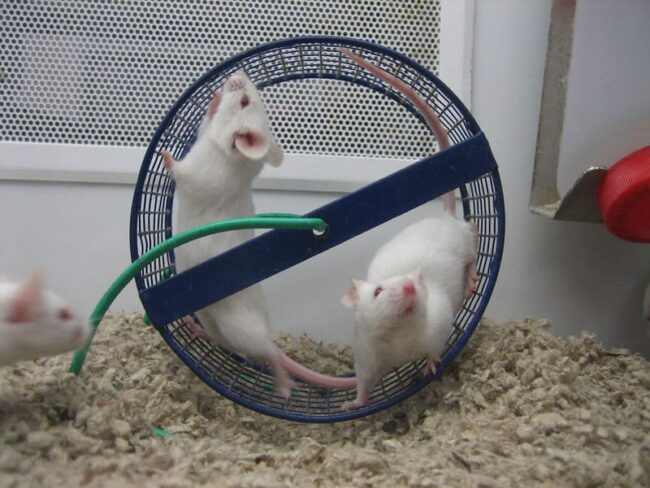
This nasal spray vaccine possibility supercharges the immune defenses of the lungs. When tested in mice, it prevented severe illness and blocked allergic reactions for months.
Universal Vaccine Study
The findings from the study were published on Feb. 19, 2026 in Science. Mice that received the universal vaccine nasal spray were protected from SARS-CoV-2 and other coronaviruses, Staphylococcus aureus, and Acinetobacter baumannii (infections commonly acquired in the hospital), and dust mites.
Bali Pulendran, PhD, senior author, and professor of microbiology and immunology, says the level of protection from so many respiratory threats exceeded expectations.
If humans experience similar results, one universal vaccine has the potential to replace several annual injections for season respiratory illnesses and offer rapid protection for any emerging viruses.
Current Vaccines Need Updating
The experimental nasal spray works differently than traditional immunizations. The term “vaccination” was first introduced in the 1700s by Edward Jenner after he used cowpox to prevent smallpox. Since then, the inoculations have followed the common strategy known as antigen specificity – they give the immune system a pathogen it recognizes so the body can identify it and attack the real virus later.
The problem? Pathogens evolve fast. When viruses change their surface structure, previously effective vaccines lose potency. This why COVID-19 boosters and annual flu shots are necessary.
Pulendran says, “It’s becoming increasingly clear that many pathogens are able to quickly mutate. Like the proverbial leopard that changes its spots, a virus can change the antigens on its surface.”
Until now, efforts to create broader immunizations have focused on protection against a viral family, targeting components that do not mutate as frequently.
“We were interested in this idea because it sounded a bit outrageous. I think nobody was seriously entertaining that something like this could ever be possible,” says Pulendran.
Integrated Immunity
The new universal vaccine “imitates the communication signals immune cells exchange during infection. By doing so, it links the body’s tow main defense systems — innate and adaptive immunity — into a coordinated and longer lasting response,” according to Science Daily.
It continues, “Most existing vaccines primarily stimulate the adaptive immune system, which produces antibodies and specialized T cells that target specific pathogens and retain memory for years. The innate immune system responds within minutes of infection and acts more broadly, deploying cells such as dendritic cells, neutrophils and macrophages that attack perceived threats.”
Innate immunity is short-lived, however, there have been indications it sometimes could last longer. The Bacillus Calmette-Guerin tuberculosis immunization that is administered to newborns, may lower infant deaths from other infections, implying cross protection, as an example.
In 2023, Pulendran’s group of scientists clarified how that cross protection works in mice. The tuberculosis inoculation triggered innate and adaptive responses, however, the innate response remained active for months. Researchers discovered that T cells recruited to the lungs during the adaptive process sent signals that kept innate immune cells working.
“This T cells were providing a critical signal to keep the activation of the innate system, which typically lasts for a few days or a week, but in this case, it could last for three months,” according to Pulendran.
The mice remained protected as long as the heightened innate activity continued. The T cells were identified as cytokines that activate pathogen sensing receptors called toll-like receptors on innate immune cells.
Pulendran continues, “In that paper, we speculated that since we now know how the tuberculosis vaccine is mediating its cross=protective effects, it would be possible to make a synthetic vaccine, perhaps a nasal spray, that has the right combination of toll-like receptor stimuli and some antigen to get the T cells into the lungs. Fast forward two and a half years and we’ve shown that exactly what we had speculated is feasible in mice.”
How the Nasal Immunization Works
The universal nasal immunization is currently called GLA-3M-052-LS+OVA. It is designed to replicate the T cell signals that stimulate innate immune cells in the lungs. Additionally, it includes a harmless antigen, an egg protein known as ovalbumin or OVA. The OVA draws T cells into the lungs and helps to sustain the boosted innate response from weeks to months.
Mice in the study were given the universal vaccine as droplets in their nostrils. Some animals received multiple doses a week apart. After being immunized, mice were exposed to a respiratory virus. After three doses, the mice remained protected from SARS-CoV-2 and other coronaviruses for a minimum of three months.
Unvaccinated mice experienced severe weight loss ( a sign of illness) and often died. When examined, their lings showed extensive inflammation and high levels of the virus. Immunized mice lost little weight, all of them lived, and their lungs contained little virus.
Pulendran referred to this effect as a “double whammy.” The sustained response reduced viral levels in the lungs by 700-fold. Viruses that bypassed the first level of defense were confronted by rapid adaptive response.
Sources:
ScienceDaily: Scientists create universal nasal spray that protects against COVID, flu, and pneumonia
Stanford Medicine: One vaccine may provide broad protection against many respiratory infections and allergens
Live Science: ‘Universal’ nasal-spray vaccine protects against viruses, bacteria, and allergens in mice
Featured Image Courtesy of Rene Schwietzke’s Flickr Page – Creative Commons License
Discover more from Guardian Liberty Voice
Subscribe to get the latest posts sent to your email.