

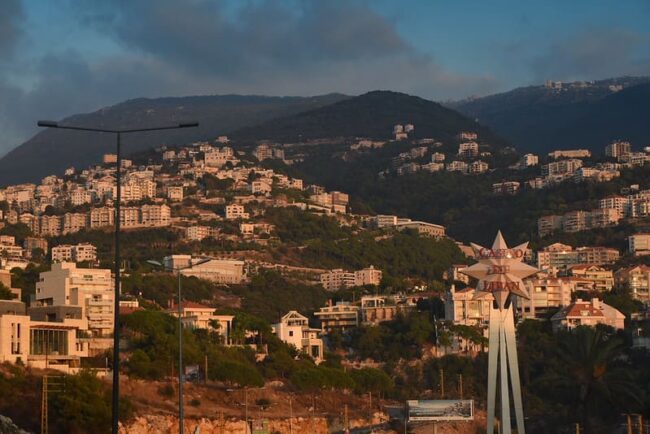
In the past week, Israel has created a “mass displacement crisis” in Lebanon, killing 400 people and relentlessly bombing the country and pushing troops further into the southern part of the country, according to reports from Al Jazeera.
Analysts told Al Jazeera that Israel is creating a new reality in Lebanon with possible long-term consequences that may reshape the country in a way not seen before.
It is possible Israel will “redraw the demographic map” of Lebanon in an attempt to pressure Hezbollah and sever the connection between the group and its support base, according to Michael Young, a Lebanese analyst and writer.
Drawing the Line
Israel partnered with the U.S. on Feb. 28, 2026, in a strike against Iran’s Supreme Leader Ayatollah Ali Khamenei, launching a sustained war in the second week.
On March 2, Hezbollah attacked Israeli military sites in retaliation for the killing of the Iranian supreme leader. At the same time, Israel attacked Lebanon almost daily, violating the November 2024 ceasefire and killing hundreds of civilians and destroying civilian infrastructure.
Israel declared the truce over and issued threats to residents in south Lebanon, telling them to move north of the Litani River, and residents of the southern suburbs of Beirut were instructed to leave as well.
According to United Nations peacekeepers, Israel violated the ceasefire more than 10,000 times, and many in Lebanon report that the ceasefire was always one-sided. Now, there is no ceasefire on any side as Hezbollah is attacking Israeli military sites daily and is engaging in battles in the eastern Bekaa Valley and south Lebanon.
In addition to the five points Israel has occupied in Lebanon since 2024, the military has pushed into unpopulated areas across the southern border of the country.
Pushing Into Lebanon
There are fears Israel will not withdraw, although some analysts do not believe Israel has much to gain in the occupation.
Lebanese political analyst Rabih Dandachli told Al Jazeera, “In the long run, it is not in Israel’s interest, strategically speaking. I don’t think they stray on the land. The presence of an occupation in this way will create another resistance like Hezbollah.”
In 2000, after an 18-year occupation, Hezbollah ushered Israel out of the country. Israel invaded in 1982 to destroy the presence of the Palestine Liberation Organization (PLO), killing 19,000 Lebanese and Palestinians.
Analysts believe the actions of Israel are part of its efforts to reshape the region and impact the relationship and power of Hezbollah.
Young asserts, “Today, Israel’s actions in Lebanon are tied to the political conditions they want to impose on Lebanon once this war is over.”
Those conditions could include imposing an actual peace deal in line with Israel’s Abraham Accords, or an economic zone Prime Minister Benjamin Netanyahu touts regularly.
According to Young, the intention might be to “demilitarise the area north of the Litani” to the Awali River, near Sidon. This is similar to the demand in Syria that the area south of Damascus be demilitarised in reference to the 1976 Red Lines Agreement.
Pockets of Internal Displacement
Hezbollah has been the most powerful force in Lebanon for years, but was severely weakened in that conflict, with the loss of military leadership, including longtime Secretary General Hassan Nasrallah.
Since then, the Lebanese government has promised to disarm Hezbollah and declared the group’s military activities illegal. It was reported to Al Jazeera that the Lebanese Armed Forces (LAF) is “arresting everyone carrying non-state-sanctioned arms.”
Hezbollah is the weakest it has been in 40 years; therefore, Israel is using mass displacement to reshape how the group exists in relation to the Shia community support base.
Sources:
Al Jazeera: Is Israel reshaping Lebanon, trying to separate Hezbollah from its people?
France 24: Lebanon reports 83 children among the dead after Israeli attacks
Featured Image Courtesy of Stephen Downes’ Flickr Page – Creative Commons License
Discover more from Guardian Liberty Voice
Subscribe to get the latest posts sent to your email.