


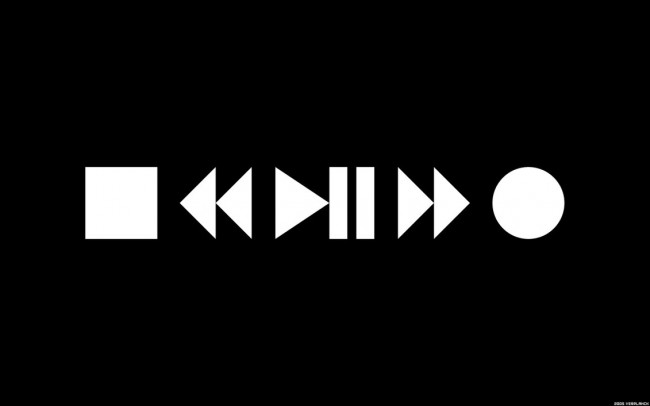
 Keyboards, electronics, and applications all share the same symbols for basic functions such as power, command, pound, Bluetooth etc, but why were these symbols chosen and what is the origin for these universal computer symbols? The origins for these symbols are as varied as their functions.

The USB trident logo is modeled after Greek god Neptune’s trident, the mighty Dreizack. The designers replaced two of the triangles with a circle and square in order to represent the different peripherals the device can utilize.

The power symbol is utilized by almost every electronic device to indicate the button needed to be pressed in order to turn the device on or off. The symbol dates back to World War II, where binary was used to indicate functions (still is). ‘1’ means on and ‘0’ means off. The power symbol is combination of a ‘o’ and ‘1’ to indicated its dual functionality.

The command symbol is seen on every command key on every Apple keyboard. While the original Apple team was working on translating menu commands to the keyboard via computer symbols, Andy Hertzfeld needed to figure out what to make the command key, which can be utilized to access the majority of the computer’s abilities. The original design was of an Apple. Which was rejected by Jobs due to their being “too many Apples on the computer.” Then the Swedish Gorgon loop design was chosen. Which in Sweden is a road sign to indicate a place of interest.

The origin for this member of universal computer symbols dates back to 10th Century Danish King, Harald Blåtand. The Bluetooth symbol is a combination of the two runes of the king’s initials. This was chosen because the Danish King was instrumental in uniting aggressive and warring factions in parts of Denmark, Sweden and Norway; just like Bluetooth technology is developed to allow cooperation between automotive, mobile, and computing markets.

The play button is another widely recognized member of universal computer symbols. It’s origin is more straightforward than its peers. The symbol was created when tape became the popular medium. The symbol simply indicates which direction the tape is moving. Rewind points in the opposite direction, fast forward and fast rewind have two arrows to signify increased speed.

The pause symbol, however, originates from someplace else. The pause symbol is taken from music and poetry’s causera. The causera indicates a pause in the middle of a verse and is denoted as two parallel lines.

The at symbol has one of the more complicated origins of universal computer symbols. It has been known by many names: the monkey’s tail in Germany, the snail in Italy and France, and the little mouse in China. Some historians suggest that the symbol was first used by sixth century monks who created it as a better way to write the Latin word for “at” or “toward,” so it would not be confused with “AD.” It was first used in the computer world when Bolt, Beranek, and Newman programmer, Raymond Tomlinson inserted the symbol between computer network addressed to differentiate the user from the terminal.
By Andres Loubriel
Sources:
Maximum PC
Creative Visual Art
Laughing Squid
Discover more from Guardian Liberty Voice
Subscribe to get the latest posts sent to your email.
2 Responses
Nice blog here! Also your web site loads up fast! What web host are you using? Can I get your affiliate link to your host? I wish my web site loaded up as quickly as yours lol
Hi, just came across this website. Its a brilliant illustration of how small to medium sized companies can use Awards based marketing to get their companies ranked on the 1st page of Google. Awards programmes offer many benefits to participants. After all they bring publicity and you can share the news of your win with your employees, clients, industry peers and target market as many times as you like. Additonally awards offer prestige and status, giving potential clients peace of mind that they are working with a reputable company. There are many types of awards programmes, including those that host awards ceremonies (and you pay per table), organisations that award only their members (and you pay for membership and advertising) and those that provide marketing materials. The latter is a great choice for those who are unsure about the benefits of using corporate awards programmes because generally nominees and winners do not have to pay a penny to be involved. Participants often receives online exposure, usually with a reach much greater than their own marketing efforts can deliver. Other free benefits can include the use of an announcement. Most participants have the option to purchase additional marketing materials to further enhance their win, if they wish to, for use in social media campaigns, on their own website, email marketing campaigns or in customer newsletters.