


Rioting and other counter-productive expressions of anger following the shooting death of Mike Brown, at the hands of Ferguson police officer Darren Wilson, serve as a poignant indicator of lack of trust growing between law enforcement and the public that they are sworn to protect. This is nothing new, but rather a continuation of a trend that extends back far enough to become difficult to attribute a beginning to, but somewhere along the line the American conscience went from seeing police as Barney Fife and the perspective transformed to something more sinister for many.
Maybe an earlier contribution to the growing negative public perception of police was the tragedy that occurred at Ruby Ridge, a high-profile case across national news in its time. Certainly, a recurring theme is the easy dismissal of the perspectives of those painted as the antagonists to the broader American public. People in the 90’s focused on the characterizations of Randy Weaver as an anti-social element, rather than as another human being possessed of natural rights. Rarely are people as quick to extend to others the considerations that they would appreciate while explaining their own behavior.
A very important philosophical quandary to address, in Weaver’s case and others, is the cover afforded to possible excessive force cases committed by police officers in the process of securing the arrest and/or surrender of suspects. If a person were to grant that a death occurring in the process of apprehension amounted to a de facto punishment for the alleged criminal, they would then have to justify how resisting arrest was in itself a crime heinous enough to deserve summary execution. Further, they would have to reconcile the abandonment of habeus corpus’ command, that all suspects of wrongdoing have the right to face their accuser in a fair trial.
In the Ruby Ridge case, events were instigated by a probation officer named Karl Richins, who misinformed Randy Weaver of the date Weaver would be required to appear in court on other charges. Furthermore, after Chief Probation Officer Terrence Hummel discovered the discrepancy and reported it to the court, the judge presiding over the case still refused to retract the bench warrant of which Weaver was in breach. A short synopsis of the rest of events is that after a bench warrant was issued for Weaver, on account of his failure to appear, his sense of injustice was offended enough to exacerbate his defiant behavior to the point where he refused to surrender. However, rather than running amok as a rampaging criminal, Weaver holed up at home and simply refused police requests to surrender.
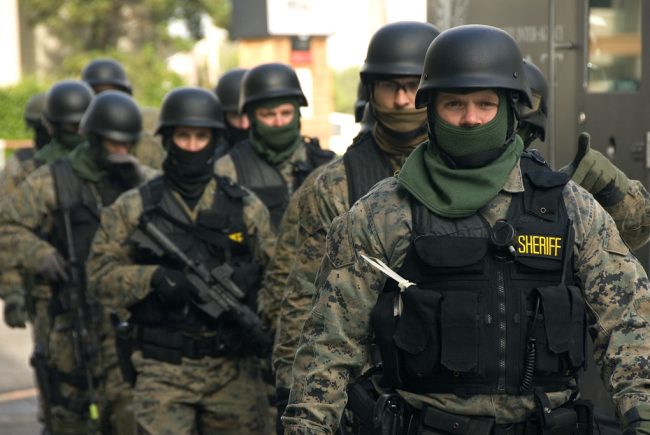
Since he was effectively under siege, Weaver could not have been characterized to have presented a credible threat to public safety, unless he has the ability to escape his cordon undetected and at will. Several further missteps on the part of the Idaho justice system resulted in an ill-advised police escalation of the situation that eventually resulted in the death of Weaver’s son, Sam. Some of the many questions that the public needs to answer are how, and at what points, are police officers justified in escalating a situation up to the loss of life? Is a person’s dereliction of duty to appear in court sufficient cause to enact paramilitary operations to extract them from their home, in the absence of a credible threat to others? It is only when these questions are answered, and their answers enforced, that public trust will be restored. Then, people like Mike Brown will stand a better chance to grow up respecting law enforcement, and many other factors which escalate the tension of those interactions will abate. A final illustration of this point is the photograph at the top of this article. Despite the word “Sheriff” being embroidered on those vests, that picture is property of, and licensed for use through, the Oregon Department of Transportation.
Opinion by Brian Whittemore
Sources:
Cornell Law Review
Photo Courtesy of the Oregon Department of Public Transportation – flickr License
Discover more from Guardian Liberty Voice
Subscribe to get the latest posts sent to your email.