


 The definition of being boldly inclusive encompasses a vast array of ideologies. Most people would be able to describe the concept in one way or another. In the simplest form, to be inclusive means to include all others, no matter their gender, race, heritage, sexual orientation, religious beliefs, age, political affiliation, or any subset thereof.
However, to be boldly inclusive is to stand next to another person even when there are psychological and/or social differences between two people without judgment. A person’s positionality, which defines them, will cause them to manifest their individual perspective of what it means to be boldly inclusive.
When raised with the negativity of intolerance, a person’s positionality will reflect this. What would cause a person raised with negativity toward those differences to choose a different perspective on life? In deciding to become boldly inclusive, an evolution of thinking and being must take place. It is not a simple task to overcome the negative training they may have received in childhood.
A person is not born with the ability to be boldly inclusive. When a child comes into this world, their only tasks are to learn about their environment and how to survive. For example, an infant will cry, and if there is no response, eventually, that child will remain silent. Conversely, if the child is cared for when they express their needs by crying, they begin to learn trust. Out of trust and repetition, the child will develop a sense of self. As they grow, children develop ideologies by watching the adults in their lives and mimicking the behaviors of those they trust.
When an adult, a parent, or another person important to a child, teaches bigotry against those who are different, it is called negative modeling. By the time the youngster is in school, the hatred has already become part of who the child believes himself to be. When that same child is subjected to attending school with kids who do not fit into the same category as they do, there is confusion. Because this group is the child’s peers, confusion builds. These are the people he was trained to hate, to believe they do not deserve to be included.
What seed must be planted for that young person to begin to question the values they were taught? Is it as simple as being exposed to other people who are not bigots? Or does a child learn to become a critic of the adult who taught them the hatred against the very children who play with them every day in school?
Occasionally, a child is curious or confused enough to step outside the norm of their family and explore relationships with others who exemplify what it means to be boldly inclusive. Sometimes all it takes is an innocent question from the child and an honest yet simple explanation from an adult to begin to break down the barrier.
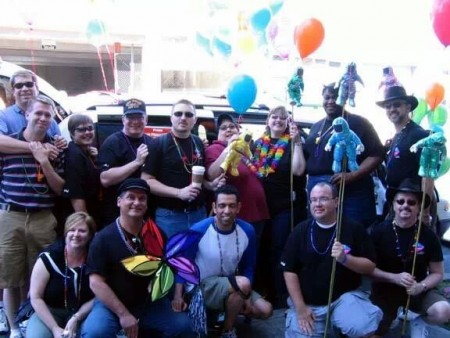 When adults model openness, tolerance, and acceptance of the differences in people, the child sees the world through those eyes. Many people are involved in raising a child, whether they are a birth parent, step-parent, foster parent, social worker, teacher, individual in the community, sibling, or extended family. It is their responsibility to model a broadly open, inclusive, and welcoming point of view. Through their example, adults can teach a youngster to be open-minded enough to become boldly inclusive.
As they become an adult, the youngster must choose to be a bigot or become a person who is capable of placing value in becoming inclusive. If that decision is made, most often, it is not carried out on a conscious level. Nonetheless, when the choice is made to become a different person — to be boldly inclusive of others in their life — that person blossoms.
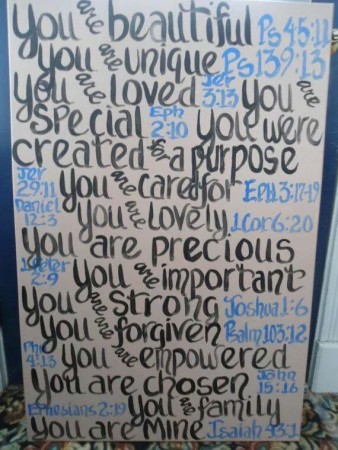 Courage is what it takes to move away from bigotry and to become boldly inclusive of those who are different. Even an adult who steps outside of their upbringing will occasionally find they must fight the deep-seated bigotry within themselves. To clearly comprehend that this hatefulness is not who they are but what they were taught to believe is a difficult and challenging concept.
When one chooses to embrace being inclusive of others and stand boldly beside someone they do not understand, growth can occur. That growth could be emotional, intellectual, or even physical. Becoming an advocate for others takes open-mindedness, tolerance, and a generous soul. To fight for another’s right to be respected takes tenacity, which is the same strength it took to learn how not to be a bigot.
The adage, “It takes a village to raise a child,” could easily be reworded. It takes a seed, lots of water, fertilizer, nutrients, and more to re-create the hateful mind into one that is tolerant and boldly inclusive. In this sense, the person’s positionality has undergone a metamorphosis. It does not matter who a person is; he can evolve and overcome negativity to embrace inclusivity boldly and decisively.
Written by Cathy Milne-Ware
Sources:
Guardian Liberty Voice: The Historical Model – “Boldly Inclusive”
Science of Identity Foundation: Overcoming Racism and Bigotry with Wisdom
Cambridge University Press: Kristin J. Anderson – Benign Bigotry: The Psychology of Subtle Prejudice
Little, Brown and Company: Timothy D. Watson – Redirect; The Surprising New Science of Psychological Change
Featured Image Courtesy of Alan English CPA’s Flickr Page – Creative Commons License
All Inset Images Courtesy of Cathy Milne
Discover more from Guardian Liberty Voice
Subscribe to get the latest posts sent to your email.
2 Responses
My spouse and I love your blog and find almost all of your post’s to be just what I’m looking for. can you offer guest writers to write content for you? I wouldn’t mind producing a post or elaborating on some the subjects you write concerning here. Again, awesome weblog!
Hi there, You have done an incredible job. I’ll certainly digg it and personallysuggest to my friends. I am confident they will be benefited from this site.