


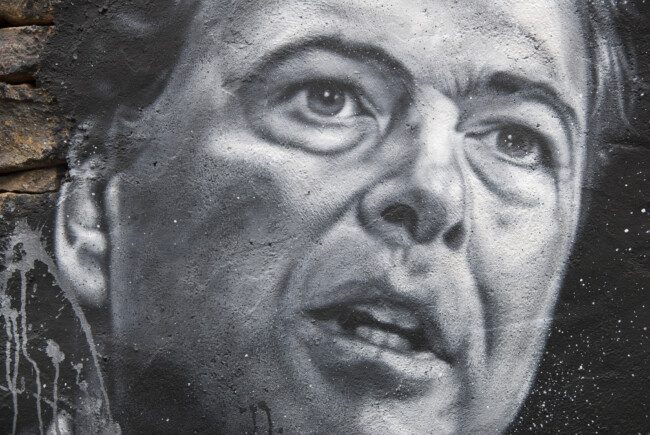
Journalism is the big loser after James Comey’s testimony before the Senate Intelligence Committee on June 8, 2017. How is that so? Almost 20 million people watched at least part of the testimony. That is an unusually high figure. Despite the high viewership, journalistic standards and ethics took a hit during the testimony of the former director of the Federal Bureau of Investigation. The high rating figures simply mean that it was a big hit with the public.
The Frantic and Phenomenal Media Coverage
The amount of coverage in the days preceding Comey’s testimony was frantic and phenomenal. The event was hyped by every major news outlet in the nation during the days prior. Both national network news and cable news organizations ran a countdown clock in the hours before the Comey was to testify. Regular daytime programming on all the networks was preempted to make room for the broadcast. No one had to ask where it could be seen or heard.
There were even bars in various cities hosting “Watch Parties” where people could order drinks and watch the testimony on TV:
Union Pub… in [Washington] D.C., said that it will buy a free round of drinks for everyone at the bar whenever Trump tweets about Comey during his likely hours-long testimony.
CNN experienced one, now infamous, incident during its hours of pre-testimony coverage. A particular commentator revealed that according to unnamed sources:
Comey is going to dispute the president on this point if he’s asked about it by senators, and we have to assume that he will be. He will say he never assured Donald Trump that he was not under investigation, that it would have been improper for him to do so.
However, as everyone now knows Comey testified that he did, indeed, tell Trump he was not being investigated. Oops. One wonders about the trustworthiness of unnamed sources.
Journalism Rebuked by Testimony
However, that was not the worst blow sustained by journalism that came from Comey’s statements under oath. He also delivered a severe strike to the gray lady of journalism, the New York Times. In a February 14, article, the Times claimed knowledge of multiple contacts between Trump campaign personnel and the Russians:
Asked by Sen. Tom Cotton, Arkansas Republican, whether the story was “almost entirely wrong,” he answered, “Yes.” In response to a similar question by Sen. James Risch, Idaho Republican, Mr. Comey said that “in the main, it was not true.”
Mr. Comey then continued to make a salient point. One that journalism as a whole should heed:
The challenge, and I’m not picking on reporters about writing stories about classified information, is that people talking about it often don’t really know what’s going on and those of us who actually know what’s going on are not talking about it.
In other words, he is saying that one of the most respected news organizations in the world either did not know what they were talking about; or they were intentionally incorrect. It is a stinging rebuke to the journalism of the Times.
Moreover, such a respected outlet for journalism getting this so wrong should be a wake-up call for the profession as a whole. Judging from the immediate reaction to Comey’s testimony, that wake-up call was missed.
Initial Response Reflects Defects in Standards and Ethics
The Times was wrong concerning its story about Trump officials and Russian contacts. Yet, after that error is revealed, AP leaves out of its official story a key revelation. The official Associated Press story about the testimony included Comey’s words that Trump,
defamed him and lied about him, and more importantly [lied about the] FBI.
Yet the same report excluded the testimony that former Attorney General Loretta Lynch,
had directed me not to call it [the Clinton email investigation] an investigation, but instead to call it a matter…
AP stories are printed in some 1500 newspapers around the world. An organization called “the largest news-gathering organization in the world” should take more care in reporting the full story.
It was wrong to report suspicions from unnamed and uncorroborated sources as the Times did. It is worse for the AP to sin by omission and make the testimony appear more damning to the president.
If these examples are intentional, then they are violations of ethics. If they are by incompetence and excuse, they are violations of standards. The New York Times is the symbolic flagship of journalism. The AP is the practical authority for news, simply because it has the widest dissemination of any news source. If those two organizations are suspect, it is a bad sign for journalism as a whole.
Not all journalists or media organizations misrepresent the facts. Not all journalists are driven by agenda or ratings. However, if mainstream journalism is to survive, the drive to report the truth as it is must be reclaimed in the professional ranks.
It Could Become a Legal Problem for Journalists
The problem could go beyond violations of standards and ethics. Violations of the law are a real possibility when journalists misuse their pen for partisan political points.
During an earlier testimony before the House, in March of 2017, this exchange between Comey and Rep. Trey Gowdy (R-South Carolina) occurred:
GOWDY: ….Is there an exception in the law for current or former U.S. officials who request anonymity?
COMEY: To release classified information?
GOWDY: Yes sir.
COMEY: No.
GOWDY: Is there an exception in the law for reporters who want to break a story?
After a brief discussion about the courts and the Department of Justice difficulties in answering the question, the testimony continues:
COMEY: …that’s a question I know the Department of Justice has struggled with through administration after administration.
GOWDY: I know the department struggled with it, the 4th Circuit struggled with it, lots of people have struggled with it but you’re not aware of an exception in the current dissemination of classified information statute that carves out an exception for reporters.
This is an ominous signal from Gowdy. If for example, a current or former government official, leaks to the press, that is against the law. If news reporters can be found guilty of illegal “dissemination of classified information,” by reporting the leaked information, it could become a serious legal problem for them and the media companies they represent.
Journalism Needs Some Re-evaluation
Journalism was the big loser after Comey’s testimony. When journalism is legitimately challenged publicly, it needs to re-evaluate some basic ethics and standards. When journalism is challenged by the law, the profession and individual journalists are potentially in serious trouble.
Journalism is an industry that survives and thrives on a high level of public trust. Without such trust, journalism degenerates into a theater of comedy and conspiracy. A recent Harvard-Harris poll revealed that:
Nearly two-thirds of Americans say the mainstream press is full of fake news, a sentiment that is held by a majority of voters across the ideological spectrum… According to data from the latest Harvard-Harris poll, which was provided exclusively to The Hill, 65 percent of voters believe there is a lot of fake news in the mainstream media.
Journalists need to renew their commitment to truth, and their duty to report it truthfully. Perhaps some credibility, at least with the people, might yet be restored. Such credibility is sorely lacking, and much needed today.
Opinion News by D.T. Osborn
Edited by Cathy Milne
Sources:
ABC15: Comey expected to refute Trump, sources say
Beatrice Daily Sun: Firing Blamed on Probe
Cyber College Internet Campus: The Beginning of Mass Communication In The United States
NY Daily News: Watch parties, morning ‘covfefe’ cocktails planned for Comey testimony
news672: CNN Panel Discussion Cooper; Comey to testify he never told Trump he was not under FBI Investigation
POLITICO: Full text: James Comey testimony transcript on Trump and Russia
TVNewser: Here’s How Networks Will Cover James Comey’s Testimony Before the Senate Intel Committee
THE HILL: Poll: Majority says mainstream media publishes fake news
The Washington Post: Full transcript: FBI Director James Comey testifies on Russian interference in 2016 election
The Washington Times: CNN ‘goes bonkers,’ airs 10 hours of Comey coverage before a single word of testimony: Report
The Washington Times: James Comey debunks New York Times story that fueled unproven Trump-Russia collusion
Featured and Top Image Courtesy of thierry ehrmann’s Flickr Page – Creative Commons License
Discover more from Guardian Liberty Voice
Subscribe to get the latest posts sent to your email.
One Response
Hi would you mind stating which blog platform you’re using? I’m going to start my own blog soon but I’m having a difficult time making a decision between BlogEngine/Wordpress/B2evolution and Drupal. The reason I ask is because your design and style seems different then most blogs and I’m looking for something unique. P.S Apologies for being off-topic but I had to ask!