


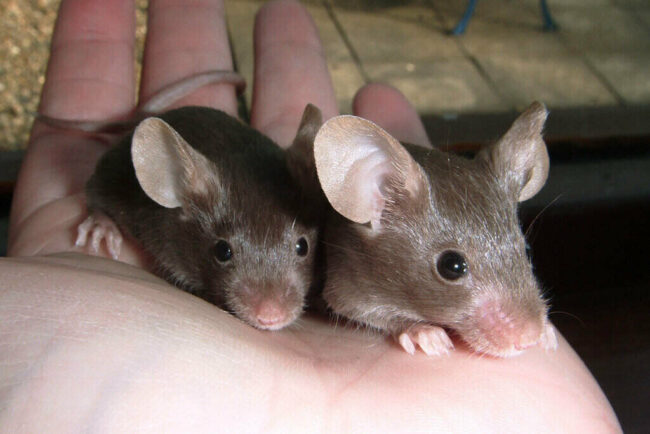
Elderly mice are getting younger in a lab that is run by Daniel Sinclair located at Harvard Medical School. Sinclair is a molecular biologist.
Sinclair and his group used proteins to morph adult cells into stem cells. By doing this, they have rebooted aging cells in the mice to become younger forms of themselves. The first breakthrough Sinclair’s team made with the rats was published in 2020. It explained that older mice with damaged retinas and impaired eyesight could see again suddenly.
He said that it is a permanent reboot as they can see. They think the process could be universal and it could be used throughout the body to reboot people’s age. Sinclair has spent 20 years investigating reversing the damages of time.
Age is the Underlying Cause for Certain Diseases
He explained that if they reverse aging then certain illnesses should not occur. He also said that there is technology today that can help people get into their hundreds not needing to worry about Alzheimer’s in their 90s, heart issues in their 80s, or getting cancer in their 70s.
Sinclair also proclaimed that this is the world in the future. However, it is a matter of when and for some, it will happen in their lifetimes.
An investor that is currently partnering with Sinclair to make do-it-yourself age biology tests, Whitney Casey, stated that the research Sinclair has done shows that it can recreate aging to make people younger and longer. Also, Sinclair wants to make changes to the world and turn aging into a disease, according to Casey.
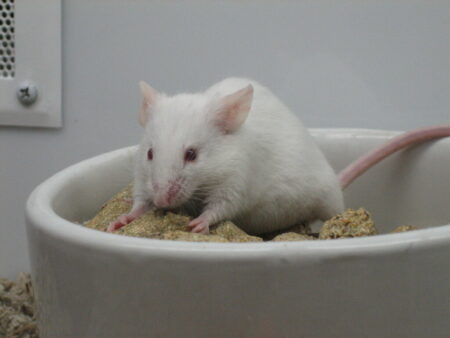
As modern medicine helps with sickness, it does not touch on the underlying reason. Sinclair said that for most illnesses the reason is aging. He also explained that they are aware that when they switch the age of an organ such as the brain in mice, the illness of aging will resolve. Sinclair said that the memory will return.
In his lab, two mice are beside each other. One is young, and the other is old and gray. However, the mice are siblings born in the same litter, but one has been altered genetically to age quicker.
The Yamanaka Factors in Mice
Sinclair asked his team if they have the ability to create aging in mice, do they have the ability to do the opposite in mice? Dr. Shinya Yamanaka, a Japanese biomedical researcher, had reprogrammed adult skin cells in humans to act like pluripotent or embryonic stem cells. The cells were able to develop into any cell in the human body. The discovery in 2007 won Dr. Yamanaka a Nobel Prize. The cells he created are now known as “Yamanaka factors.”
However, the cells switched back to stell cells completely by Yamanaka factors losing their identity. They could not recall that they were heart, blood, and skin cells. Which made them perfect for being reborn as “cell du jour,” but not good at rejuvenating.
Labs across the globe got on the situation. A 2016 published study that was done by researchers at the Salk Institute for Biological Studies located in La Jolla, California, revealed signs of aging might be removed in mice that were genetically aged and exposed to four key Yamanaka factors for a short period without wiping out the cells’ identity.
However, there were downfalls with the research. In some cases, the mice that were altered developed tumors that were cancerous.
Written by Marrissa Kay
Sources:
CNN Health: The ‘Benjamin Button’ effect: Scientists can reverse aging in mice. The goal is to do the same for humans; by Sandee LaMotte
Flipboard: The ‘Benjamin Button’ effect: Scientists can reverse aging in mice. The goal is to do the same for humans
Reddit: The ‘Benjamin Button’ Effect: Scientists can reverse aging in mice. The goal is to do the same for humans
Featured and Top Image Courtesy of Hy’Shqa’s Flickr Page – Creative Commons License
Inline Image Courtesy of Rene Schwietzke’s Flickr Page – Creative Commons License
Discover more from Guardian Liberty Voice
Subscribe to get the latest posts sent to your email.