


China’s local governments have been facing a funding shortage for some time now. This problem is particularly acute in the western part of the country, where many cities are still recovering from the economic downturn of 2008. Many cities in China are facing a limited tax base which means they cannot fund their projects. The central government has been asked to solve this problem by using its financial resources to help out local governments with development projects and other activities that will improve their economies.
After a decade of record economic expansion, the effectiveness of China’s economic policy has been weakened by its need to borrow. China’s economy is still growing, but it is not growing as fast as it used to. The reason for this slowdown seems to be related to debt.
The government has already borrowed too much.
There is a lot of debt in China, and it’s growing at an alarming rate.
Behind Japan, China has the world’s second-highest debt level with the U.S. — $28 trillion to date and climbing faster than its economy. This means that the government must pay interest on this immense amount of borrowing — a bill it can’t afford to pay without further borrowing itself.
The problem doesn’t end there, however, local governments have borrowed money too. Unlike the central government, they’re not allowed to sell bonds or issue credit or run deficits. They also need money for social services like education and healthcare and infrastructure development (like roads). Which they can no longer fund by themselves because they don’t have enough revenue sources these days after decades of capital misallocations by Beijing’s policymakers.
Most local governments have no means to repay the loans they take out to fund infrastructure projects.
They are doing this because the central government has provided them with a greater ability to issue bonds than they would otherwise have had if they were private companies.
The problem is that most local governments don’t have any means of repaying these loans and so they will remain in debt until the end of time (or until a natural disaster wipes out all human life on earth).
The government is now spending more money than it receives in tax revenues.
Local governments in China are facing a funding shortfall. The government is now spending more money than it receives in tax revenues, meaning they’re borrowing to cover the difference. This means that local governments are running a deficit—they’re spending more than they make.
The government is currently in debt to the tune of $1 trillion.
This means that the government has borrowed too much money and has not been able to pay back what it owes. The government is spending more money than it receives in tax revenues, and this increases its total debt.

The current tensions between China and the U.S were caused by a disagreement over trade between the two nations. The discord is largely centered on China’s trade deficit with its northern neighbor. Which has been a sore point for decades. In 2018, this dispute came to a head when President Trump announced new tariffs. On Chinese goods imported into the US, these moves were met with retaliatory measures from Beijing. Putting both countries on an escalating path toward a confrontation that has yet to be resolved.
The reason why this conflict has reached such heights is due in part to how closely connected. In these two economies over 40% of total global production comes from factories in China alone. Meanwhile, they hold around $1 trillion worth of American debt (around 7% percent). This makes it difficult for either country to truly hurt one other economically unless there’s some. Sort of “shock” events like war or economic collapse happening within their borders. This isn’t likely given that both sides have plenty at stake by keeping things status quo!
Chinese banks have stopped lending money to local governments because they are worried that their projects will not make money and will end up being in bad debt to them.
Local governments are also worried that their projects will end up being bad debt for them. They may not be able to repay the loans.
Local governments account for about half of the country’s total investment spending, but only 15% of its tax revenue comes from them.
This means that if there is an economic downturn, it will disproportionately affect local governments that have less revenue to work with than their national counterparts do (although this could be offset somewhat by an increase in sales taxes).
Local governments also rely heavily on land sales and other commercial activities to generate income. In contrast, central government sources are more diverse: taxes; fees charged for services such as education; miscellaneous fees; and grants from the central government.
China’s government is not afraid
The crux of the problem is that local governments have borrowed too much. And they are not able to repay their debts to the Chinese government. Has also borrowed a lot of money, which means that it needs those tax revenues from local governments. Even more, than they do. This has created an unsustainable situation where both parties rely on each other for survival but neither can survive.
On their own, because neither has enough capital to pay off its debts and continue functioning normally. Essentially: if one side fails (the central government), then both sides fail (the central government and all its regional branches).
The Chinese government is not afraid of a potential collapse — it’s already happening right now. Local governments are struggling with debt and there are serious concerns about how sustainable this situation will be over time. If it turns out that China is unable to fund its current levels of spending, then there could be serious consequences for international investors who have been pouring money into its markets in recent years.
Written By Daniel Batalla
Sources:
Us News- Analysis – A $1 Trillion Headache: China’s Local Fiscal Shortfall Poses Broader Growth Risks By Reuters
Zawya- A $1trln headache: China’s local fiscal shortfall poses broader growth risks By Ellen Zhang and Ryan Woo
Asia Financial- China’s Local Governments Face a $950bn Funding Shortfall By Jim Pollard
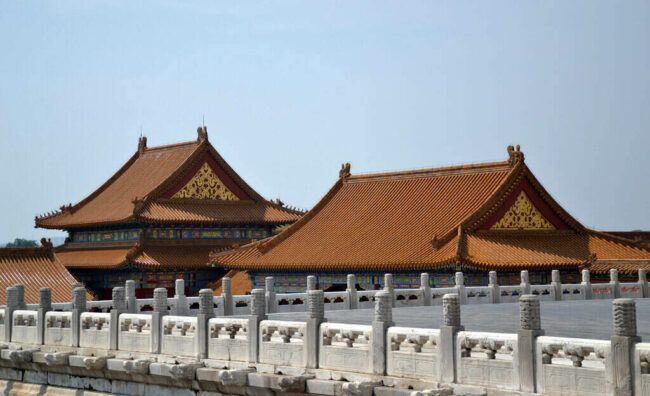
Featured and Top Image Courtesy of Diego.aviles Flickr Page Creative Commons License
Insert Image Courtesy of Diego.aviles Flickr Page Creative Commons License
Discover more from Guardian Liberty Voice
Subscribe to get the latest posts sent to your email.