

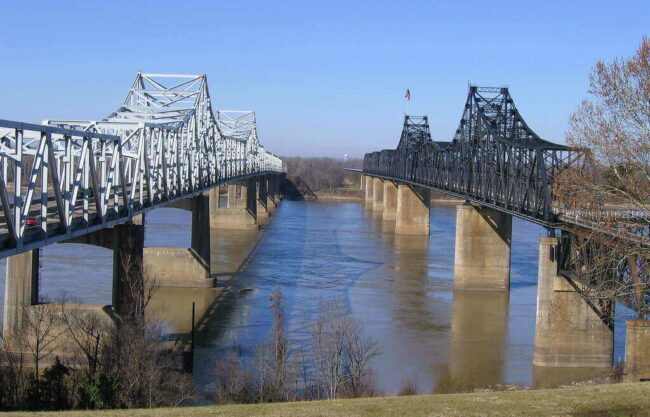
Mississippi River
Mississippi is suffering from the worst drought in about a decade. The Mississippi river is reaching record-low water levels. If the state does not receive any more rainfall, it will remain this way. Unfortunately, the forecast is still predicted to be dry.
River gauges have fallen below their low-water threshold in many places throughout the river. From Illinois all the way to Louisiana, the Mississippi river water levels are historically low.

Earlier this week, the river levels dropped to minus 10.75 feet which had been the lowest ever recorded in Memphis. According to the U.S. drought monitor, the drought has been expanding more this week all the way from the Midwest to the South. This has impacted more than half of the contiguous U.S. with moderate or worse drought conditions. This is the highest value since March and the third-highest value this year.
Drought Impact
Out of all places, the Midwest has seen the worst deterioration. The amount of land impacted by drought increased by around 60,000 square miles. More than 134 million people are impacted by these drought conditions. This is the highest percentage of the population since back in 2016.
Previously people were unable to walk to Tower Rock, which is an island in the middle of the Mississippi river. Tower Rock was generally only accessible by boat but now those visiting can walk there on foot.
Similar to the recent human remain findings in Lake Mead, which also reached record low water levels, human bones were discovered in the Mississippi river. A woman walking along the river found these remains and they were later found out to be human. Within the river, there was a lower jawbone, rib bones, and other unidentified pieces all found.
This time of the year is crucial for the transportation of crops. County Mayor Danny Cook explained how farmers are trying to produce more goods and take them to the market but are unable to ship out as much as they want. Because of the low water levels, the ships can’t be loaded with as many products.
John Lindamood, from Lindamood Planting Company, is one of the farmers impacted because of this drought. Their farm grows cotton, wheat, beans, and corn. Their company is making changes to help with the drought. They have stated that it has become an inconvenience for them. Instead of being able to take their crops straight to the granaries, they now have to put in more effort and labor in manually airing and drying them. This would normally not be the case if the river levels weren’t so low and preventing the goods from being delivered to the granary.
What Comes Next
Additionally, the low water level of the river is allowing salt water to leak into the river’s water stream from the Gulf of Mexico. Due to this, the Army Corps is now building a 1,500-foot wide underwater levee, or an artificial wall, in Louisiana to prevent the water from getting in. Officials do not want this saltwater to get into Louisiana’s drinking water. The Army of Corps of Engineers has also been trying to keep the transportation traffic flowing by clearing out portions of the river, although it is happening very slowly. Many vessels have been waiting to be able to pass through the low river.
Written by Alyssa Calderon
Sources
CNN: Before and after: See how the Mississippi River and its tributaries have dropped to record lows
WPSD Local 6: ‘That’s just catastrophic,’ low Mississippi River levels spell problems for local farmers
Fox Weather: Drought-stricken central US, Mississippi River watershed to receive much-needed rain
Top and Featured Image Courtesy of Phillip Stewart Flickr Page – Creative Commons License
Inset Image Courtesy of Tery14 Flickr Page – Creative Commons License
Discover more from Guardian Liberty Voice
Subscribe to get the latest posts sent to your email.