


What is Happening with rats?
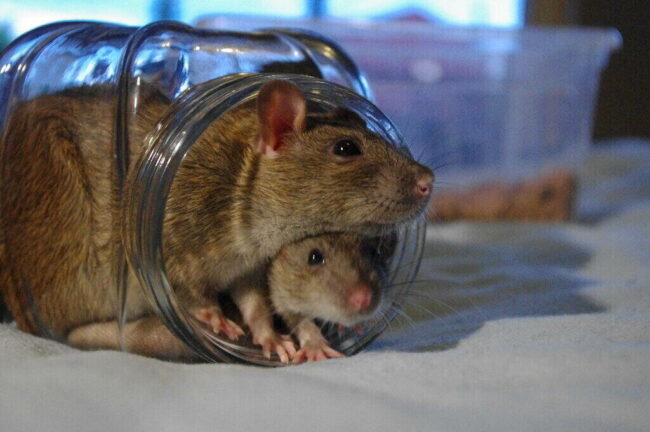
Scientists have always found new ways to learn about human anatomy, and each time they are able to make groundbreaking discoveries. This is no different. Scientists have been able to use rats as a way to study the human brain. Sky News mentions, “Professor Sergiu Pasca and colleagues at Stanford University in California took sesame seed-sized clumps of human brain cells called “organoids” grown in a test tube and implanted them into the brains of baby rats.” This has raised many thoughts and questions about the way they are going about this procedure. Many scientists are hopeful that this will introduce many new methods of treating brain diseases. According to Madeline A. Lancaster, a group leader at the Medical Research Council Laboratory of Molecular Biology, “Overall, I think this approach is a step forward for the field, and offers a new way to understand disorders.” If there was more knowledge on different disorders, a possibility for more cures would arise. On the other hand, others are questioning the ethics behind this procedure.
Is This Procedure Ethical?
Many have been questioning the morality of this procedure. Many believe that this can be harmful to the rats, although Scientists at Stanford University have said otherwise. Sky News mentions, “The research team say they observed no behavioural differences between the rats with human brain grafts and those without.” Seemingly, they were completely normal, even with the difference in brain tissue.
Many say that animal welfare can come into play within this procedure. The Washington Post mentions, “Ethically, there may be concerns about animal welfare, and so just like all animal experimentation, the benefits should always be weighed against the risks to the animal.” Many can argue that this can be a huge issue, but the benefits that arise from this procedure are greater.
Will Primates Come Into Play?
Implanting brain tissue into rats is already in itself a very difficult task to complete. Furthermore, it is also something that is very time consuming to do as well. If rats are a difficult subject, then primates would be ten times more difficult. As of right now, scientists are not planning on doing this same procedure on primates. According to Professor Pasca from Sky News, “Transplantation into primates is not something we would do, or encourage doing.” There may be many reasons for this particular decision, to which there is no say.
What Does This Mean for Brain Diseases and Disorders?
Scientists at Stanford University have already seen some differences within a couple of months. According to US News, “These human/rat brain hybrids already have yielded some new understanding of Timothy syndrome, a rare genetic condition strongly associated with autism and epilepsy, the team noted.” Scientists are starting to use this information to better treat different diseases. The more scientists study the brain tissue through the rats, the more they will find out about different disorders, and how to treat them. According to Sky News, researchers hope that testing a new species, can help see into the human mind, “Particularly when it comes to testing new drugs for brain disease.” If new drugs are tested, more cures can be found.
What Can We Expect in the Coming Years?
Scientists not only at Stanford, but at other universities are continuing to make new discoveries using this particular method. In the coming years, we can certainly expect a new scientific breakthrough relating to a brain disorder. Many more lives will be turned upside down because of these new discoveries.
Written by David Loran Jr
Sources:
Sky News: Lab rats given human brain transplants could shed new light on diseases, say researchers
The Washington Post: Transplant of human brain tissue into rats could help study autism, other disorders
US News: Scientists Transplant Human Brain Cells Into Rat Brains, a Boon to Research
Featured and Top Image Courtesy of Staffan Vilcans’ Flickr Page (Creative Commons License)
Inset Image Courtesy of Nestles’ Flickr Page (Creative Commons License)
Discover more from Guardian Liberty Voice
Subscribe to get the latest posts sent to your email.