


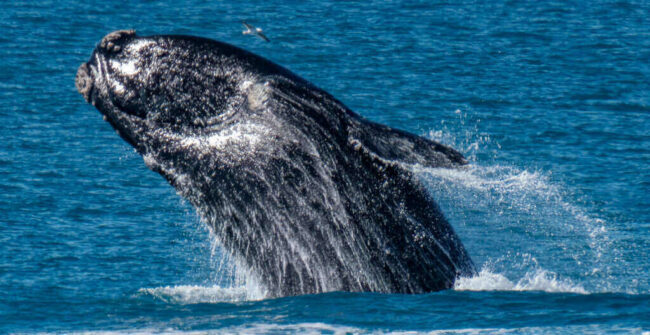
It’s not often that you hear about how a species of animal can save the planet. But whales are doing just that, according to recent research from Australia’s James Cook University. The study found that whales are natural carbon emitters and play an important role in removing carbon dioxide from the atmosphere. This could be great news for our climate crisis. However, it also leaves us with a question: Why aren’t more people talking about it?
Hope For the Climate Crisis
A new study published in the journal Science has found that whales are natural carbon emitters. Specifically, they release methane (CH4) and carbon dioxide (CO2) when they poop in the ocean. This might sound gross, but it’s actually a good thing — when whale poop sinks to the ocean floor, it helps remove carbon dioxide that’s in the atmosphere and thus contributes to cooling down our planet.
In fact, scientists estimate that whales emit 174 million metric tons of CO2 each year — and that figure could be even higher if humpback whales weren’t hunted down so aggressively during whaling times. Though there is some debate about whether or not this was really effective at reducing their numbers.
Whales Play a Big Part
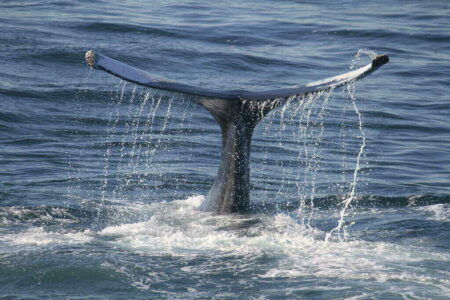
The finding that whales are a big part of the solution to climate change confirms what many conservationists have been saying for years.
Whales are nature’s carbon sinks, absorbing and storing CO2 in their bodies. This means they have the ability to reduce our planet’s toxic impact on itself. Which is exactly what we need right now.
The time has come for us all to help these gentle giants in any way we can. With any luck, they’ll be able to save our planet from an impending environmental disaster.
They are one of the largest animals in the ocean, and they produce a lot of carbon dioxide. In fact, some whales produce so much carbon dioxide that it’s believed to be enough to offset their ecological footprint.
Difference Between Humans and Whale Excrement
However, there are significant differences between whale poop and human poop:
- Whale poop is mostly water with a little bit of solid matter (like krill). Human poop has very little water content and lots of solids.
- Whale poop sinks quickly because it’s heavy from all the water in it; human poop floats because there aren’t many nutrients or minerals in it to make it sink.
Whale Poop Could be the Answer to Our Prayers
That’s because where there are whales, there is zooplankton. And these tiny creatures eat whale poop and store the carbon in their bodies as organic matter. In other words, they turn it into food for themselves and other critters that live within the depths of our planet’s oceans — and that includes us.
These tiny organisms eat whale poop and store it on the ocean’s surface, where it remains in a sort of suspended animation until it can be eaten again by something else or broken down by other processes. This process is called the “biological pump,” and it’s one of our best hopes for mitigating climate change — if only we can harness that power effectively enough.
They are responsible for a great deal of the ocean’s carbon storage. Which helps mitigate climate change by storing carbon in the form of organic matter created by these tiny sea creatures.
Once this carbon sinks to the ocean floor, it’s given a new lease on life.
New Lease on Life
This process creates large amounts of organic matter in their bodies. That is, living things that produce carbon as waste products during respiration and photosynthesis.
The organic matter produced by these animals goes into making new cells or getting stored as fat or glycogen in their bodies. One study showed that a single oyster could have about 1% of its body weight made up of this kind of organic material. And if you think about how many billions of oysters there are in each cubic meter or two…well, let’s just say there’s a lot going on underwater.
Whales Could Be the Answer to Saving Humanity
“Whales help reduce atmospheric carbon levels by storing it [in] their bodies,” said Dr. Tracey Sutton, a senior scientist at Murdoch University’s Centre for Marine Science and Technology (CMST). “They’re doing all this work under water.”
In addition, if left alone whales can help remove excess phosphorous from oceans. Which would otherwise lead to algal blooms that choke out other marine life. It also generates oxygen through photosynthesis even when resting at depth or swimming slowly at shallow depths.
This keeps them healthy enough not only for reproduction but also may make them better able than humans or other animals in maintaining healthy ecosystems worldwide despite manmade pollution.
One Reason Why Whales are Known as Natural Carbon Emitters
They help fight climate change by taking in and storing atmospheric CO2.
The findings are a reminder that we have a responsibility to protect these amazing creatures, who have been helping us for as long as they’ve existed. Whales deserve our respect and appreciation. Not just because they deserve it but also because their survival is critical for the future of our planet.
By Sheena Robertson
Sources:
CNN: Whales can have an important but overlooked role in tackling the climate crisis, researchers say
Science Alert: Whales Can Actually Help Us Fight Climate Change. Here’s How
The Hill: Whales could provide a valuable carbon storage solution: study
Top and Featured Image Courtesy of robdownunder‘s Flickr Page – Creative Commons License
Inset Image Courtesy of Isaac Kohane‘s Flickr Page – Creative Commons License
Discover more from Guardian Liberty Voice
Subscribe to get the latest posts sent to your email.