

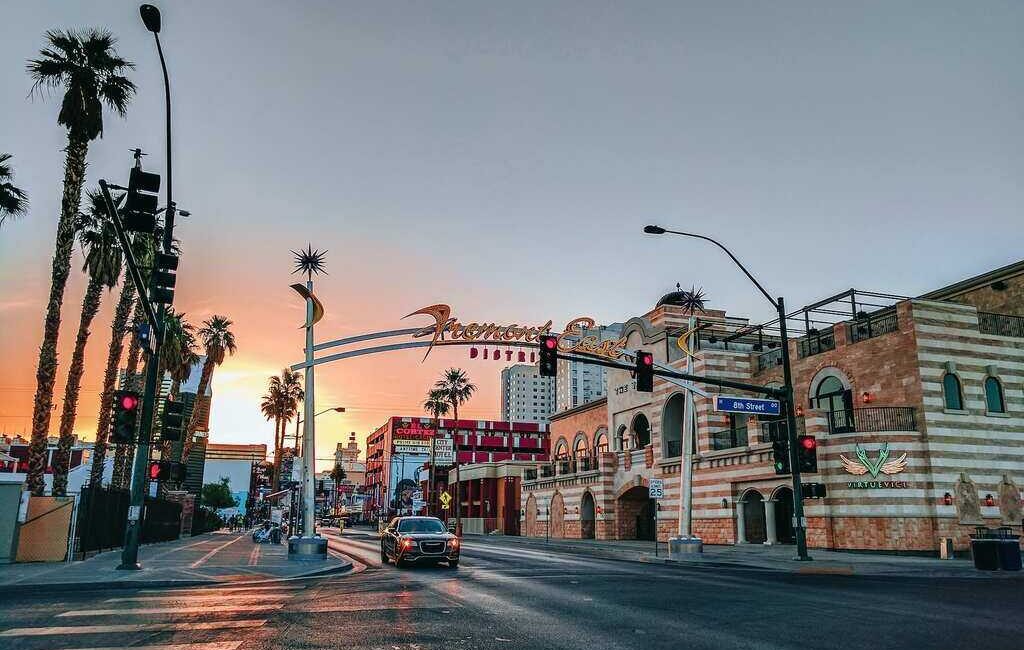
Mardi Gras, also known as Fat Tuesday or Shrove Tuesday, is right around the corner. This year it will be held on February 21. This colorful holiday is held the day before Ash Wednesday, making it a moveable holiday that can take place in either February or March. Ash Wednesday is the beginning of the Christian observance of Lent. Mardi Gras takes place exactly 47 days before Easter.
For many Christians, this holiday is Shrove Tuesday. It is a time to purify oneself through confession — prior to Lent. People spend most of the day receiving penance and absolution.
Some refer to Mardi Gras as “Carnival.” However, this term technically refers to a period of feasting that begins on January 6 (the Feast of the Epiphany) and ends on Fat Tuesday. In New Orleans, Louisiana, Rio Janeiro, Brazil, and Venice, Italy, there are week-long festivities leading up to Mardi Gras.
Traditions
The holiday is called Fat Tuesday because Mardi is the French word for Tuesday and Gras is the word for fat. The name was created from the tradition of using up the fat, eggs, and milk in one’s pantry because they were forbidden during the 40-day Lenten fast.
Not wanting to waste the food, people made pancakes, fried foods, cakes, and other delicious delicacies to consume throughout the day. “Carnival” is derived from the word carnem levare or carnelevarium which means “to take away or remove meat.” Traditionally, Catholics gave up meat and mainly ate fish during Lent.
Over in England, Mardi Gras is known as Pancake Tuesday. They have festivities that include flapjack-related activities. In Olney, Buckinghamshire, they have a pancake race that is held by women and dates back to 1445.
Legend has it the idea behind the pancake race came from a woman who lost track of time while cooking some flapjacks in a skillet. When the church bells began to ring she rushed out the door to attend the shriving service. The woman was still wearing her apron and holding the skillet containing a pancake when she arrived.
Various Other Names For Mardi Gras and Treats Enjoyed
The Pennsylvania Dutch refers to Fat Tuesday as Faasencht or Fastnacht which means “fast night.” On this day everyone enjoys a rectangular donut with a slit in the middle called the Fasnacht pastry.
Polish communities refer to Mardi Gras as “Paczki Day.” It is named after the puffy jelly-filled doughnuts they traditionally enjoy.
In Sweden they call it Semlans Dag, Fettisdagen, or Semmeldagen. On this day they enjoy a sweet cream bun called semla.
Closer to home, in Louisiana the favorite treat is the beignet, a pillowy fried dough concoction talked about in the animated Disney film “The Frog Princess.”
A Bit of History on the Holiday That’s Just Around the Corner
Mardi Gras is a traditional holiday that has been around for thousands of years. Before becoming a Christian holiday it was a pagan festival of spring and fertility. This included the raucous Roman celebrations of Lupercalia and Saturnalia.
After Christianity arrived in Rome, religious leaders decided to incorporate popular traditions into the new faith. This was easier than abolishing them altogether.
On March 3, 1699, French explorers Sieur de Bienville and Pierre Le Moyne d’lberville landed near present-day New Orleans. They held a small celebration dubbing their landing spot as Point du Mardi Gras and marking the first Fat Tuesday celebration in the United States.
In the following years, New Orleans and other French settlements began marking the holiday with masked balls, lavish dinners, and street parties. Decades later the Spanish gained control of New Orleans and abolished the rowdy Mardi Gras rituals. Their bans remained in effect until Louisiana became a U.S. state in 1812.
The Birth of New Orleans Mardi Gras Parade
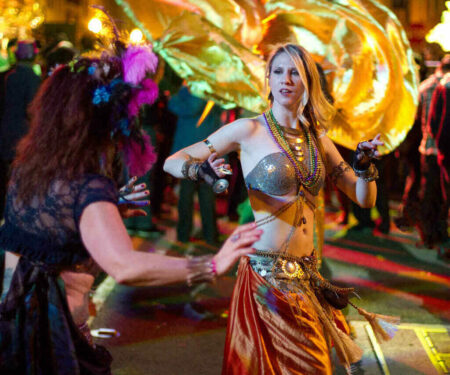
In 1827, a group of students donned colorful costumes and danced through the streets of New Orleans to celebrate Mardi Gras. The students emulated the revelry they saw while visiting Paris. A decade later, the first recorded New Orleans Mardi Gras parade took place. This tradition has happened for over 160 years with roughly 14 cancelations.
The Mistick Krewe of Comus, a secret society of New Orleans businessmen, organized a torch-lit Mardi Gras procession with rolling floats and marching bands in 1857. This set the tone for future public celebrations in the city.
There are also several other traditions that have stuck over the years. Like:
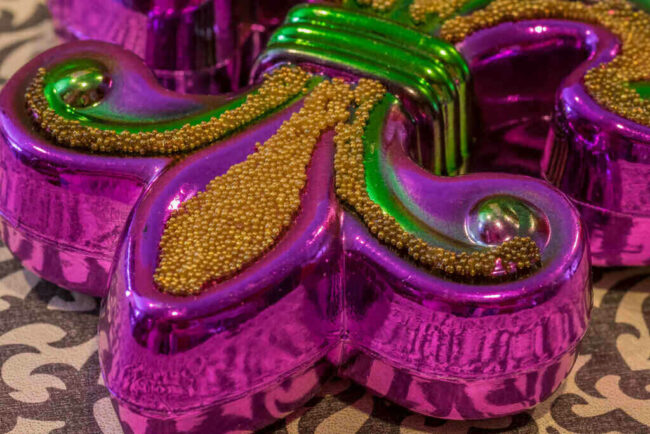
- Yellow, gold, green, and purple beads are being distributed.
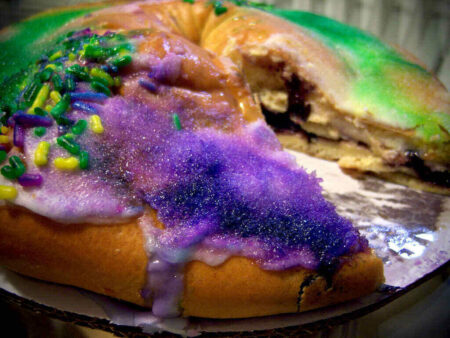
- The iconic king cake. A cake that has yellow, gold, and green with a tiny plastic baby in it. Whoever finds the baby is tasked to bring the cake the following year.
- And wearing colorful masks.
Many restaurants, bars, and communities have huge plans to celebrate Mardi Gras.
By Sheena Robertson
Sources:
History: Mardi Gras 2023
Almanac: Mardi Gras 2023 (Fat Tuesday)
Britannica: Mardi Gras
Top and Featured Image Courtesy of Marcy Leigh’s Flickr Page – Creative Commons License
First Inset Image Courtesy of Nathan Rupert‘s Flickr Page – Creative Commons License
Second Inset Image Courtesy of WyldKyss‘ Flickr Page – Creative Commons License
Discover more from Guardian Liberty Voice
Subscribe to get the latest posts sent to your email.