


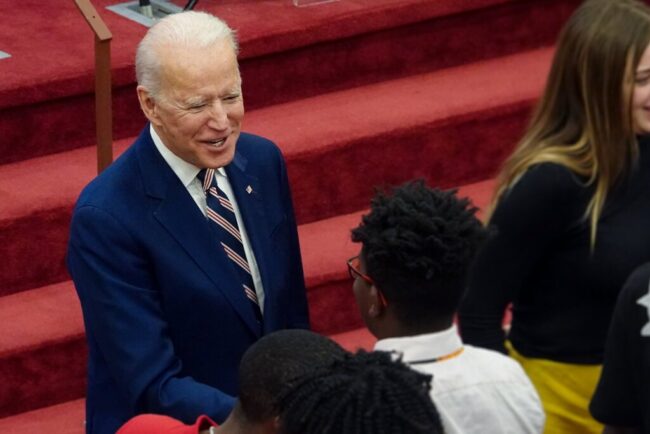
Biden appeals to Netanyahu to seek consensus before pursuing the judicial overhaul. President Biden is currently deliberating whether to explore the possibility of a U.S.-Saudi mutual security pact, contingent on Saudi Arabia normalizing relations with Israel and Israel making concessions to the Palestinians to preserve the potential for a two-state solution.
The recent loss may feel disheartening for those who fought against Prime Minister Benjamin Netanyahu‘s attempt to undermine the Israeli Supreme Court.
Biden has sent Sullivan and McGurk to Saudi Arabia to explore the potential for a U.S.-Saudi-Israeli-Palestinian understanding. Although Biden is still undecided on whether to proceed, he has given his team the green light to engage with Saudi Crown Prince Mohammed bin Salman and determine the viability and cost of such a deal.
While closing a multinational deal of this nature would be time-consuming and complex, even if Biden decides to pursue it immediately. The fact that exploratory talks are already underway is promising. These talks hold significance for two main reasons.
Closing a Multinational Deal
While closing a multinational deal of this nature would be time-consuming and complex, even if Biden decides to pursue it immediately. The fact that exploratory talks are already underway is promising. These talks hold significance for two main reasons. There are a couple of essential points to consider in this situation:
First, a U.S.-Saudi security pact that fosters normalization of relations between Saudi Arabia and Israel could have a transformative impact on the Middle East. This development would surpass the significance of the Egypt and Israel Camp David peace treaty. This is because if Saudi Arabia, as the custodian of Islam’s holiest cities, Mecca and Medina, were to establish peace with Israel, it could pave the way for peace between Israel and the entire Muslim world. It would include countries as influential as Indonesia and even Pakistan. Thus, such an agreement would leave a lasting legacy for the Biden administration’s foreign policy.
Second, certain conditions would likely exist if the U.S. were to form a security alliance with Saudi Arabia. These conditions include Saudi Arabia normalizing relations with Israel and Israel making substantial concessions to the Palestinians. This would directly question Benjamin Netanyahu’s ruling coalition: You can either annex the West Bank or opt for peace with Saudi Arabia and the entire Muslim world. Both options cannot coexist, so a choice must be made.
My column: Biden Is Weighing a Big Middle East Deal https://t.co/UcgsYlXpkM
— Thomas L. Friedman (@tomfriedman) July 27, 2023
Saudi Arabian Government Three Key Objectives
Such a discussion within Netanyahu’s cabinet would undoubtedly be intriguing. It would be interesting to witness Israeli Finance Minister Bezalel Smotrich explaining to the Israeli people why it would be in Israel’s best interest to permanently annex the West Bank, with its 2.9 million Palestinian inhabitants, instead of pursuing Saudi Arabia normalization ties and the rest of the Muslim world.
A Saudi-Israeli peace agreement could substantially reduce the century-old hatred between Muslims and Jews from the Jewish-Palestinian conflict. However, it is essential to note that before such a choice—annexation or normalization—can be presented to this extremist Israeli government, various parties must address and agree upon many complex obstacles.
The Saudi Arabian government has expressed three key objectives in its discussions with the United States:
- They are seeking a mutual security treaty similar to NATO. This would require the U.S. to defend Saudi Arabia in the event of an attack, most likely from Iran.
- They want to establish a civilian nuclear program that the United States would monitor.
- The Saudis want to purchase advanced U.S. weapons, specifically the Terminal High Altitude Area Defense (THAAD) antiballistic missile defense system, to counter Iran’s growing missile capabilities.
Biden Administration Making a Peace Deal
Biden administration making a peace deal without a significant Palestinian component would have negative consequences.
- Firstly, it would undermine the Israeli democracy movement by giving Netanyahu a political victory after he engaged in anti-democratic activities.
- Secondly, it would harm the two-state solution at the heart of the United States Middle East diplomacy.
However, it seems unlikely that Biden would go ahead with such a deal, as it would alienate the progressive element of his party and create opposition within Congress.
Furthermore, Senator Chris Van Hollen stated that a proposal with meaningful provisions to preserve the two-state solution. This proposal will ensure equality and freedom for Israelis and Palestinians. If such a deal were to happen, it is proposed that the Israelis make certain concessions, such as an official commitment not to annex the West Bank, a stop to expanding new settlements, and transferring some Palestinian-populated land from Israeli to Palestinian control. This would, in turn, require the Palestinian Authority to endorse the Saudi-Israeli peace deal.
United States Demands from Saudi Arabia

Conversely, the United States has its demands from Saudi Arabia. The U.S. is urging an end to the conflict in Yemen, where there has been some progress in recent months. They also seek a substantial aid package from Saudi Arabia to support Palestinian institutions in the West Bank. The United States is also concerned about the deepening relationship between Saudi Arabia and China. They are particularly troubled by reports of Saudi Arabia considering accepting the Chinese renminbi as payment for oil sales, which could negatively impact the U.S. dollar.
The U.S. is also looking for Saudi Arabia to limit their cooperation with Chinese tech companies such as Huawei, whose telecom equipment is banned in the U.S. This potential mutual security pact with Saudi Arabia would be the first of its kind since President Dwight Eisenhower entered into a similar agreement with South Korea in 1953. However, the deal would require approval by the Senate.
Lastly, a significant factor in this negotiation would be the demands that Saudi Arabia would make of Israel to preserve the possibility of a two-state solution. Just as the United Arab Emirates required Israeli Prime Minister Benjamin Netanyahu to forgo any annexation of the West Bank, the Saudis may have their own set of conditions to ensure progress toward a two-state solution.
Palestinian Authority Not to Engage in Peace Talks
Palestinian Authority is not currently in a position to engage in peace talks with Israel due to its current state. Meanwhile, Israel’s far-right ministers attempt to take over as much of the West Bank as possible. Instead of the State Department’s ineffective finger-wagging approach, the author suggests a significant strategic initiative that benefits everyone, excluding the extremists on both sides.
This proposed deal would be in the best interests of the US, Israel, and Saudi Arabia. Although this would be difficult and unlikely to succeed. But, it could revive hopes for a two-state solution and force Netanyahu to work with the Israeli center left and right.
Written by Janet Grace Ortigas
Sources:
The New York Times: Biden Is Weighing a Big Middle East Deal; by Thomas L. Friedman
Yahoo! News: Biden dispatches top adviser for talks with Saudi crown prince on normalizing relations with Israel; by AAMER MADHANI
Times of Israel: Top Biden aides dispatched to Saudi Arabia to discuss normalization deal – report; by Jacob Magid
Featured and Top Image Courtesy of stingrayschuller‘s Flickr Page – Creative Commons License
Inset Image by Ellen Wallop of Asia Society‘s Flickr Page – Creative Commons License
Discover more from Guardian Liberty Voice
Subscribe to get the latest posts sent to your email.