


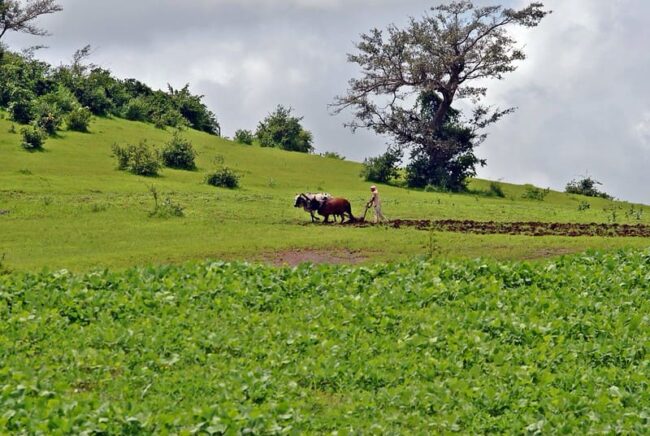
Farmers around the world are feeling the squeeze of the Iran war. Gas prices and fertilizer supplies are waning due to the shutdown of the Strait of Hormuz. A move Iran used in retaliation for the U.S.-Israel joint strikes.
Fertilizer Shortage Troubles Farmers
The shortage of fertilizer is risking the livelihoods of farmers in developing countries already struggling due to rising temperatures and erratic weather systems.
In the Northern Hemisphere, the poorest farmers rely on fertilizer imported from the Gulf, and the shortage comes at the beginning of planting season, says Carl Skau, the deputy executive director of the World Food Program.
“In the worst case, this means lower yields and crop failures next season. In the best case, higher input costs will be included in food prices next year.”
Baldev Singh, is a 55-year-old rice farmer in Punjab, India who says the bulk of the country’s farmers may not survive if the government cannot subsidize fertilizers in June at the peak of demand.
Key Nutrients Halted
Iran is limiting shipments through the Strait of Hormuz, through which a third of the global fertilizer trade flows.
On Friday, March 27, Iranian Ambassador to the United Nations in Geneva Ali Bahreini says Tehran accepted the request from the U.N. to allow humanitarian aid and agricultural shipments move through the waterway.
This will be the first breakthrough at the shipping chokepoint after a month of war. Mostly, markets and governments have focused on blocked oil and gas supplies, however, the restriction of fertilizer threatens farming and global food security.
Nitrogen and phosphate are under immediate threat due to the blockade. Nitrogen is the most widely traded fertilizer that helps plants grow and boosts yields have been hit the hardest due to shipping delays and the skyrocketing price of liquified natural gas.
The conflict with Iran has restricted 30 percent of fertilizer trade, according to Chris Lawson of CRU Group, a London-based commodities consultancy.
Countries are already dealing with critical shortages, according to Raj Patel, a food systems economist at the University of Texas. Ethiopia, for example, gets 90 percent of its nitrogen fertilizer from the Gulf through Djibouti, a supply route that was strained even before the war began.
Once the war ends, producers in the Gulf will need security guarantees before shipments resume through the waterway, and insurances costs would rise, according to Own Gooch, an analysts with Argus Consulting Services based in London.
The government in India prioritized urea supplies for domestic use and provides fertilizer manufacturers with 70 percent of their natural gas. Still, plants are running low.
“The food system is fragile, and it depends on stable fertilizer supply chains to ensure farmers can produce the food the world relies on,” says Hanna Opsahl-Ben Ammar of Yara International, one of the largest fertilizer companies in the world.
The Time Is Now
The shortage is already causing issues in the United States and Europe amid the main planting season.
“Our crops out in the field need nitrogen now – the sooner the better – so they can get off to an good start, helping them establish themselves and build up reserves for the harvest later this summer,” says Dirk Peters, an engineer of agriculture who runs a farm outside Berlin.
Disruptions are also being felt in Africa where farmers rely on fertilizer imported from Russia and the Middle East.
Early heavy rains left farmers with a week of dry weather to prepare fields and apply fertilizer, says Stephen Muchiri, a maize farmer in Kenya and CEO of the Eastern African Farmers Federation, representing 25 million smallholders.
Sources:
AP News: The war in Iran sparks a global fertilizer shortage and threatens food prices
MS Now: ‘Could not come at a worse time’: U.S. farmers hit hard by economic fallout of Iran war
CNBC: It’s not just oil and gas. The Strait of Hormuz blockage is rattling another vital commodity
Featured Image Courtesy of Chetan Jawale’s Flickr Page – Creative Commons License
Discover more from Guardian Liberty Voice
Subscribe to get the latest posts sent to your email.