


The joint strikes from the U.S. and Israel escalated the Iran conflict, posing serious consequences to oil markets and the global economy.
Currently, trading markets are closed; therefore, the effect of the strikes will not be fully understood until they open late Sunday. The weeks leading up to the attack caused crude oil prices to increase over the threat of conflict.
Iran Conflict Oil Impact
Iran is a significant oil exporter, despite sanctions. In December, the report was 1.9 million barrels exported a day, according to the International Energy Agency.
Most of the oil from Iran is exported to China on “shadow ships,” which are tankers that actively conceal their activities to evade restrictions and sanctions. The U.S. has attempted to limit these exports by escalating sanctions enforcement on shadow fleets specifically.
Antoine Halff, chief analyst at Kayrrol, a climate and environmental analytics firm, says, “China has very large reserves, both strategic reserves and commercial reserves. You take Iran out, you’re not really starving the rest of the world.”
The reason the Iran conflict is making oil markets nervous is the concern over the response from Iran, according to managing partner at 3TEN32 Associates, Raad Alkadiri. “The issue will be sort of what that does in the longer term and the potential spillover effects.”
The Strait of Hormuz is a vital shipping route controlled by Iran. Every day, 20 million barrels of oil and oil products pass through the Strait of Hormuz from countries including Saudi Arabia and Iraq, according to the U.S. Energy Information Administration; this is 20 percent of the global demand.
If the Strait of Hormuz closed, the flow of oil would be disrupted, and the impact on global prices would be dramatic and immediate, says Alkadiri.
Strait of Hormuz Response to Iran Conflict
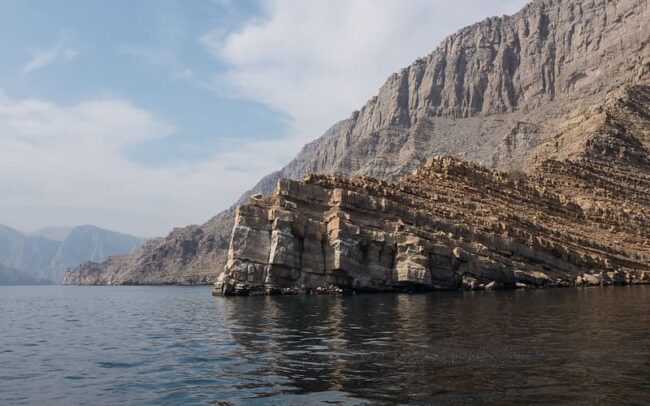
The Strait of Hormuz is between Oman and the UAE on one side and Iran on the other. It links the Arabian/Persian Gulf with the Gulf of Oman and the Arabian Sea.
At its narrowest point, the strait is 33km (21 miles) wide with a shipping lane of just 3km (2 miles) wide in either direction. This makes the route vulnerable to a strike.
Even though it is narrow, it accommodates the largest crude carriers from around the world. Exporters in the Middle East rely on the channel to move supplies to international markets, while importing nations depend on uninterrupted operation.
On Saturday, a spokesperson from the European Union told Reuters that ships crossing the strait have been receiving very high frequency (VHF) transmissions from the Islamic Revolutionary Guard Corps, saying “no ship is allowed to pass the Strait of Hormuz.”
The EU official added Iran had not officially closed the route; instead, several tankers have suspended the shipments of oil and gas through the strait amid the Iran conflict.
A top executive at a major trading desk who spoke with Reuters on condition of anonymity said, “Our ships will stay put for several days.”
Currently, the global oil community is oversupplied, which has prevented a sharp rise, thus far. Halff states the worst-case scenario would be for Iran to strike its neighbors.
“The number one concern for the oil market and for the energy market is whether Iran would retaliate in any way against producer countries in the Gulf. Against Saudi facilities or Kuwaiti facilities, UAE facilities or even Qatar,” says Halff.
“There’s a stronger likelihood of this. And the impact of this would be much, much greater.”
Sources:
NPR: How could the U.S. strikes in Iran affect the world’s oil supply?
The New York Times: Shipping Traffic Through Strait of Hormuz Plummets After on Iran
CNBC: ‘Bigger ramifications than Venezuela’: Markets brace for impacts after U.S. strikes Iran
Featured Image Courtesy of Rita Willaert’s Flickr Page – Creative Commons License
Discover more from Guardian Liberty Voice
Subscribe to get the latest posts sent to your email.