

The second son of Ayatollah Ali Khamenei, who was killed by US-Israeli air strikes on Feb. 28, 2026, has been selected as the new supreme leader of Iran.
The Khamenei Decision
Iran’s Assembly of Experts is an 88-member clerical body that chooses the country’s supreme leader. They made their decision on a “decisive vote” that urged Iranians, “especially the elites and intellectuals of the seminaries and universities, to pledge allegiance to the leadership and maintain unity.”
Introducing the New Supreme Leader
The new supreme leader has never run for office or been subjected to a public vote. However, Khamenei has been a highly influential figure within the inner circle of his father, cultivating deep ties to the paramilitary Islamic Revolutionary Guard Corps (IRGC).
In recent years, Khamenei has increasingly been praised as a replacement for his father, who was president for almost eight years before gaining absolute power for 36 years.
Khamenei’s ascension is a clear indication of the establishment of hardline factions in Iran and indicates the government has little desire to negotiate or come to an agreement at this time.
Khamenei has kept a low profile. He does not participate in public speaking, Friday sermons, or public addresses. In fact, many Iranians have not heard his voice, despite being aware he was a rising star in the theocratic establishment.
Allegations
Local and foreign opponents have linked the name to the violent suppression of protesters for nearly two decades.
The reformist camp in Iran accused him of tampering with elections and wielding the IRGC’s Basij force to come down on peaceful demonstrators during the 2009 Green Movement, which was formed after populist Mahmoud Ahmadinejad was re-elected president in a controversial vote, followed by a crackdown on reformist leaders and supporters.
Since 2009, Basij forces have been at the heart of crackdowns against nationwide protests. The most prominent wave of protests began two months ago, when the United Nations and international human rights organizations said thousands of people were killed.
The late supreme leader and the establishment blamed the killing on “terrorists” and “rioters,” who they claimed were armed, trained, and funded by the U.S. and Israel.
Khamenei began developing ties with the IRGC in his younger years when he served in the Habib Battalion during the Iran-Iraq War in the ’80s. Several of his comrades went on to leading posts in the security and intelligence apparatus of the Islamic Republic.
Additionally, he has amassed an economic empire with assets in several countries, according to reports from Western media outlets.
It is not believed his name is any of the alleged transactions, but reportedly, he has moved billions of dollars through a network of insiders and associates linked to the establishment.
Bloomberg tied him to Ali Ansari, whose bank was forcibly dissolved because it went bankrupt after lending huge amounts of money to unnamed insiders and accruing mighty debts. The dissolution helped to push inflation rates in Iran higher and made the people poorer as the losses were partly compensated through public funds.
Khamenei has not publicly addressed the links or the allegations, including the purchase of luxury property in European countries.
Additionally, he is a hojatoleslam, a mid-level cleric, not an ayatollah. This has been a contentious issue; however, his father was also not an ayatollah when he became Iran’s leader in 1989, and the law was amended to accommodate him. A similar compromise may be made for Khamenei.
Sources:
Al Jazeera: Who is Majtaba Khamenei, Iran’s new supreme leader amid war?
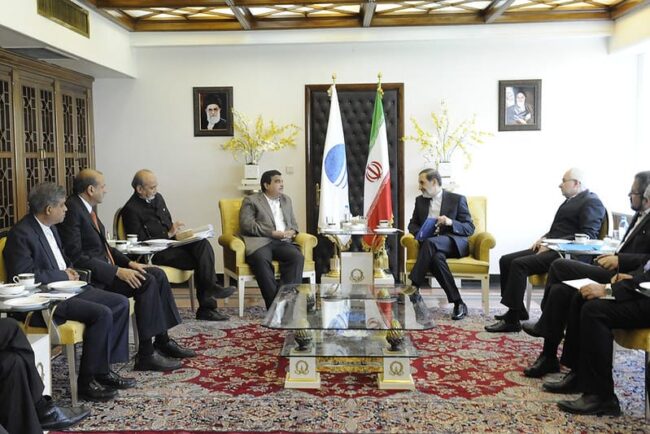
Featured Image Courtesy of MEAphotogallery’s Flickr Page – Creative Commons License
Discover more from Guardian Liberty Voice
Subscribe to get the latest posts sent to your email.