


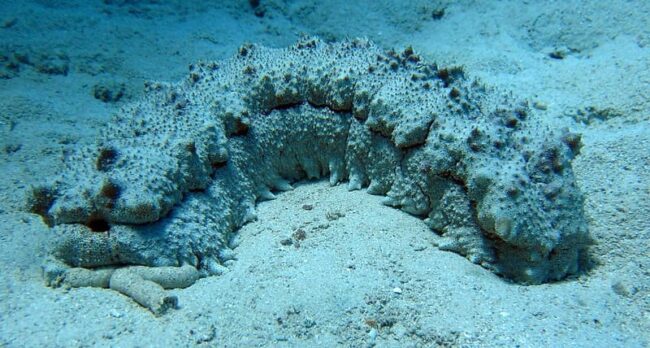
Recently, researchers learned that detached tissue from the sea cucumber Psolus fabricii can survive for years in seawater.
The tissues absorb nutrients, heal wounds, reorganize their structure, and remain active long after being separated from the animal.
The discovery surprised scientists because the tissue was not kept in sterile laboratory conditions. The tissue was kept in flowing seawater filled with microbes, sediment, and organic debris.
“We haven’t grown a new, complete sea cucumber yet, but we are seeing pretty stunning growth and diversification of cells literally years after this tissue was removed. It’s like a lizard that loses its tail. We know some lizards can grow new tails; we’re talking about whether the tail can grow a new lizard,” says Rachel Siplet, senior research scientist at the Bigelow Laboratory for Ocean Sciences.
Keeping the Tissue Alive
Since the 1800s, scientists have attempted to keep animal tissue alive. Living tissue could help guide researchers learn about disease, test drugs, and observe cells without causing harm.
Once tissue is removed from the body, it usually dries out, becomes infected, or loses its structure. Modern tissue culture systems require sterile conditions in carefully prepared nutrient mixtures.
There are individual cells that can survive indefinitely. HeLa cells were removed from a cervical cancer patient in 1951, and they have endlessly divided. Stem cells are also capable of reproducing over long periods of time.
Living tissue, however, is more complicated than isolated cells. Real tissue needs communication within muscles, connective tissue, nerves, and surface layers. The ability to keep this organization intact outside the body is difficult.
Regeneration Experts of the Sea
The focus of the study was echinoderms, a marine group that includes sea urchins, sea stars, sea cucumbers, and brittle stars. These creatures are known for regenerative abilities.
Sea stars can regrow arms. There are sea cucumbers that can expel internal organs and replace them later. Certain sea urchins show minimal measurable aging at a cellular level.
Researchers were aware that echinoderm tissue responded differently from other animal tissue. There have been experiements were explants did not perform well in nutrient-rich laboratory media.
This information led scientists to wonder if natural seawater contained the nutrients these tissues needed.
Psolus fabricii is a small reddish sea cucumber found in the waters of the Arctic and North Atlantic. It clings to rocks with rows of tube feet and grabs food particles with branching tentacles.
These appendages become damaged in the wild, making them ideal for regeneration research. After discovering a detached tube foot had not decayed after several weeks, scientists collected adult sea cucumbers near Newfoundland and cut small tissue explants from them. The explants were placed into culture plates inside tanks on natural seawater.
No sterile conditions or antibiotics were used.
Every tube foot explant survived the first week. Within two days, damaged cells around the edges of the wound disappeared. By the sixth day, the surrounding tissue sealed the injury.
Microscopic observations showed waves of cell division and programmed cell death near the wound site. Coelomocytes, immune cells, migrated toward areas of injury, and damaged material and waste were expelled into the surrounding seawater. The detached tissue acted like an independent living system.
Feeding by Sea
The research team investigated how the explants managed to live for so long. They exposed the tissues to seawater with nitrogen-15-labeled amino acids and ammonium. After several days, the explants were observed to be rich in nitrogen-15. They were absorbing the nutrients from the seawater.
There was another observed change. The explants broke down their own muscle layer. The detached tube feet were converting muscle into energy.
“Natural seawater is just about the most microbially diverse, least clean approach we could take experimentally. Yet, that rich environment full of bacteria and all this organic matter was actually feeding them and allowing this tissue to heal and grow,” says Sipler.
The explants transformed over time. Their wounds became invisible, connective tissue expanded, and collagen fibers became dense bundles.
By the end of a year, they were larger than their original size. Some survived for over three years. Tentacle tissues reacted to touch by extending or retracting, proving nerve networks remained active.
Scientists repeated this experiment with brittle stars, sea urchins, sea stars, and other sea cucumber species. Most of these experiments lasted a few weeks or months. None of these species had the endurance of Psolus fabricii.
Researchers anticipate that psolusosides, special antimicrobial compounds, protect tissues from harmful microbes.
Echinoderms share biological pathways with vertebrates; therefore, these discoveries may influence human medicine.
The broader significance of this work is explained by Andrea Bodnar, science director of the Gloucester Marine Genomics Institute. “This discovery highlights that the ocean holds profoundly unexpected biological innovations.
“The fact that tissue explants from a sea cucumber can heal, reorganize, and survive independently for years in natural seawater suggests an entirely new model for biological resilience and tissue regeneration.”
Additionally, the study raises the question: “What does it mean to be alive?” A detached tube foot should die. However, these tissues heal themselves, absorb nutrients, defend against microbes, and survive on their own for years, continuing to challenge biology assumptions.
Sources:
Nautilus: Can Cells from a Sea Cucumber Live Forever?
earth.com: Sea cucumber tissue heals itself and survives for years after being detached from the body
Discover Magazine: The Ocean’s ‘Real-Life Zombie’ Is a Sea Cucumber Whose Amputated Tissue Survived for Three Years
Featured Image Courtesy of Saspotato’s Flickr Page – Creative Commons License
Discover more from Guardian Liberty Voice
Subscribe to get the latest posts sent to your email.