

Swiss researchers learned that while colorectal cancer rates are declining among older adults, it is increasingly common in younger adults. According to a nationwide study conducted in Switzerland, there has been a steady rise in the number of adults under the age of 50. Additionally, these younger patients are being diagnosed at later stages of the disease, underscoring a greater need for symptom awareness and risk factors. These findings were published in the European Journal of Cancer.
Colorectal cancer is one of the most common cancers in the world. The disease ranks third in new diagnoses and second in cancer-related deaths. The World Health Organization reports that more than 1.9 million people were diagnosed with colorectal cancer in 2022, and 900,000 died from it.
Europe, New Zealand, and Australia have the highest rates of the disease, and Eastern Europe has the highest mortality rates.
In Switzerland, the disease is among the three most diagnosed cancers, with 4,500 new cases a year. Screening programs have helped to reduce diagnoses in adults over 50 years of age; however, the opposite is trending in younger adults.
“Cases are now emerging in people in their thirties, with no personal or family history of the disease. These patients are often diagnosed late, by which time metastases are already present,” says Dr. Jeremy Meyer, privat-docent in the Department of Surgery at the UNIGE Faculty of Medicine and a Senior Consultant Surgeon in the Division of Digestive Surgery at the HUG.
Colorectal Cancer Study
Meyer joined Dr. Evelyne Fournier, an epidemiologist at the Geneva Cancer Registry at UNIGE, to study the trend. The two conducted the first national study on colorectal cancer among adults under 50 in Switzerland.
Their study reviewed 96,410 colorectal cancer cases diagnosed between 1980 and 2021. The study information was collected from the Geneva registry and the National Agency for Cancer Registration.
Researchers learned that cancers diagnosed before the age of 50 accounted for 6.1 percent of all colorectal cancer cases. Within this population, the incidence increased by 0.5 percent annually, reaching nearly seven cases per 100,000 person-years.
The pattern that emerged is a stark contrast to what researchers observed in adults aged 50-74, the most targeted group by screening programs. Incidence declined by 1.7 percent among men and 2.8 percent among women in that population.
“Our study also shows that the observed increase primarily concerns rectal cancers in both men and women, as well as right-sided colon cancers in young women. These differences suggest the presence of distinct biological or environmental mechanisms,” according to Fournier.
Additionally, the study discovered that younger patients were more likely to have an advanced diagnosis. Twenty-eight percent of those under 50 had metastatic cancer when they were diagnosed, compared to 20 percent of older patients.
Colorectal Cancer Symptoms
Recognizing early signs plays an important role in improving outcomes. These symptoms include bloody stool, persistent abdominal pain, changes in bowel habits, and unexplained weight loss. These symptoms should be evaluated by a medical professional as soon as possible.
“Some countries, such as the United States, have chosen to lower the screening starting age to 45. In cases of increased familial risk or hereditary colorectal cancer, screening should be carried out even earlier,” says Meyer.
Researchers are still working to understand why colorectal cancer is becoming more prevalent among younger adults. Multiple factors may be contributing to the increase, including rising obesity rates, changes in diet and lifestyle, and environmental exposures early in life that affect the microbiome.
Testimony
In April 2024, father of two, Chris Kowalski, felt discomfort in his stomach and rib area one day after completing his regular workout routine. He made an appointment with his primary care physician at Mass General Hospital. A CT scan showed stage 4 colon cancer that had spread to the 36-year-old’s liver.
Kowalksi was shocked. He was a healthy, young man with minimal symptoms, who played two sports in college and continued to work out daily.
“When you hear something like that … the word ‘cancer,’ you’re like, ‘Am I going to die in the morning?'” he said.
This is one man among a growing number of people under the age of 50 who are being diagnosed at advanced stages. Many of these people had no symptoms, and no one knows why the number of cases among younger people is rising.
Dr. Leon Pappas of Mass General Brigham Cancer Institute is Kowalski’s oncologist. He says screening is critical for early detection.
“Unfortunately, we’re seeing increasing incidents of colorectal cancer in young people. And because the screening age is 45, often people haven’t had a colonoscopy yet. The earlier that you discover any cancer, the more chances you have for a better response and potentially cure, including colon cancer,” he says.
At the time of his diagnosis, Kowalski’s wife was pregnant with their second child. She says, “The hardest part of this has been watching how it impacts the kiddos, I think. We try our best to not let this impact them. But knowing what we know, it’s going to.”
Another Testimony
In July 2022, after a routine colonoscopy, Tracy O’Rourke was diagnosed with rectal cancer, despite having no symptoms or family history. She was 47 years old.
O’Rourke used a stool DNA test she purchased from her local drug store. “I did not have any symptoms at all. I didn’t have any stomach pains. I hadn’t been ill,” she says.
Her treatment included chemotherapy, radiation, and surgery to remove a large rectal tumor.
According to Dr. Justin Maykel, chief of colon and rectal surgery at UMass Memorial Medical Center, “there’s been a lot of attention to the increased incidence of colorectal cancer in patients under age 50.”
A bright light has been shone on the disease with the recent deaths of actors Chadwick Boseman, 43, and James Van Der Beek, 48, who both died from colon cancer.
Maykel says, “People are diagnosed in the 40s, in their 30s, and even in their 20s. Why is that happening? We don’t have a great answer, to be honest with you.”
Lifestyle factors like diet and inactivity play a role, according to Maykel. Other risk factors include family history, and certain ethnic groups, such as Native Americans and African Americans, are at a higher risk.
Sources:
SciTechDaily: Why More People in Their 30s Are Suddenly Getting Colon Cancer
WGBN: Under 50 and living with colorectal cancer, two Mass. patients strive to help others
KBOI: Why are more young people getting colon cancer? Idaho doctors help lead search for answers
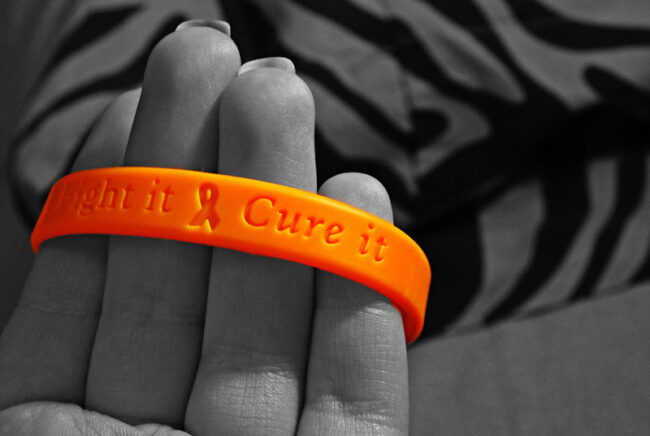
Featured Image Courtesy of Billie.Stock.Photography’s Flickr Page – Creative Commons License
Discover more from Guardian Liberty Voice
Subscribe to get the latest posts sent to your email.