


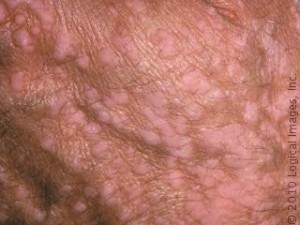
 A study, published in the Journal of the American College of Cardiology, indicates the likelihood that women infected with Human Papillomavirus (HPV) have a higher incidence of cardiovascular disease than women not infected by HPV.
Of the 2450 study participants, 1141 women were positive for HPV. 573 women had cancer associated HPV types. Of those 573 women, a total of 60 women had reported having myocardial infarction or stroke, both of which are considered cardiovascular disease.
HPV infections in women are generally temporary and have a little long term effects. 70% of HPV infections are absent after one year, and 90% are absent within two years.
5 to 10% of women infected with HPV, have a higher risk of developing precancerous lesions of the cervix, which will progress to invasive cervical cancer given time.
It is these women who have increased risk factors for cardiovascular disease as a result of the HPV infection.
It has been recently reported in the journal Sexually Transmitted Diseases, that male circumcision decreases the likelihood of and spreading the HPV infection to their partners. Other studies indicate that male circumcision also reduces the incidence of HIV infection transmission to sexual partners of HIV infected individuals.
There are more than 30 to 40 types of the human papilloma virus that can be transmitted through sexual contact with the human genital region. The majority of cases of HPV cause no symptoms in most people, but some cases can cause genital warts, and in a minority of infections, can lead to cancer of the cervix, vulva, vagina, penis, throat and rectal. HPV type 16 and type 18 infections are strongly identified with higher risk factors for developing throat cancer.
There are over 128 HPV types that have been identified, which may lead to cancer. They are, type 16, 18, 31, 33, 35, 39, 45, 51, 52, 56, 58, 68, 73, and 82.
Of these cancer causing identified types of HPV, the number of cases reported between the years 2004 two 2008 in the US totaled 32,371, with 25,900 of those cases attributed to HPV infections, and 22,600 of them attributed to HPV types 16 and 18.
The most common infection result attributed to HPV are warts. Most times they cause “cutaneous,” or common warts, as well as plantar warts, which are found on the soles of the feet and grow inwards causing great pain when walking, periungual warts, which form under the fingernail, around the fingernail or on the surface of the cuticle, in addition to flat warts, which are commonly found on the arms, face or for had, and just like common warts, occur more frequently in children and teens.
A rare condition, called respiratory papillomatosis, is caused by HPV types 6 and 11. This condition is described as reoccurring warts that form in the larynx or in other areas of the respiratory tract, which may interfere with breathing and in rare cases, progress to cancer.
HPV infections are relatively easy to prevent, as vaccinations for the prevention of the disease are available through your family doctor or your local health department.
An examination of what vaccinations are available through your local health department, and which ones you should take advantage of would be an optimum strategy for decreasing your risk of acquiring an infectious disease, virus or viral disease.
The study from the Journal of the American College of Cardiology was co-authored by Hsu-Ko Kuo, MD, MPH, Department of Internal Medicine, at the University of Texas, Medical Branch, Galveston, TX, and Ken Fujise, MD, Division of Cardiology, University of Texas, Medical Branch, Galveston, TX.
Article by Jim Donahue
Discover more from Guardian Liberty Voice
Subscribe to get the latest posts sent to your email.
7 Responses
Hey! This post could not be written any better! Reading this post reminds me of my old room mate! He always kept chatting about this. I will forward this post to him. Pretty sure he will have a good read. Many thanks for sharing!
Jake, it’s just a typo “the is” should be ‘these’. There is also “vaccinations for the Pirates” – who knows what that’s supposed to mean…?!
Sounds like an interesting study, but very shoddy journalism. There is no mention of how many HPV-negative women had MI or stroke so you cannot state HPV positivity is linked to CV disease without this data. If you are going to write about the study, please report the relevant information!
“increased risk factors for cardiovascular disease as a result of the HPV infection” is very misleading as well as it’s near impossible to prove that the increased risk was due to the infection alone.
Oh, and GM, HPV is not a bug (or bacteria) – the V stands for virus, quite different…
Thank you for correcting my grammar mistakes. I must apologize as my mind was in Newtown, Conn. that morning. The statistical info you are looking for was in the second paragraph, and you can see the link to the study in the first paragraph and the last paragraph.
Thank you for your observations, you should be a journalist, or perhaps you already are?
Thanks for your comment GM – the figures in the second paragraph are not statistical info and I couldn’t connect to the link on the device I was using. It does indeed sound like a significant difference, but I am highly sceptical that the study was robust enough to link HPV to the CV events and exclude other factors… Because HPV is so prevalent and normally asymptomatic, there are many other factors that those women had in common that could have been the cause of their MIs and strokes.
I am not a journalist but I have written and spoken about HPV many many times as I have worked in cervical cancer prevention for over 7 years, and found that there are glaring omissions or errors in almost every report or article I have seen in the non-medical press… No criticism of you, it’s a difficult area to report accurately.
I have to tell you, this was one hard paper to analyze. But they did exclude all manners of other factors that could lead to CVD, and after your comments, I re-read the study 3 times only to come to the conclusion that the NO HPV negative women developed CVD type outcomes, and here is the link:
http://www.sciencedirect.com/science/article/pii/S0735109711030440
Jake, Your sentence structure is off a bit, but yes, women who are infected with the HPV bug have increased risk for negative cardiac outcomes, and experience heart related problems at a much higher rate than women NOT infected by the HPV bug.
Incoherent sentence:
“It is the is women who have increased risk factors for cardiovascular disease as a result of the HPV infection.”