


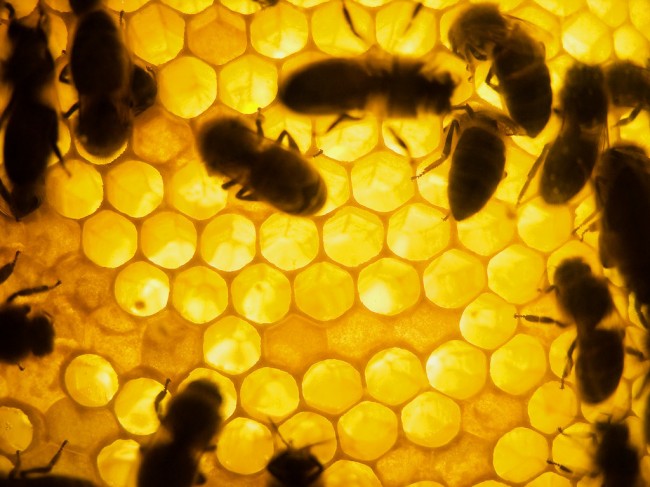
The almond industry in California leads the world in the nut’s harvest and production. Any drive up I-5 in the Great Central Valley will attest to the acres upon acres of land devoted to the brownish-reddish nut. In fact, the state contains 800,000 acres of almond trees which supply 82 percent of the world’s almonds. The California almond industry is in jeopardy due to the phenomenon of Colony Collapse Disorder, which plagues bees statewide. So, under the auspices of the Almond Board, they have decided to help.
Bees are vital to the pollination of almond trees. Without the farmer’s best friend, the bee, trees will not produce the nuts needed to sustain a thriving business. When colonies of bees collapse, the next year’s crop is put in jeopardy. Since the world relies on California almonds, the bees are important to the livelihood of possibly millions of people, from the farmers in Tehama to retailers in Thailand. Domestically, the almond crop is the nation’s top crop in terms of export value. A lot is riding on the success of the bees.
California’s drought has been impacting the bee, however. Hillsides which were once covered with wildflowers are now brown, dry mounds. This cuts the bees natural diet dramatically, prompting beekeepers to supplement with manufactured foods which cannot deliver the nutritional punch needed to keep the bees at optimal health. Where a larger system, such as the human body, can withstand periods of poor nutrition from processed foods, a bee is not so resilient. This malnutrition cuts honey production by up to or exceeding 60 percent.
Bee nutrition has been listed by the Almond Board as the top priority for maintaining healthy bee populations. What is needed, then, is rain. However, this solution is rather difficult to obtain.
To help prevent crop loss due to fungicides, the Almond Board has recommendations. Since almond trees release their pollen in the morning, the board has recommended that fungicides be applied to almond groves in the late afternoon. Fungicide use has been implicated in possibly poisoning the bees but at least it is known that if the stigma of the plant is wet that pollen germination is inhibited. The bees cannot get their work done if a wet poison is spread over their workspace.
Adding to the problem of Colony Collapse Disorder is a new virus which has been linked to the problem. Tobacco ringspot virus has been identified as posing a threat to bee populations and the $3 billion almond industry.
To help the California bees, the almond industry has released a document outlining best practices for using insecticides during the bloom and honey bee brood periods. In fact, the Almond Board has invested more in the issue of colony collapse disorder than any other industry group. It’s a tall order, as the University of Georgia’s Department of Entomology lists up to seven factors contributing to the plight of the bee.
California bees are finding help from the Almond industry but universities and local activists are taking on the charge nationwide. Up in Oregon, poet and beekeeper Dena Rash Guzman is starting her own honey company, Lusted Road Honey Co. & Humblebee Pollinator Conservatory, to help save the bees and many urban farmers in Portand, Oreg. and New York City are striving to help this vital insect maintain a healthy population.
By Hobie Anthony
Sources:
Penn State College of Agriculture Sciences
California Almond Board
LA Times
LA Times
University of Georgia Entomology Dept
Capital Public Radio
Discover more from Guardian Liberty Voice
Subscribe to get the latest posts sent to your email.
2 Responses
Dena, Thats a great idea,but the TONS of nasty pesticides they spray on the almond farms kills the bees. Thats why they aren’t any wild bees there. I also place my bees in cherry,apple,peaches and plum orchards right after the Almonds. After they are pulled out of there and come back to Idaho for the summer, you can visibly see how week and struggling many of the hives are. In Wenatchee Washington they say there are absolutely no wild bees left,because they have all been killed by spraying pesticides. There is a huge incidence of cancer in Wenatchee. I bet it’s the same in all of these farming communities. I know that Butte county California has a huge cancer problem where they grow alot of peaches and walnuts. The root of the problem is man made. Pesticides.
I am looking forward to reading the best practices. I hope one consideration is bordering acres with native flowering plants to encourage pollinators to take up residence within the orchards themselves. I love almonds. Thanks for mentioning us, Hobie: beekeepers are doing the best they can. The support of the agricultural industry is appreciated by us all, and by honeybees.