


Harvard professor and LSD researcher-turned-spiritual leader born Richard Alpert but known throughout the world as Ram Dass passed away on Sunday, Dec. 22, 2019. He was 88 years old.
Dass and his colleague in the Harvard psychology department Timothy Leary forever changed a generation of Americans through his explorations with psilocybin, LSD-75, and other psychedelics. Then, Dass reinvented himself as a spiritual leader and humanitarian – “a bhakti yogi with love as his path,” according to Tricycle. He was one of the most beloved voices of the counterculture.
It was Leary who encouraged American youth to “Turn on, tune in, drop out,” however it was Dass who became the model of awakening that was not dependent on drugs.
Dazz was fired from Harvard in 1963 for giving LSD to an undergraduate. Dass and Leary moved to Millbrook, New York. Leary had been fired because he was not showing up to his classes. While in Millbrook, Leary and Dass continued their experimentation with psychedelics with an ever-changing cast of psychonauts and acidheads.
In 1967, Dass was still searching for something and he went to India. There, he found the Hindu sadhu Neem Karoli Baba, known as Maharaj-ji. He was wrapped in a blanket and seated on a wooden tucket, a low Indian bed. Dass was curious how a spiritual adept would react to LSD so, he gave him a rather large dose. The LSD did not have any effect on the holy man.
Maharaj-ji renamed Alpert Ram Dass and, until his death in 1973, Dass would periodically revisit the guru.
In 1974, Dass returned to America and started a new life based on meditation and his own synthesis of Buddhist, Hindu, Advaita, and Sufi teachings. Later, he would include Jewish mysticism.
Dass’ first book for the masses was “Be Here Now.” The book sold over two million copies since it was published in 1971. The book offered seekers an “engaging, unconventional, slightly zany roadmap for finding a spiritual path and a more enduring connection to higher consciousness than a tab of acid could bring.”
From then on, Dass continued to share his wisdom of a journey that had gone beyond personal transformation to embrace a cosmic worldview and social agenda through books, podcasts, retreats, and teachings.
Dass founded the Hanuman Foundation to further application of the principles and teachings of Neem Karoli Baba, which continues today through Dass’ Love Serve Remember Foundation. Additionally, he set up the Prison Ashram Project through the Hanuman Foundation. This allowed members to offer counseling and spiritual practice to the incarcerated, many of whom contacted Dass after reading his first book, “Be Here Now.”
Inspired by the humane approach to death and dying in India, Dass helped to co-create the Living-Dying Project to support caregivers, healthcare professionals, and those dealing with a terminal illness. Through this project, he established a hospice and training center in Santa Fe, New Mexico.
In 1979, alongside epidemiologist and Hanuman board member Larry Brilliant, Dass founded the Seva Foundation, which combats blindness in the Himalayas and provides healthcare there and in other underserved areas in Asia and the Americas.
Additionally, Dass helped set up the Social Venture Network to explore ways to bring spiritual awareness to businesses and served on the board of Creating Our Future. Creating Our Future is an organization for teenagers who desire to lead more spiritual lives.
He has lived in Maui since 2004. There, he co-founded Doorway Into Light, which helps people prepare for death. He said, “Sitting by the bed of the dying is sadhana [spiritual practice].”
After he had a massive cerebral hemorrhage in 1997, he observed, “My life has been a dance between power and love. First part, till Harvard: power, power, power, power. Up until drugs, I thought power was the end all and be all, because I was a little individual. Then drugs: love, love, love, love. My first mushroom trip was so profound that I saw radiance was inside, and I said, ‘I’m home, I’m home, I’m home.’”
Ram Dass was born Richard Alpert on April 6, 1930, in Boston. He was the youngest of three brothers. George Alpert, Dass’ father, was a prominent lawyer, president of the New York, New Haven & Hartford Railroad and the first board president of Brandeis University.
The family was Jewish, and he was bar mitzvahed, but later called the ritual “hallow.” Dass claimed that he had no interest in religion until he took psychedelics.
After he graduated cum laude from Williston Northampton, a prep school in Massachusetts, Dass earned a bachelor’s degree from Tufts, a master’s degree from Wesleyan, and a Ph.D. from Stanford – all in psychology.
When he was in California, Dass met psychologist David McClelland, who became his mentor and brought Dass to Harvard with him.
Dass was a star at Harvard. He had appointments in the Psychology and Social Relations Departments, the Graduate School of Education, and the Health Service, where he served as a therapist. Additionally, Dass had research grants from both Yale and Stanford, and he was publishing academic books.
In “Be Here Now” he wrote, “In 1961, at the beginning of March, I was at the high point of my academic career. I was making great income, and I was a collector of possessions. But what it all boils down to is that I was really a very good game player.”
On March 6, 1961, Dass took psilocybin for the first time and everything changed.
Psychedelics led to his second great awakening: His encounter with Maharaj-ji and spiritual transformation. In 1997, he was finishing “Still Here” and he had his third great awakening, the stroke that began the final phase of his life. At the time, he was given a 10 percent survival rate.
Shortly before his stroke, Dass told an audience, “Something has happened to me as a result of my meanderings through consciousness over the past 30 years that has changed my attitude towards death. A lot of the fear that denial of death generated has gone from me. Death does not have to be treated as an enemy for you to delight in life. Keeping death in your consciousness as one of the greatest mysteries and as the moment of incredible transformation imbues this moment with added richness and energy that otherwise is used up in denial.”
After the stroke, Dass said these observations were hopelessly naïve. The stroke gave him a deeper understanding of what suffering, aging, infirmity, and death really mean. He viewed it in spiritual terms, “I don’t wish you the stroke, but I wish you the grace from the stroke. The stroke pushed me inside even more. That’s so wonderful,” Dass said in the 2017 documentary by Derek Peck, “Ram Dass, Going Home.”
Now, after Dass had spent many years helping others, it was time to allow others to help him. Before the stroke, he wrote a book titled, “How Can I Help?” Dass stated that if he had written the book after the stroke it would have been titled, “How Can You Help Me?” “In this culture dependency is a no-no. The stroke showed me dependency, and I have people who are dependable.”
In 2004, Dass had a near-fatal infection. After this experience, he was primarily confined to his Maui home. It was a gift from devoted friends; “a sprawling, light-filled aerie with lush vegetation and a panoramic ocean view.” He took pleasure in his weekly swim in the ocean accompanied by neighbors. He would be wheeled to the shore in a dune buggy that had enormous yellow balloon wheels and orange floats as armrests. Then, he would launch himself into the ocean buoyed by a large black life jacket, he would paddle with yellow webbed mitts and a look of delight on his face.
Ram Dass was one-of-a-kind. Even after the stroke rendered him nearly immobile with halting speech, he still managed to summon his mind to be totally present for his weekly podcast and the friends and followers who gathered around him. Some would come to Maui for the three-annual retreats. His door was always open to a steady stream of visitors, many of them strangers seeking.
Mirabai Bush, a “guru sister, from Dass’ days with Maharaj-ji in India summarized his life’s work in her introduction of the book she co-wrote with Dass, “Walking Each Other Home: Conversations on Loving and Dying.” She wrote, “Ram Dass’ journey has been a search for love and for finding a way to stay in the space of love once he experienced it. Ram Dass was always loving, but now he is love.”
By Jeanette Vietti
Sources:
Tricycle: Ram Das, Beloved Spiritual Teacher, Has Died
Time: Ram Dass, Spiritual Leader Who Experimented With LSD and Aimed to Spread Enlightenment, Dies at 88
ABC News: Spiritual guru and LSD pioneer Baba Ram Dass dies at 88
Featured Image Courtesy of Riccardo Cuppini’s Flickr Page – Creative Commons License
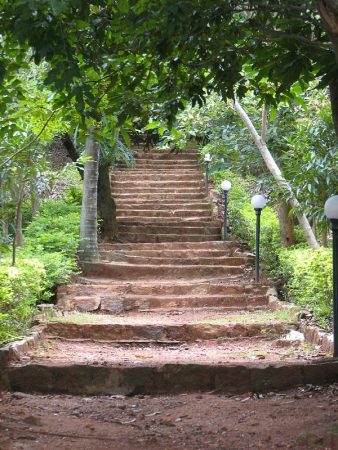
Inline Image Courtesy of Sabarish Raghupathy’s Flickr Page – Creative Commons License
Discover more from Guardian Liberty Voice
Subscribe to get the latest posts sent to your email.
One Response
Like!! Great article post.Really thank you! Really Cool.