

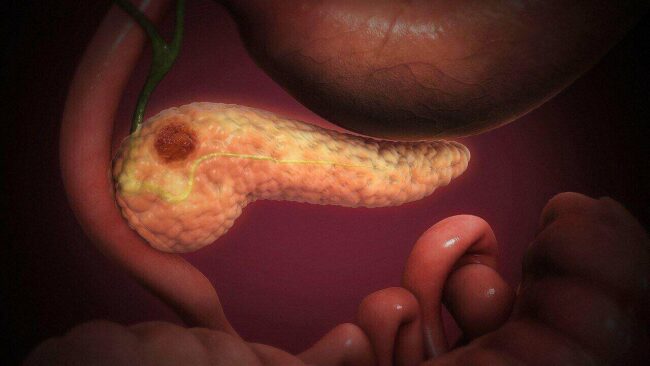
Pancreatic cancer is hard to catch, deadly, and tough to treat because pancreatic cancer tumors do not respond to cancer therapies as others.
Pancreatic cancer has long been considered a death sentence because it is one of the deadliest forms of cancer. Approximately 25% of cancer patients survive one year after being diagnosed, and 5 out of 100 will survive their cancer for five years or more.
Pancreatic cancer is a silent killer because most patients do not have symptoms until the cancer is enormous enough to affect the nearby organs.
Here are some of the well-known people who died of Pancreatic Cancer:
- Steve Jobs did not have pancreatic cancer in 2003, but doctors diagnosed him with a rare neuroendocrine tumor that affected his pancreas.
- Alex Trebek was formerly the host of the long-running Jeopardy game show.
- John Hurt, the celebrated English actor, was known for his roles in the Alien, Harry Potter movies, and The Elephant Man.
- Luciano Pavarotti is a wildly popular bearded tenor.
- Patrick Swayze was known for the Dirty Dancing and Ghost movies.
Experimental Immunity-Boosting Therapy
Researchers have recently managed to tame pancreatic cancer in Kathy Wilkes, a woman with the far advanced condition after other forms of treatment had failed.
Wilkes first saw signs later attributed to pancreatic cancer in 2015. She was exhausted, sluggish, and had episodes of severe pain. Tumors did not turn up on scans. But a 3.5-centimeter mass showed up by early 2018 in the head of her pancreas.
She had surgery, chemotherapy, and radiation for her pancreatic cancer, but doctors found that the cancer had metastasized in her lungs. She understood typical chemotherapy would not save her life.
Wilkes had chemotherapy followed the Whipple procedure in which surgeons draw the pancreas head, part of the small intestine, the bile duct, and the gallbladder. Then more chemotherapy was followed by radiation and even more chemotherapy.
The pancreas cancer was gone, but nodules metastasized in her lungs. The radiation and chemotherapy continued throughout 2018.
Wilkes, a woman from Ormond Beach, Florida, with advanced pancreatic cancer, found researchers testing immunotherapy to fight hard-to-treat tumors. A biopsy showed a specific mutation was fueling her cancer.
Wilkes received pioneering T-cell receptor, or TCR, therapy last June and appears to be beating the often-incurable disease, as doctors see her tumors shrink dramatically.
Search for Best Therapy Option
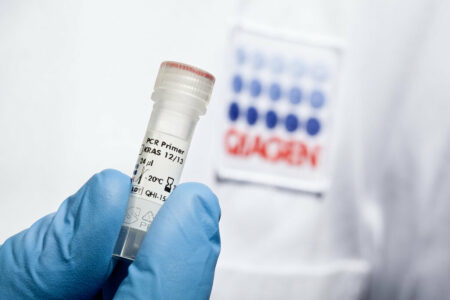
Desperate to find a treatment for her condition, Wilkes researched the best therapy option. Her search led her to Tran, who co-authored a subset of T cells study in 2016 that naturally held receptors able to detect the KRAS mutation. The new study was published in the New England Journal of Medicine. According to this study, the therapy harnesses the immune system to develop living drugs that target and destroys tumors.
Josh Veatch researcher for the Fred Hutchinson Cancer Research Center in Seattle, who was not involved with the experiment, said this is the first time this treatment has worked in a very difficult-to-treat cancer type.
In a new therapy, researchers in Oregon turbocharged Wilkes immune cells, spotlighting a possible new way to treat a variety of cancers someday. Wilkes is not cured, but her cancer did not show any signs of new growth since the one-time therapy last June.
More research is needed as Wilkes is one of only two who have tried this exact approach but failed in other patients.
T cells are vital resistant fighters, able to eradicate diseased cells, but cancer often eludes them. Doctors have already discovered how to boost T cells to fight lymphoma and leukemia by adding an artificial receptor to the patients’ T cells so the immune fighters can recognize the blood cancer cells and attack them. But that, CAR-T therapy does not work against more solid tumors.
Researcher Eric Tran genetically maneuvered Wilkes’ T cells to identify a mutant protein within her tumor cells, not in healthy cells.
TCR or T Cell Receptor Therapy
It’s a method known as TCR or T cell receptor therapy. Tran emphasized that the study is still exploratory but confirmed that Wilkes’ tremendous response yields his optimism.
The genetically engineered T cells from Wilkes’ blood grew billions of copies. In a fantastic twist, Wilkes’ tumor shrunk by 72%, six months after a transfusion of the altered cells, and her recent checkups showed her disease stays stable.
It’s still unclear why the experiment did not work for other patients.
The Oregon team opened a small study further to test TCR therapy for patients with incurable cancers. The experiment necessitates reprogramming the patient’s T cells, an immune system type of white blood cells, so they can spot and kill cancer cells.
Pancreatic cancer is one of the most challenging cancers to treat. While new medicines allowed patients to live longer, pancreatic cancer has obstinately defied these advances.
Written by Janet Grace Ortigas
Edited by Sheena Robertson
Sources:
Science Tech: An Entirely New Kind of Highly Reactive Chemical Has Been Found in The Atmosphere; by Mike McRae
Earth: Highly reactive chemicals discovered in the atmosphere; by Andrei Ionescu
Cosmos: New compound class found in atmosphere; by Evrim Yazgin
Featured and Top Image by Scientific Animations Inc’s Courtesy of Wikimedia – Creative Commons License
Inset Image Courtesy of QIAGEN’s Flickr Page – Creative Commons License
Discover more from Guardian Liberty Voice
Subscribe to get the latest posts sent to your email.