


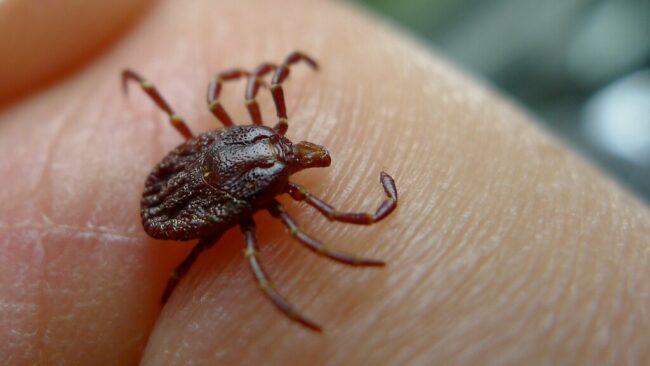
Warmer weather is rolling in and with it comes tans, fun in the sun, barbeques, and pesty insects like mosquitoes, flies, and the dreaded ticks. Most people do not realize that ticks can be found year-round, however, they are most active during the warmer months.
There are many different breeds of these creepy little critters. They are a type of arachnid that thrives in wooded or grassy areas. Normally these blood-sucking parasites attach themselves to animals, but it is not uncommon for them to choose a human to pester.
Ticks, fleas, and mosquito bites can infect humans — and animals in some cases — with diseases like Zika, dengue, plague, or Lyme. The Centers for Disease Control and Prevention (CDC) stresses the importance of protecting oneself from these dangerous pests.
Between 2004 and 2016 there were over 640,000 tick and other vector-borne diseases reported in the United States and American territories. There were 50,865 tickborne diseases reported by state and local health departments in 2019, according to the CDC.
Due to climate change and population growth, humans have been driven closer to ticks in recent decades. These invasive species can bring new diseases or affect the spread of local viruses.
Improvements in technology have allowed scientists to renew their curiosity as they discover new tick-borne pathogens. Researchers are now able to identify genome sequences, enabling scientists to distinguish known bacteria and viruses from those not yet documented.
Since 2009, scientists have been able to identify two new viruses caused by ticks. One of the diseases is the Heartland virus. There have been more than 30 cases reported in the Midwest and the South since 2017. Signs and symptoms of the Heartland virus are:
- Fatigue.
- Fever.
- Headache.
- Decreased appetite.
- Arthralgia.
- Myalgia.
- Diarrhea.
- Nausea.
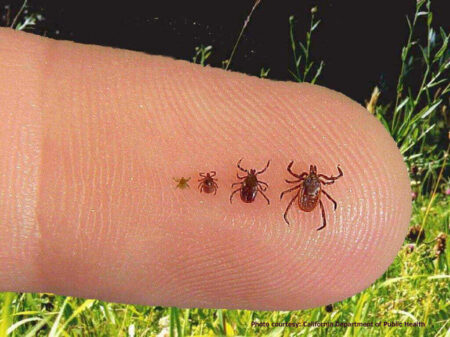
The second one found, is the Bourbon virus disease. As of 2017, there have been a limited amount of cases identified in the Midwest and the southern U.S., according to the CDC. Some of those who were infected with the Bourbon virus disease later passed away. People infected with this virus experienced:
- Headache.
- Body aches.
- Fever.
- Tiredness.
- Rash.
- Nausea.
- Vomiting.
Some of the other illnesses these parasitic critters can cause are:
- Lyme Disease — a potentially serious bacterial infection affecting both humans and animals. it is caused by Borrelia burgdorferi which is transmitted by the blacklegged or deer tick.
- Anaplasmosis — formerly known as human granulocytic ehrlichiosis (HGE). It is a bacterial disease first identified in Minnesota in the early 1990s. People can contract this illness through the ticks that carry Lyme disease.
- Babesiosis — protozoan infection. Up to 20% of those infected with Babesiosis also have Lyme disease.
- Powassan virus disease — a tick-borne flavivirus that has been reported in patients from the Upper Midwest and Northeastern U.S. Recently a woman from Connecticut passed away from this disease.
- Ehrlichiosis — caused by Ehrlichia chaffeensis is found throughout much of south-eastern and south-central U.S.
- Borrelia mayonii Disease — was identified in 2013. Known to cause an ailment similar to Lyme disease
- Borrelia miyamotoi Disease — was identified in 2011. It causes an illness in humans similar to tick-borne relapsing fever. It is a distant relative to the bacteria that causes Lyme disease.
- Tularemia — a potentially serious illness that occurs naturally in the U.S. It is caused by the bacterium Francisella tularensis. This illness can be transmitted by infected animals, biting flies, or American dog ticks.
- Rocky Mountain Spotted Fever (RMSF) — this is an extremely rare illness. There have been isolated cases reported in the U.S. It can be transmitted by the American dog tick.
Ticks can be found on animals or in brushy, grassy, wooded areas. Before anyone spends time gardening, camping, hunting, playing in their yards, or walking the dog they should protect themselves from these blood-sucking parasites.
Wearing hiking boots and long pants tucked inside of socks can protect one’s lower half. Long sleeve shirts with fitted cuffs can protect a person’s torso and arms. Treating gear and clothing with products containing 0.5% permethrin can help. Side note they do sell permethrin-treated clothing and gear.
People can also use Environmental Protection Agency (EPA)-registered insect repellents containing para-menthane-diol (PMD), 2-undecanone, IR3535, Oil of Lemon Eucalyptus (OLE), DEET, or picaridin.
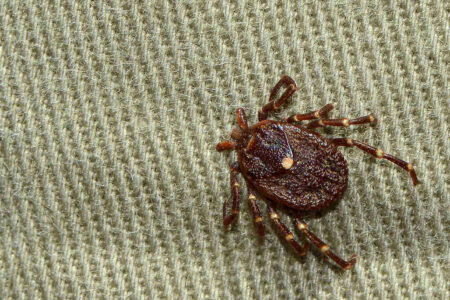
Avoiding wooded and brushy areas with leaf litter and high grass is always a good idea. When walking down a trail, people should try to stay in the center of the pathway.
Ticks like to hitch a ride on pets and people’s clothing, daypacks, and coats. Individuals should examine everything once they get home. It is also a good idea to shower within two hours of arriving home.
People should check for ticks:
- In and around ears.
- Under arms.
- Back of knees.
- In and around the hair.
- Between the legs.
- Around the waist.
- Inside the belly button.
Enjoying the great outdoors is a fun way to spend the summer, but it is wise to be aware of potential areas ticks may dwell.
Written by Sheena Robertson
Sources:
CDC: Tickborne Diseases of the United States
US News: The 10 Worst States For Tick-Borne Diseases
Minnesota Department of Health: Diseases that can be Transmitted by Ticks
CDC: Ticks On People
Top and Featured Image Courtesy of John Tann’s Flickr Page – Creative Commons License
First Inset Image Courtesy of Fairfax County’s Flickr Page – Creative Commons License
Second Inset Image Jean and Fred Hort’s Flickr Page – Creative Commons License
Discover more from Guardian Liberty Voice
Subscribe to get the latest posts sent to your email.