

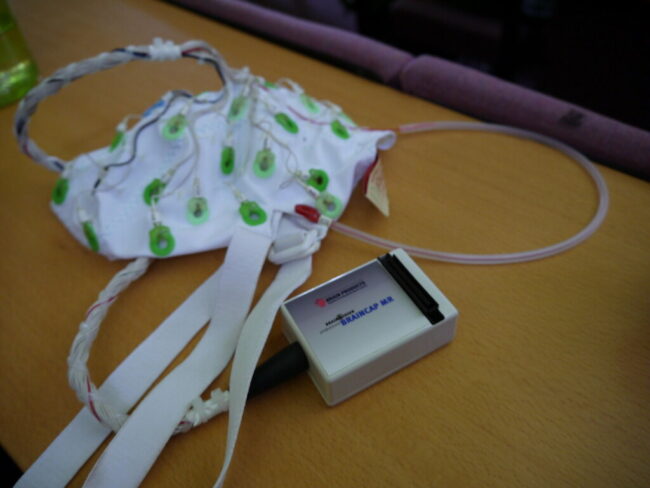
In a randomized controlled trial, researchers at Washington University School of Medicine in St. Louis found that an electrical cap that zaps the brain increased memory in older adults for at least a month. The technology, published Monday in Nature Neuroscience, could be used at home to boost memory in people with dementia and diet and lifestyle changes, according to the study’s authors. While the authors and outside experts agree that more research is required, there is enthusiasm surrounding the results.
According to Dr. Gregory Worrell of the Mayo Clinic in Rochester, Minnesota, neurologists are finding remarkable outcomes in studying the brain’s memory impairment in patients with nervous system and mental disorders.
According to the Centers for Disease Control and Prevention, more than 16 million Americans have some form of cognitive impairment. Although everyone becomes a little forgetful as they age, Reinhart says it’s unfortunate. According to him, memory deficits can negatively impact our daily lives, planning, decision-making, cognition, learning, and overall quality of life.
A Brain-Zapping Cap
New research involving 150 people over 65 who did not have a neurological disorder was conducted. A weak electrical current was sent through the brain of subjects as they were asked to recall five lists of 20 words. A placebo group was also included in the study, who wore the brain cap but did not receive the electrical stimulation. Participants who received electrical stimulation for 20 minutes for four days improved their memory performance. The scientists said this translated to an increase of four to six words remembered on average compared to those who received the placebo treatment.
“This is not a small effect,” Worrell said.
A brain-zapping cap appeared to improve memory in a new study, and researchers hope the device could one day be used to protect memory in older adults. https://t.co/awhfGopRIu
— NBC News (@NBCNews) August 22, 2022
The study also discovered that the intervention boosted working memory and long-term memory. Working memory is crucial for holding information for seconds and minutes, such as a phone number. Long-term memory is critical for preserving data for days, months, and years. The researchers said that people with Alzheimer’s might benefit the most from this intervention because those with the lowest cognitive function demonstrated the most significant improvement over time.
These findings are still preliminary, according to Reinhart. Additional studies are required to determine whether these treatments have lasting effects on memory or whether they may be used to help people with neurodegenerative disorders such as Alzheimer’s. According to a new study, the capacity for memory enhancement was enhanced among older adults. Using an electrical current to zap the brain, a new study published in Nature Neuroscience found that a brain cap appeared to improve memory. The findings, posted Monday, might one day be used as a do-it-yourself memory improvement treatment for Alzheimer’s patients in addition to diet and lifestyle changes, according to researchers.
According to the authors and outside experts, there’s a lot of enthusiasm surrounding the study results. He said that people might not be able to utilize such a device immediately, but the findings are pretty remarkable. According to neurologist Gregory Worrell of the Mayo Clinic in Rochester, Minnesota, who was not involved in the study, brain memory impairment is a common complication of neurologic and mental ailments. So the results might have ”broad applications,” he said.
According to a neuroscientist at Boston University, author Robert Reinhart, as people are living longer, the approach may become a crucial tool for protecting or even enhancing memory in older people.
Electrical Brain Stimulation Can Improve a Person’s Memory
A team of researchers at UCLA’s School of Nursing has found that electrical brain stimulation can improve a person’s memory. They studied people aged 65 to 88 without neurological issues to see whether the brain cap they developed, which delivers electrical pulses to the brain, might help individuals remember things better. During the procedure, subjects were asked to place five lists of 20 words for 20 minutes. Thirty people in the study received electrical stimulation to their brain for 20 minutes for four days, while the other 20 participants received a placebo.

Those who had the actual treatment remembered about four to six more words than those who had the placebo treatment, leading the scientists to believe there was a connection between receiving the therapy and memory. The study was published in the journal Frontiers in Aging Neuroscience.
According to the study, the intervention enhanced working and long-term memory. Working memory is essential for maintaining information, such as remembering a phone number.
Long-term memory is crucial for preserving data for days, months, or even years. It is theorized that this improvement contributed to individuals with Alzheimer’s disease receiving the most significant benefit from the treatment.
These preliminary studies have yet to establish whether these methods can improve memory function in individuals with dementia owing to neurodegenerative diseases like Alzheimer’s.
According to Shrey Grover, the study’s lead author and a doctoral student at Reinhart’s, this process has limitations. He said it’s not the first time researchers have demonstrated that zapping the brain can improve memory. However, he said the approach could not cure brain neurons frequently killed by these disorders.
However, it’s not the first time researchers have shown that zapping the brain can improve memory. It appears as though low-intensity electrical stimulation may enhance verbal short-term memory, Worrell reported in 2018. Furthermore, this research has been a mixed bag in the past. Nevertheless, Dr. Michael Fox, a Harvard Medical School neurologist who wasn’t involved in the study, believes that the possibility of being able to don a cap for 20 minutes a day and enhance memory is ”exciting.”
Fox said he is concerned about the possible detrimental effects, if any, that this technique may have on the mind. He wonders whether this method would still benefit individuals over 65 and with memory issues if it sacrifices other capabilities. However, the study’s authors said they did not observe any significant side effects over the study period. According to Grover, participants often reported itching and prickling sensations before and after using the helmet. Most people who used the brain zapping cap felt a slight ”poke” on their scalp, but they found it quite manageable.
Wide Use One Day?
According to many researchers, cognitive-impairment technology might one day be broadly used. For example, Worrell said that people might one day be able to use the brain zapping cap at home as it is relatively inexpensive and noninvasive (Worrell, 2018). In addition, similar devices are already sold in physical and online stores such as Amazon. Still, they have not been approved by the Food and Drug Administration for memory improvement and may not function as advertised (Worrell, 2018).
According to Grover, this method may be used in addition to other therapies outside the medical office. However, Reinhart foresees that if the approach is made accessible to the general public, people may use it the same way they consume caffeine to increase arousal. “People may use stimulation in the future,” he said. People are eager to “boost their ability to provide a cutting-edge benefit,” according to Worrell. It’s more expensive than coffee, but not terribly so.
Written by Janet Grace Ortigas
Edited by Cathy Milne-Ware
Sources:
NBC News: Brain-zapping cap appears to boost memory for at least 1 month, early research finds; by Berkeley Lovelace Jr.
Yahoo! Finance: Brain cap appears to boost memory for at least 1 month; by Berkeley Lovelace Jr. and Judy Silverman
Flipboard: Brain-zapping cap appears to boost memory for at least 1 month, early research finds; by Berkeley Lovelace Jr.
Featured and Top Image Courtesy Rain Rabbit’s Flickr Page – Creative Commons License
Inset Image Courtesy of Alan Levine‘s Flickr Page – Creative Commons License
Discover more from Guardian Liberty Voice
Subscribe to get the latest posts sent to your email.