

Lightfoot’s Plan
Lightfoot’s 2022 Climate Action Plan aims to reduce 62% of the city’s carbon emissions by the year 2040. One of the key actions in the plan indicates that new construction would need to be built without natural gas hookups for appliances and heating. Otherwise, developers will be charged a “fossil fuel mitigation fee”.
“Currently, buildings account for 70% of Chicago’s greenhouse gas emissions and we must take all actions to reduce energy consumption in buildings to meet our long-term climate goals,” Chicago’s Chief Sustainability Officer, Angela Tovar, wrote in the proposal. “The burning of fossil fuels is no longer a viable option.”
Some of the plan’s recommendations can be put into action shortly, according to Tovar. This is thanks to available federal funds from the COVID-19 stimulus passed in 2021.
The mayor’s proposal also focuses on converting older buildings to 100% electric heating and hot water. The city has already taken action to convert municipal buildings like libraries to all-electric. They have plans for all of its buildings to run on 100% renewable energy by 2035.
Lightfoot’s Equitable Distribution
The plan will work towards helping residents transition homes away from greenhouse gas use, emulating the work of Elevate, a nonprofit that assists low-income residents with paying for electric utility conversions. Elevate itself has plans to help covert up to 100 houses in low-income Chicago communities within the next two years.
Mayor Lightfoot stressed the need for an equitable distribution of carbon reduction. Writing:
We must reinforce the importance of equitable decarbonization, and to keep in mind that the climate crisis disproportionately affects low-income communities and people of color.
Peoples Gas
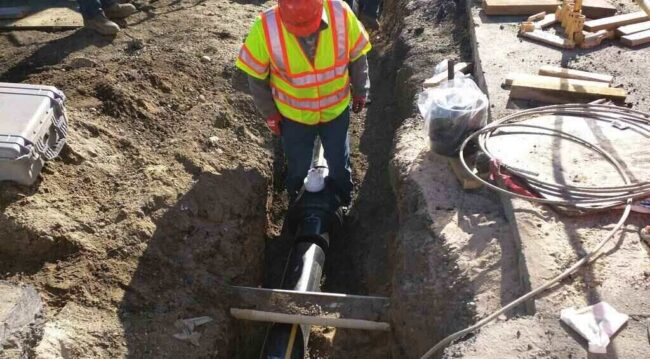
Lightfoot’s plan comes even as Chicago’s natural gas utility Peoples Gas is laying down hundreds of miles of new pipes across the city, spending billions of dollars with plans to continue through 2040.
The gas utility has been behind schedule, replacing 19 fewer miles of old pipes last year than the planned 70 miles. On top of the usual utility cost, the new pipework has added an 11% increase to customers’ monthly bills. Chicago customers paid an average of $131 last year for the pipe replacement, 10 times the utility’s original estimate provided to the Illinois State Legislature in 2013.
In 2007, Peoples Gas estimated the cost of the project would be $1.4 billion, almost $10 billion shy of what it could end up costing by the time it finishes in 2040.
The inflated cost and delays in construction are due to Peoples Gas’ shift from simply replacing old leaky pipes to modernizing the whole city’s gas system, according to the Illinois Public Interest Research Group. The shift was made with the intention of increasing the old low-pressure system to medium-pressure.
As Chicago heads toward winter our team is here to help customers manage their heating costs. We offer energy efficiency tools and resources, budget billing and payment arrangements, plus bill payment assistance for those who qualify. More information: https://t.co/YinHsUJSVq pic.twitter.com/u20IpCwFcR
— Peoples Gas (@PeoplesGasCHI) October 2, 2022
Price Discrepancy
Despite the price discrepancy, Peoples Gas claims that its more comprehensive approach will ultimately ensure better, safer service for residents in the near future. Nevertheless, Illinois Governor J.B. Pritzker has been pushing for an end to the additional pipework charges to customers. However, Mayor Lightfoot and the city council have asked for more state oversight of the utility’s project.
A representative for Peoples Gas issued a statement in response to Lightfoot’s decarbonization proposal. They said that they are “reviewing the report and believe the mission of the city advisory group is well intended.” Adding that the utility is formulating its own plans to reduce carbon emissions going forward.
But as the years pass, this slow-moving approach to modernizing Chicago‘s natural gas system could become nearly irrelevant as Lightfoot’s plan transfers the city to a carbon-free future.
Written By Seth Herlinger
Sources:
Chicago Sun-Times: Chicago may end natural gas hookups for new homes, businesses
Chicago Sun-Times: Peoples Gas pipe replacement is costing Chicagoans more
City of Chicago: Developing an Equitable Building Decarbonization Strategy for Chicago
WEBZ Chicago: Chicago homeowners welcome energy-efficient upgrades in green push
Top and Featured Image Courtesy of MTA Construction Development Mega Projects’ Flickr Page – Creative Commons License
Discover more from Guardian Liberty Voice
Subscribe to get the latest posts sent to your email.