


I never miss this single television show. Every Sunday, “CBS Sunday Morning,” offers positive stories. Many of their stories are never reported anywhere else in the media. The reason is simple: they are not ‘sensational,’ and do not sell the most advertising. They are often surprising and offer information few Americans are aware of today.
Eatonville Becomes the First
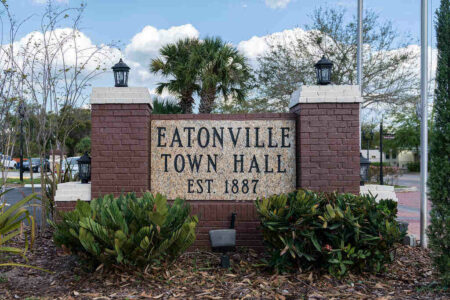
This Sunday one story stood out and I felt ashamed that I did not know anything about it before. I consider myself well-read. The first all-Black city to be incorporated was in Florida. Eatonville was established in 1887 after being settled two decades after the Civil War ended, occupied by former slaves.
I found this single fact amazing. I wondered why this entire city is not a monument to the 620,000 Americans who lost their lives in the Civil War. If you did not know, this huge number is larger than the total of American fatalities in the Revolutionary War, the War of 1812, the Mexican War, the Spanish American War, World War I, World War II, and the Korean War, combined.
It is without a doubt a tribute to the thousands of men, women, and children who were enslaved in the New World since 1619. Americans in the 21st century have no concept of what freedom meant to thousands of Black families whose lives had been controlled by their white owners for generations.
Located Near the Prosperous Orlando Area in Central Florida
Eatonville is located just six miles north of Orlando. Two Black men purchased over 100 acres from one of the few white men who agreed to sell the property to Blacks, Josiah Eaton. A former slave, Joseph C. Clarke, and a northern philanthropist, Lewis Lawerence, originally named the area “Maitland.” They parceled the land to Black families from the surrounding area, and on the fifteenth of August, 1887, twenty-seven registered Black voters indicated their intention to create a municipality and officially incorporated the town. They named the town Eatonville to honor the man who sold the land and became its first mayor. The new town’s citizens, however, chose Columbus H. Boger as its first mayor to head an entirely Black-staffed government.
The First Structure Was a Methodist Church
In 1881, after Clarke and Lawerence purchased the land, they awarded 10 acres to a Methodist Church. Along with the construction of the first Black church in the area, the first Black school shared the property. The church still stands and serves the community.
Eatonville experienced its largest population in 2000 with 2,436 residents. However, the city is in decline in 2023, with less than 2,400 residents currently living in the small town.
Eatonville is in danger of becoming nothing but a memory. The reason is founded in our nation’s current motto, “profit before people.”
Selling History
At the heart of the problem is the fate of the Robert Hungerford Preparatory School property. It was founded on 300 acres in 1897 with the assistance of Booker T. Washington and leaders of the Eatonville community.
Eatonville now covers about 1.6 square miles. The School Board is prepared to sell 100 acres, about 15 percent of the tiny town to a developer. The result has been protests by the people of Eatonville, and the creation of a non-profit organization, the Association to Preserve the Eatonville Community, Inc.
This association is offering plans to reinvigorate the community by rebuilding this parcel “into a destination for tourism and study that it hopes could spark an economic renaissance centered on the town’s rich cultural, sociological and literary history.” This area will be dedicated to the Literary Giant, Zora Neale Hurston.
A Literary Giant Who Grew Up in Eatonville
Ms. Hurston gained recognition as one of the preeminent African American Writers of the 20th century. Her writing revealed the African American experience in the United States and Haiti, and “included a career that spanned more than 30 years, she published four novels, two books of folklore, an autobiography, numerous short stories, and several essays, articles and plays. Born on Jan. 7, 1891, in Notasulga, Alabama, Hurston moved with her family to Eatonville, Florida, when she was still a toddler.”
Ms. Hurston moved to Harlem in the 1920s. Her early acclaimed writing included a short story with the title of “Sweat,” and an essay “How it Feels to be Colored Me.” After receiving a Guggenheim Fellowship, she moved to Haiti and wrote her most famous novel, “Their Eyes Were Watching God,” in 1937.
The Beginning of the End of Eatonville
The issue began in 1974. An interstate highway bisected a section of Eatonville known as the Hungerford Property. The school district decided to sell the land on the other side of the highway, keeping the section which contained Hungerford High School. When the school closed in 2009 the district began considering the sale of this property as well. Without involving the community, the school board demolished the high school and greenlighted the sale of this prime property in 2020. The development group is offering 14.6 million dollars for the 100 acre parcel.
Building “the New,” by Destroying the Past and Our History
Throughout my life I have been frequently concerned about what is now standard policy. America is a business, and therefore has little concern for the past. Instead of rebuilding and cherishing land and buildings which are related to our nation’s celebrated past events and the courage and dedication of our ancestors, we are prone to destroying everything and constructing “new and improved” edifices to wealth and power.
It appears that the fate of Eatonville has been decided. Once again greed preempts the lives of working class, low income, and impoverished Americans. This is what is wrong with America today, and it makes me very sad to know that the leaders of our nation fail to value its people and instead support the corporations which control our country’s future.
Written by James Turnage
Find my nine novels on Amazon’s Kindle
Sources:
Black Past: EATONVILLE, FLORIDA (1887– )
Southern Poverty Law Center: Preserving Black Heritage: Florida Activists Fight to Save Historic Site and Their Culture
WESH2 Orlando: A brief history of Eatonville: The Town That Freedom Built
Top and featured image courtesy of Lorie Shaull‘s Flickr page – Creative Commons License
Inset image courtesy of Lorie Shaull‘s Flickr page – Creative Commons License
Discover more from Guardian Liberty Voice
Subscribe to get the latest posts sent to your email.