


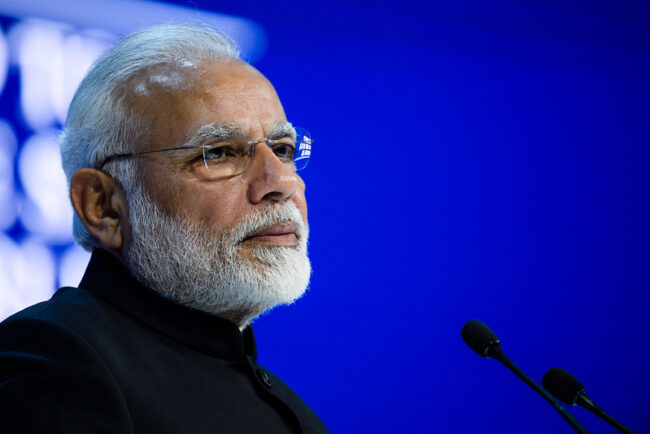
Leaders from all over the world, including Maurtius, Spain, Sri Lanka, and Bolivia attended the AI Impact Summit in New Delhi this week to discuss how the technology should be governed and how it should be used for the welfare of the people. The first high-level artificial intelligence gathering in the Global South.
India Prime Minister Narendra Modi compared artificial intelligence to nuclear power. He said, both technologies have immense power to destroy but also to be directed for good. He added that if AI becomes “directionless,” it will lead to destruction. “A core question is not about what AI can do in the future, but what it can accomplish now to serve the people,” he said.
“Every country will want to chart their own AI destiny. They each have unique characteristics about their own culture, their language, their traditions, the way that they want to use AI,” said Michael Kratsios, director of the White House Office of Science and Technology Policy and the leader of the U.S. delegation at the summit.
Summit Announcements
Kratsios announced initiatives that will increase America’s global engagement on AI. One on those initiatives is an AI-focused Peace Corps program, another is World Bank funding so countries can purchase AI systems.
Reliance and Adani, together, pledged a $210 million investment in domestic AI and data infrastructure. OpenAI signed a partnership deal with Tata Group, and Anthropic announced a deal with Infosys and opened an office in Bangalore.
“The solutions presented here — in agriculture, security, assistance for persons with disabilities, and addressing the needs of multilingual populations — are powerful examples of Made in India strength and India’s innovative capabilities,” stated Modi in Thursday’s speech.
A Little Chaos
The summit had 250,000 registered attendees and with people come issues, such as overcrowding, traffic, disruptions and no-shows. Nvidia CEO Jensen Huang cancelled last minute.
Bill Gates was supposed to deliver the keynote speech on Thursday. He also cancelled saying he wanted “to ensure the focus remains on the AI Summit’s key priorities.” Gates has been facing questions concerning his ties to Jeffrey Epstein.
Reportedly, an Indian university was asked to leave the summit allegedly attempting to claim they developed a robotic dog that belonged to Unitree, a Chinese company.
Why India?
Arun Teja Polcumpally, a JSW Science and Technology Fellow at the Asia Society Policy Institute said, “You can’t think of foreign policy without thinking of technology. India is trying to show it is a country that can be a trusted platform for emerging economies” by laying the groundwork to deploy AI responsibility.
Sushant Kumar Yaduka teacher at the Jindal School of Government and Public Policy says, “India is trying to position itself as a distinct, third-way alternative, centered on the Global South and AI as a public good. It made sense for India to take this approach rather than try to join the geopolitical-technological arms race between China and the United States.”
India is also taking the opportunity to bolster relations with countries to build stronger trade ties and support global ambitions, according to analysts. Modi met with French President Emmanuel Macron alongside the summit to strengthen defense cooperation. India desires to purchase 114 Rafale fighter jets from France.
Additionally, India is also hosting President Luiz Inacio Lula da Silva of Brazil as the two countries recently agreed to collaborate in a variety of areas including energy, pharmaceuticals and critical minerals.
U.S. Relations
After years of positioning itself as a counterweight to China, Trump backed India into a corner pressuring them to reduce Russian oil purchases. This month they struck a deal and signed the Pax Silica Declaration. India is the tenth member to join the U.S.-led initiative to protect supply chains for A.I. and advanced computer chips.
Strategic Autonomy
Throughout the past year, India has made several major trade deals.
“We are very much wedded to strategic autonomy. It’s very much a part of our history and our evolution,” says India’s foreign minister S. Jaishankar at the Munich Security Conference.
Sources:
NBC News: India’s AI summit draws global leaders, big pledges and some chaos
CNBC: Chaos, confusion and $200 billion dreams: What I saw at India’s AI summit
The New York Times: At A.I. Summit, India Tries to Find a Way Between the U.S. and China
Featured Image Courtesy of World Economic Forum’s Flickr Page – Creative Commons License
Discover more from Guardian Liberty Voice
Subscribe to get the latest posts sent to your email.