


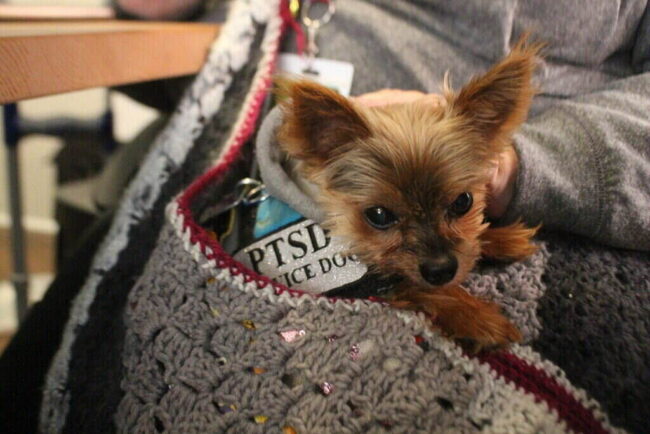
Living with PTSD is extremely hard. Post-traumatic stress disorder is a mental health condition brought on by a terrifying event that a person or animal either saw or experienced. This can make adjusting and coping extremely difficult, though not impossible.
Symptoms of PTSD can present themselves in several different ways. Each person or animal who experiences post-traumatic stress disorder may have some of the same symptoms. Although they may have different ones altogether.
Here is a few one may feel:
- Vivid flashbacks: This is when it feels like the trauma is happening all over again. Sometimes this feeling can get stuck on replay.
- Intrusive images or thoughts: These can pop up at any time. They can be triggered by certain smells, seasons, or sounds though sometimes it’s difficult to put a finger on what caused them.
- Nightmares or Night terrors: A nightmare is a dream that one may be able to remember details of when they wake. With night terrors, the dreamer stays asleep during the episode. Some may be able to recall fragments of their dreams. However, they usually just wake up frightened, in a panic state, sweating, and/or gasping for air.
- Distress at real or symbolic reminders: During these incidents, a person or animal will feel intense distress over something that reminded them of the trauma they faced.
- Physical sensations: These can present themselves as pain, trembling, nausea, or sweating.
Those Who Suffer From PTSD May Have Extreme Alertness and Feel on Edge
These feelings can include:
- Being easily upset or angry.
- Extreme alertness or “hypervigilance.”
- Panicking when reminded of the trauma.
- Irritability or aggressive behavior.
- Disturbed sleep or a lack of sleep.
- Finding it hard to concentrate — including on simple or everyday tasks.
- Being jumpy or easily startled.
- And other symptoms of anxiety.
Unhealthy Coping Skills
Some people who have PTSD try to avoid feelings or memories with unhealthy habits. For example:
- Avoiding situations that remind them of the trauma.
- Feeling as though they need to stay busy to not think.
- Being unable to remember details of what happened.
- Feel as though they are physically numb or detached from their bodies.
- Feel emotionally numb or cut off from their feelings.
- Being unable to express affection.
- Doing things that could be self-destructive or reckless.
- Using alcohol or drugs to avoid memories.
The healthy way is to seek out professional help. Talk about what happened. Acknowledgment can go a long way to accepting that they can’t change what happened. This allows them to learn techniques to help them when these symptoms occur.
Learning to Live With PTSD Is Hard

People can develop post-traumatic stress disorder from many different events. Soldiers who see firsthand the horrors of war, a victim of domestic abuse, rape victims, those who’s been sex trafficked, or those who were abused as children can all have PTSD. Police officers, First responders, EMTs, doctors, or those who’ve witnessed death can also have post-traumatic stress disorder.
Some people are unfortunate and experience several traumatic events or they had something happen to them when they were growing up. This can cause complex post-traumatic stress disorder or CPTSD.
Causes of Complex Post-Traumatic Stress Disorder
Those who experience CPSTD could have suffered traumatic events like:
- Repeatedly witnessing violence or abuse.
- Ongoing domestic violence or abuse.
- Childhood abuse, neglect, or abandonment.
- Being forced or manipulated into prostitution (trading sex).
- Being a prisoner of war.
- Or were victims of torture, kidnapping, or slavery.
People are more likely to develop complex PTSD if:
- They experienced trauma at an early age.
- The trauma lasted for a long time (days, months, years).
- Escape or rescue was unlikely or impossible.
- harmed by someone close to them.
- Or as previously mentioned — by experiencing multiple traumas.
Personal Experience Living With CPTSD
As a person who has experienced several traumas in their life, I can attest to the difficulty of living with it. At a young age, I was molested by someone who was married to a family member. This person made me think it was my fault and if I told anyone they would cause harm to my parents and sibling. Being a child I believed these words, however, the incident was so traumatic my mind regressed the whole thing until I was well into my teenhood.
This is a common experience for those who have had that kind of trauma at a young age. Some can experience a jumbled memory as the brain tries to save its human by taking them to a “happy place” when the trauma happened.
The next event happened when I was a teenager. A friend and I were babysitting their seven-month-old baby cousin. We were at their grandmother’s house for the weekend, however, the grandmom had to work. So we were watching the infant on our own, which wasn’t an issue. It wasn’t my first time babysitting infants being the oldest of 26 cousins and having a younger sibling.
I had checked on the baby who was napping in the other room we were watching television in. Maybe five minutes later the grandmother came home with the baby patting her on the back while on the phone with 911. She asked us when was the last time the child had been responsive. Within minutes paramedics and police officers filled the tiny apartment. My friend called her mother and aunt at her uncle’s house. She asked for her mom before breaking down and telling me she couldn’t do it, then she dropped the phone on the table.
Facing the Unthinkable
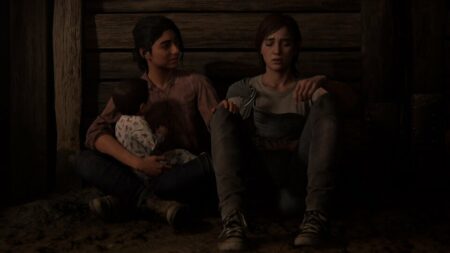
I’ve been known for being the rock for everyone. Less than a month prior to babysitting with my friend, my grandfather died. He went in for a check-up, was given a clean bill of health, and died before leaving the exam room. When my nana and aunt came back, I knew something was wrong since he wasn’t in the car.
I began sending all the cousins to my aunt and uncle’s trailer. Then I stated to my dad and aunt, “Something’s wrong.” When dad broke down outside I knew what happened. I told them to call the rest of the family and send the kids to me.
So when my friend broke down I knew what to do. I got on the phone and relayed the situation. Her mother thought I was playing a sick joke at first and even stated as much. I told her that I would never do something like that and get the mother to the hospital ASAP.
To add to the PTSD moment, the officers on the scene were making me and my friend feel like we had done something wrong. They took samples of the formula and baby food — which I had thrown away so they were rummaging in the trash. In an accusatory tone, they asked my friend if she was sure she used the formula or mixed the rice cereal correctly. Seeing my friend in pain made me really defensive and I exploded on the officer.
Straight up asked him if he was trying to give her PTSD more than she would most likely already have. Then I stated I had been babysitting on my own for eight years and yes I know exactly what to do. Then told him he was done asking us questions we were leaving with the baby. Just then an EMT came over the radio saying the baby was stable and they were transporting her.
The PTSD Moment Continues
We got into the grandmother’s vehicle as fast as we could and were right behind the ambulance the whole way. However, a few minutes after we arrived a doctor came in sullen and said she didn’t make it. I sat in a chair by myself as I watched the grandmother and my friend ball their eyes out. I felt so helpless, the events of the night replayed in my mind on repeat.
It didn’t seem like too long after that when my friend’s mom and aunt walked in. The baby’s mom asked where she was and I looked up at the grandmother and my friend. They were still hugging each other crying seemingly oblivious to everything around them. With tearful eyes, I looked at the mother, my words were stuck in my throat so I just shook my head as the tears spilled down my cheeks.
She called me a liar and dropped to the ground in the hallway. Nurses and the doctor rushed over to console her and confirm what I couldn’t say. Then brought us into a room where the child lay lifeless.
A PTSD Nightmare
We sat in the room for over an hour maybe more. The mother kept saying the child on the bed wasn’t her baby, we were all playing a horrible joke on her, and she wanted to see her child. The nurses kept trying to get her to hold the baby to help her realize and accept we were telling her the truth. But she refused every time.
The nurses and doctor kept telling her it was an important step for her to do so she can begin the grieving process. The grandmother, my friend’s mom, and my friend all tried to get her to touch the baby. She refused to listen to them as well.
Seeing and understanding the situation at hand, I gently picked the baby up, made sure she was wrapped properly in a blanket with care and walked over to the mom. She told me to stop and get away, instead, I gently placed the baby in her arms and just sadly looked at her.
I held her there until the mom sadly looked at me and said, “Oh God it is my baby!”
Adding to the CPTSD
As if all of that wasn’t enough my CPTSD was also caused by:
- Emotional abuse.
- Domestic abuse.
- Sexual Assault.
- And Bullying.
It took years for me to fully open up to a professional. I battled my demons all by myself for a long time. I kept thinking admitting that I needed help showed weakness; not realizing it showed strength.
There were several times when I thought all hope was lost and attempted to take my own life. I even went through a self-mutilation phase where I felt so numb I just wanted to feel something.
Through counseling and therapy, I learned helpful and healthy coping skills. Like coloring, drying, keeping a journal, painting, or doing other crafts. There are even fidget toys to help with anxiety, listening to music, meditation, and relaxing exercises people can do when PTSD symptoms flare up. People can also have service animals to help them cope with daily activities.
Living With PTSD Can Be Difficult But it Can Be Done
If you are a person who has PTSD or CPTSD, please reach out for help. Nobody is perfect and everybody needs help from time to time. If you are ever feeling lost or alone and need someone to talk to immediately please call a professional, a loved one, or 988 to speak to someone 24/7 all year long. Having PTSD or CPTSD may make life a tad difficult but living a fruitful life can be done.
By Sheena Robertson
Sources:
Mayoclinic: Post-traumatic stress disorder (PTSD)
Mind.org: What are the symptoms?
Psychiatry.org: What is Posttraumatic Stress Disorder (PTSD)?
Mayoclinic: Sleep terrors (night terrors)
Mind.org: Complex post-traumatic stress disorder (complex PTSD)
Top and Featured Image Courtesy of Mike Gifford‘s Flickr Page – Creative Commons License
First Inset Image Courtesy of Gilbert Mercier‘s Flickr Page – Creative Commons License
Second Inset Image Courtesy of GlitchKnitter‘s Flickr Page – Creative Commons License
Discover more from Guardian Liberty Voice
Subscribe to get the latest posts sent to your email.