


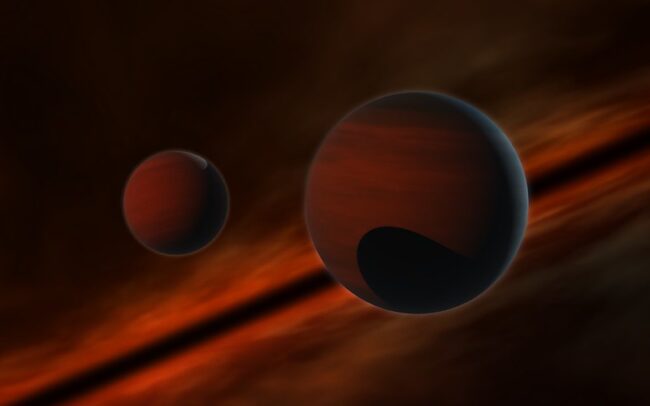
Astronomers may have witnessed a rare cosmic collision from 11,000 light-years away.
The Initial Find
Anastasios Tzanidakis was reviewing telescope observations from 2020 and noticed something unusual. Gaia20ehk, a seemingly ordinary star, was behaving in a way rarely observed near the constellation Pupis.
Gaia20ehk is described as a stable “main sequence” star similar to the Earth’s sun. Typically, this type of star shines with a steady, predictable brightness. This one began flickering erratically.
“The star’s light output was nice and flat, but starting in 2016, it had these three dips in brightness. And then, right around 2021, it went completely bonkers. I can’t emphasize enough that stars like our sun don’t do that. So when we saw this one, we were like ‘Hello, what’s going on here?'”
Tzanidakis is a doctoral candidate in astronomy at the University of Washington.
Researchers were able to determine that the strange behavior was not coming from the star itself, but huge amounts of rock and dust passing in front of the star were partially blocking the light. It appeared that the debris was created from a violent cosmic collision between two planets.
Cosmic Collision Evidence
Tzanidakis says, “It’s incredible that various telescopes caught this impact in real time. There are only a few other planetary collisions of any kind on record, and none that bear so many similarities to the impact that created the Earth and moon. If we can observe more moments like this elsewhere in the galaxy, it will teach us lots about the formation of our world.”
These findings were published by the team on March 11 in The Astrophysical Journal Letters.
Why Planets Collide
In the atmosphere surrounding young stars, gravity pulls materials together like dust, gas, ice, and rocky debris that orbit the star. Collisions between growing planets are common in the early stages of a solar system. Some crash into each other while others are thrown outward into space. This is the process researchers say shapes and stabilizes planetary systems.
Cosmic collisions are likely common in the universe; however, witnessing one from Earth is difficult. In order to view the cosmic collision, the orbiting debris has to pass directly between the observer and the star, blocking some of its light. The resulting pattern can unfold slowly, sometimes over several years.
Senior author James Davenport is a UW assistant research professor of astronomy. He says, the work Tzanidakis does is unique and “leverages decades of data to find things that are happening slowly – astronomy stories that play out over the course of a decade. Not many researchers are looking for phenomena in this way, which means that all kinds of discoveries are potentially up for grabs.”
Sources:
Science Daily: Astronomers think they just witnessed two planets colliding
Phys.org: Astronomers collect rare evidence of two planets colliding
Space: ‘Completely bonkers:’ Astromers find evidence of a cataclysmic collision between exoplanets
Featured Image Courtesy of LLacertae’s Flickr Page – Creative Commons License
Discover more from Guardian Liberty Voice
Subscribe to get the latest posts sent to your email.