


On Feb. 27, 2026, NASA announced it is increasing the cadence of missions under the Artemis program, standardizing the SLS (Space Launch System) rocket configuration, and adding a new mission.
The Artemis III mission will not land astronauts on the moon, and it is possible it will not use SpaceX’s Starship megarocket either.
Artemis Program: First 5 Missions
- Artemis I: completed an unmanned test flight of the SLS rocket and the Orion spacecraft in November 2022. The mission tested the new exploration ground systems and evaluated Orion systems.
- Artemis II: The test flight will include a crew aboard the SLS rocket and the Orion spacecraft. The mission had a wet dress rehearsal in February. A helium flow issue to the interim cryogenic propulsion stage was discovered, and the rocket and spacecraft were rolled back to the Vehicle Assembly Building for repairs. Engineers at NASA‘s Kennedy Space Center in Florida are working on the stacked SLS rocket and Orion spacecraft to address the issue that required the rollback. Additionally, teams are changing out the batteries. The next launch window is in April. Crew members include NASA astronauts Reid Wiseman and Victor Glover, Christina Koch, and CSZ astronaut Jeremy Hansen. They will embark on a 10-day mission to travel around the Moon and back.
- Artemis III: a newly added demonstration mission in low Earth orbit in mid-2027 to test commercial landers from SpaceX and Blue Origin. The mission will launch a crew in the Orion spacecraft atop the SLS rocket to test the Orion’s rendezvous and docking capabilities with the private commercial spacecraft needed to land astronauts on the Moon.
- Aretmis IV: A crew will transfer from the Orion spacecraft to a commercial lunar lander to the surface of the Moon. The readiness of the lander will determine which provider will safely transport astronauts to the surface and back to the Orion in lunar orbit before returning home. NASA is assessing alternative options for the second stage of the rocket. The interim cryogenic propulsion used for the first three missions will be replaced. The agency is no longer planning to use the Exploration Upper Stage or Mobile Launcher 2, as development of both has encountered delays.
- Artemis V: Using the standardized configuration of the SLS rocket, NASA anticipates the launch of the lunar surface mission by late 2028, and future missions once a year thereafter. NASA is expected to begin building a Moon base during this mission.
Blue Origin was founded by Amazon CEO Jeff Bezos and is developing a crewed lander named Blue Moon. This was the vehicle that was supposed to transport NASA astronauts on Artemis V in a lunar landing mission previously targeted for 2030.
Don Platt, head of the Department of Werospace, Physics, and Space Sciences at the Florida Institute of Technology, told Space.com that the pace of the development is not the only factor going into the decision.
“NASA does not want to have to rely on only one contractor, either. I think that’s why they’re really kind of pushing this competition between Blue Origin and SpaceX.”
Sources:
CNN: NASA abruptly changes its roadmap to putting boots back on the moon
NASA.gov: NASA Strengthens Artemis: Adds Mission, Refines Overall Architecture
Space: ‘Pushing this competition’: SpaceX’s Starship might not fly on NASA’s revamped Artemis 3 mission
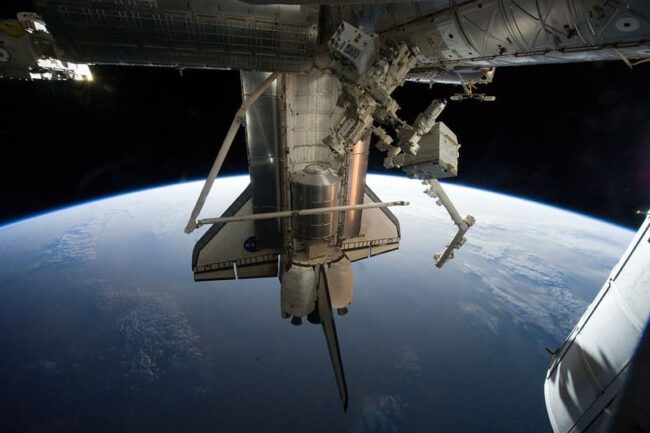
Featured Image by Holli Riebeek Courtesy of NASA Goddard Space Flight Center’s Flickr Page – Creative Commons License
Discover more from Guardian Liberty Voice
Subscribe to get the latest posts sent to your email.