
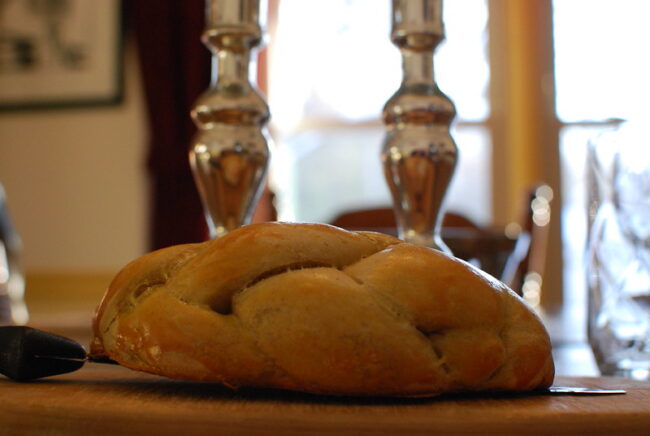
Donald J. Trump, in proclaiming Shabbat 250, is the first president in history to call on all Americans to observe the Jewish Sabbath. The proclamation was made on May 4, 2026, to be observed on May 15, invoking George Washington’s 1790 letter to the Hebrew Congregation in Newport, promising that the US gives “to bigotry no sanction, to persecution no assistance.”
The proclamation read, “In special honour of 250 glorious years of American independence and on the weekend of Rededicate 250, a national jubilee of prayer, praise, and thanksgiving, Jewish Americans are encouraged to observe a national Sabbath.
“From sundown on May 15 to nightfall on May 16, friends, families, and communities of all backgrounds may come together in gratitude for our great Nation. This day will recognize the sacred Jewish tradition of setting aside time for rest, reflection, and gratitude to the Almighty.”
National Shabbat Conflict
May 15 is also Nakba Day, the annual commemoration of the 1948 displacement of Palestinians. This year it is marked by a UN Palestinian Rights Committee special session at the ECOSOC Council Chamber in New York.
Additionally, the day after Shabbat 250 was Rededicate 250, a nine-hour nationally organized event described by Trump’s senior faith advisor Paula White-Cain as “about the history and the foundations of our nation, which was built on Christian values.” She reassured attendees the event would not involve “praying to all these different Gods.”
The American Jewish community received the exhortation with mixed reviews. Some stated they appreciated the gesture and recognition of a central tradition in Judaism, and promoted their own Shabbat services as part of “Shabbat 250.”
Others assert that Trump is appropriating Judaism in an effort to promote conservative political goals and Christian nationalism. This is a movement backed by portions of Trump’s base, scholars believe could push the nation in a direction that is not hospitable to the Jews.
Orthodox Jews strongly supported the initiative. Rabbi Josh Joseph, executive vice president of the Orthodox Union, was happy to endorse the national Shabbat.
Rabbi Joseph said, “This weekend, following President Trump’s encouragement, we will mark Shabbat 250. We will pause to acknowledge all the blessings that the Almighty has provided American Jews through the unique devotion to liberty embedded in this nation.”
Warning Against Christian Nationalism
Some Orthodox synagogues announced “Shabbat 250” programming, and Young Jewish Conservatives distributed $180 grants to conservative Jews under 35 who committed to hosting five or more people for dinner in their homes.
Event organizers promised to “explain why so many religious Americans of diverse faiths are alarmed and alienated by attempts to use America’s 250th birthday as an opportunity to frame the US as a ‘Christian nation.'”
Rabbi Amichai Lau-Lavie of the progressive Lab/Shul also criticized Trump’s Shabbat observance. “When the state meddles in our sacred affairs, blurring the already fuzzy lines between church and state, it doesn’t elevate the Sabbath; it diminishes the democracy that 250 years of history were supposed to protect.”
Trump paid tribute to Haym Salomon, a Revolutionary War-era financier who rallied support for independence and “gave everything to the success of the American Revolution,” in the proclamation.
He continued, “Like so many Jewish Americans who follow in his footsteps, Salomon’s legacy stands as a testament to the unshakable belief in the American promise.”
Trump directly rebuked the rise of anti-Semitism on college campuses and beyond, “Under my leadership, we are aggressively fighting the violence against Jewish Americans that increased under my predecessor, prosecuting hateful criminals to the fullest extent of the law, and working to end the scourge of anti-Semitism throughout our institutions.”
Jewish communities and organizations all over the United States praised the Shabbat 250 initiative. Chabad, the Israel Heritage Foundation and other groups issued thank-you letters to the President.
www.shabbat25.org reported more than 7,500 people declared their intention to observe Shabbat.
Prayer Rally on National Mall
Thirty-three evangelical Christian prayer leaders were scheduled to appear for Rededicate 250 on May 17, organized by Freedom 250. Trump appeared on video for the event.
The only non-Christian speaker was Rabbi Meir Soloveichik, who is an Orthodox rabbi and senior scholar at the Tikvah Fund. The rabbi also sits on the Religious Liberty Commission assembled by Trump last year.
The prayer rally was criticized by the CEO of Americans United for Separation of Church and State, Rachel Laser, who referred to the event as a “growing movement of Christian nationalism.”
“If President Trump and his allies truly cared about America’s legacy of religious freedom, they would be celebrating church-state separation as the unique American invention that has allowed religious diversity to flourish in our country.”
Additionally, the International Fellowship of Christians and Jews “extends its blessing to the White House for calling on not only the Jewish people, but all Americans, to celebrate their faith and freedom as the Founding Fathers envisioned 250 years ago.”
National Sabbath Significance
This is the first time a U.S. President has issued a formal call for a “National Sabbath” to be observed by the Jewish people specifically to honor American independence. This is a “significant departure from standard executive practice, integrating a specific Jewish religious observance into the formal framework of the nation’s 250th anniversary.”
First, the Sabbath is an acknowledgement of God as Creator (Genesis 2:1-3 and Exodus 20:11). The conscious pause recognizes there is a power that is higher than the state and asserts that this world and people’s rights do not originate from man-made institutions.
Second, the Sabbath is a moment of revelational reception (Leviticus 23:3). The Torah refers to the Sabbath as a mo’ed (an appointed time) and a mikra kodesh (a holy assembly). This represents an encounter between the Divine and humanity within time itself. “Soaking into His presence during this first thing He called “holy” provides the opportunity for our souls to hear from Him and direct our purpose toward advancing His kingdom.”
And finally, it acknowledges God as Redeemer. The Exodus was not a liberation of the descendants of Jacob alone. It also included a “mixed multitude” of Gentiles who left Egypt with them (Exodus 12:38).
This inclusivity is more than a historical footnote; it is a prophetic vision of what is to come. The prophet Isaiah envisioned a day when the Sabbath would transcend tribal boundaries. Isaiah 66:23, he says, “From New Moon to New Moon, from Shabbat to Shabbat, all flesh will worship Me, says The Eternal.”
The Preamble begins, “We the People of the United States,” is more than the start of a written, legal contract – it is the formal signature of a social covenant. A contract focuses on what can be gained; this covenant focuses on who the people are; a people bound by a sacred commitment to one another’s flourishing.
The Founding Fathers had the Hebrew Bible engraved on their hearts when they wrote, “We hold these truths to be self-evident, that all men are created equal and endowed by their Creator with certain inalienable rights.” In this, they made a profound theological statement. In view of the natural world, this equality is not self-evident; it is a revealed, biblical truth that forms the bedrock of this nation’s identity.
This identity is sustained by the unique mechanics of the covenant. A contract concerns interests, whereas a covenant concerns identity and collective responsibility. America understands that freedom requires more than simply a functioning state. Freedom requires a healthy society; a society built on covenantal institutions: marriage, family, places of worship, charities, and voluntary associations.
A covenantal nation possesses a unique capacity for self-renewal. The preservation of this covenant is a duty shared by all citizens. Shabbat 250 is a celebration of “responsible freedom.” An opportunity for all Americans, Jew and Gentile, to “stand in the gap” for each other. This is a moment to commit to the rebuilding of communities on the margins and to strengthen the American family.
The book of Deuteronomy is the blueprint: “Gather the whole nation together – the men, the women, the children… and read to them this Torah.”
Sources:
The Jerusalem Post: Donald Trump encourages Americans to observe Shabbat ahead of prayer rally
i24NEWS: Tonight Is Shabbat 250: Trump’s First-ever National Sabbath Proclamation Takes Effect
IFCJ: Trump Becomes First U.S. President to Call for National Shabbat
The Times of Israel: A National Shabbat: Why All Americans Should Mark the 250th
Featured Image Courtesy of slgckgc’s Flickr Page – Creative Commons License
Discover more from Guardian Liberty Voice
Subscribe to get the latest posts sent to your email.